Art Teachers
Overview
Artistic Qualifications:
Congratulations, and welcome to the Cordovan Art School teaching team! As a Cordovan teacher, you have been selected for your artistic talent, technical skills, and strong foundation in traditional art principles and techniques.
At Cordovan Art School, we are committed to providing students with high-quality art instruction that builds a strong foundation in the principles of art and design. Our teachers play a vital role in developing each student’s artistic abilities while inspiring creativity, building confidence, and fostering a lifelong love of art.
Teachers are expected to deliver engaging, high-quality instruction using approved lesson plans that align with Cordovan Art School’s established Art Principles and Techniques.
Teachers must also demonstrate friendliness, happiness, and provide excellent customer service at all times.
Responsibilities
Teacher’s responsibilities are outlined in the form below.
Responsibilites During Camps
Weekly Art Classes
Managers and teachers must learn each student’s name and ensure every student feels welcome from the moment they walk through the door, following the Cordovan “Smile/Smile” policy.
Trial Students
When a students registers for a Free Trial Class, the manager will notify the teacher. Teachers should make an extra special effort to make the new student’s first class successful and special. One way to make the student feel special is to call them by name, spend extra time talking with them to build a relationship of trust, and encourage them to enroll in their class.
Teaching Philosophy
While Cordovan Art School provides a lesson plan framework, teachers are encouraged to use their individual artistic strengths and teaching styles to enhance the learning experience. Because Cordovan Art School teachers are skilled artists with a strong foundation in traditional art techniques, they may adapt lesson plans and instructional approaches to better engage students and enrich the classroom experience while still teaching the required Art Principles, Elements, and Techniques. The school’s slogan, “we create artists,” reflects the core purpose of the teacher’s role.Lesson Plans
Teachers are responsible for the classroom instruction, and are encourage to teach the art principles, elements and techniques found within each art project.
Teachers may choose a lesson plan found in the lesson plan library, or come up with their own lesson plan. Lesson plans not found in the library must be approved by the studio Manager prior to teaching the lesson plan.
Lesson Plans
Library
Teachers should review their lesson plans BEFORE arriving for classes, camps, workshops, or parties so they are prepared to teach.
Teachers at Cordovan Art School are responsible for teaching art projects that incorporate the Principles of Art and Design.
Teachers may teach any project found in the Cordovan Art School lesson plan library or create their own lesson plans.While lesson plans are provided, teachers are expected to use their artistic license to adapt projects to their individual strengths in order to enhance student learning.
Before teachers are hired, they must submit a portfolio that showcases a strong foundation in traditional art and design principles. Teachers are expected to teach at a high-quality so that their students learn the principles, elements and techniques of art and design. The core objective of the teacher role is reflected in the school’s mission: “We create artists.”
Teacher’s Choice Week
Teachers may occasionally create and teach their own “Teacher’s Choice” lesson plans. Teacher’s Choice lesson plans must be submitted to the studio Manager at least one (1) week prior to the scheduled class, camp, workshop, or party using the approved Lesson Plan Form.
Lesson Plan Form (google doc): click here
Lesson Plan Form (word doc):
Tracking Attendance
Teachers are responsible for maintaining accurate attendance records for all classes and camps. The Manager is responsible for ensuring compliance by verifying that attendance is consistently and accurately recorded in the Jackrabbit Class system.
If a student does not attend class or camp, the teacher marks “A” (Absent) in the attendance record to confirm they were accounted for.
Follow the steps below:
Marking Attendance in Jackrabbit Class |
>Go to the “Class Summary” page >Click “Enter Absences” button >click on the “Absence Date Calendar” and select the date of the class >Place an “A” (Absent) for each student that was marked absent. >If you know the reason why the student missed the class, please add it to the note box. |
If a student misses two (2) consecutive weeks of class, the Manager must contact the student or parent to check in and express that the student has been missed. This outreach should be friendly, supportive, and focused on re-engaging the student.
If a student has decided to withdraw from a class, the Manager must remove the student from the Jackrabbit Class system to prevent future tuition charges. Student withdrawals may be processed immediately or scheduled using a “future” drop date, as appropriate.
Building Friendships Between Students
Teachers should look for opportunities to help their students feel connection, belonging, and friendship with the teacher and with the other students. Connections can be made during class through compliments, conversations, teacher notes to parents, warm-up exercises, cultivating an environment where students can interact with each other, etc.
Cleaning
Teachers are responsible for cleaning their classrooms during the last 5 minutes of each class, leaving the space in better condition than they found it. This includes cleaning work surfaces, maintaining sink areas, and organizing materials. Teachers should involve students and assistant teachers (during camps) in cleanup to reinforce responsibility and proper care of art supplies.
Student Artwork & Storage
Students are responsible for taking all artwork, supplies, equipment, and personal belongings home at the end of each class or camp. Personal items should not be left or stored in classrooms. If a student leaves any belongings behind, the Manager is responsible for notifying the student and arranging for pickup to keep the studio clean and clutter-free.
Exceptions may be made for multi-week art projects. If a lesson plan spans multiple weeks, Managers may allow students to leave unfinished artwork in a designated, secure area where it will not be damaged or discarded. This helps prevent students from forgetting to bring their projects back to class the following week. All artwork must be taken home once the project is complete.
Teacher’s Artwork & Storage
Teachers are also expected to take their artwork and personal belongings home with them at the end of class so that each classroom remains free from clutter. However, a manager is allowed to assign one (1) small 12″x12″ cubby or place for their teachers to store a few small items during the school year. However, all teacher cubbies must be completely cleared out before summer camp season begins.
Room Assignments
Classrooms are assigned by the Manager. Teachers may not claim or reserve a classroom. Assignments may vary based on factors such as student age, class size, and room availability. Teachers should expect to teach in different classrooms as needed.
Student Awards & Recognition Program
One purpose of the Student Awards and Recognition “LEVEL UP” program is to motivate students. As students develop new skills and are recognized for their achievements by their teacher in front of their peers, they build confidence and take pride in their progress.
The “Level Up” program must be conducted during the first full week of each month, beginning on the first Monday of the month.
Managers will send a reminder email during the last week of each month to parents & students who are eligible to Level Up. This advance notice helps students prepare for the upcoming portfolio review and achievement.
Teachers should also be engaged with their students, one-by-one. Teachers should work with their students to help them prepare their portfolio pieces, remind them of the upcoming Level Up Review days, and make a special effort to help their students Level Up.
Managers are responsible for preparing all awards, certificates, and related materials, and ensuring they are ready and provided to the teacher before class begins.
Teachers are responsible for reviewing student portfolios, recording all student advancements in the Jackrabbit Class system, and presenting awards and recognitions under the supervision of the Manager. Awards should be presented in front of classmates in a way that makes the moment feel special and meaningful for the student. Teachers are encouraged to involve the class in celebrating each student (e.g., clapping or cheering).
Teachers must ensure that all students feel encouraged, including those who are not receiving an award. This can be done by offering consistent praise, recognizing effort, and encouraging students to continue progressing toward future awards. Teachers should provide positive, specific feedback throughout each class to reinforce confidence and motivation.
Teacher Reviews
Managers will meet periodically with the studio Manager for a Teacher Review. Some of the questions may be found on the form below. It is important that Teachers’ and the Manager communicate often and work together as a team to help make the students’ experience at Cordovan Art School amazing!
Classrooms
Art Classrooms
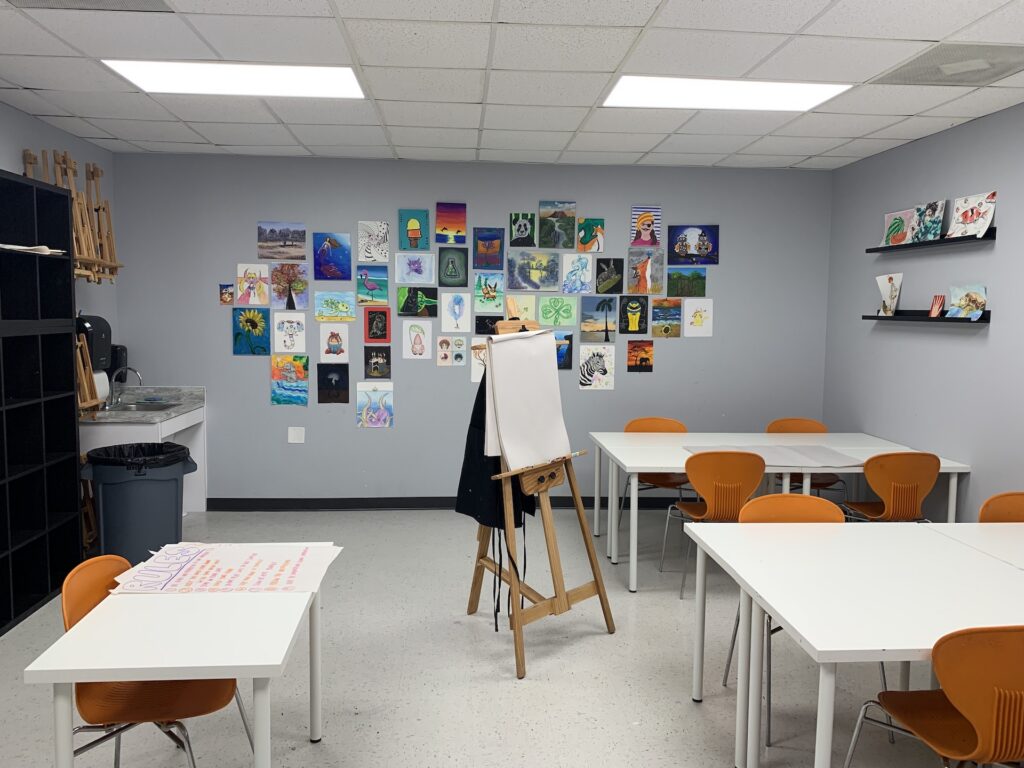
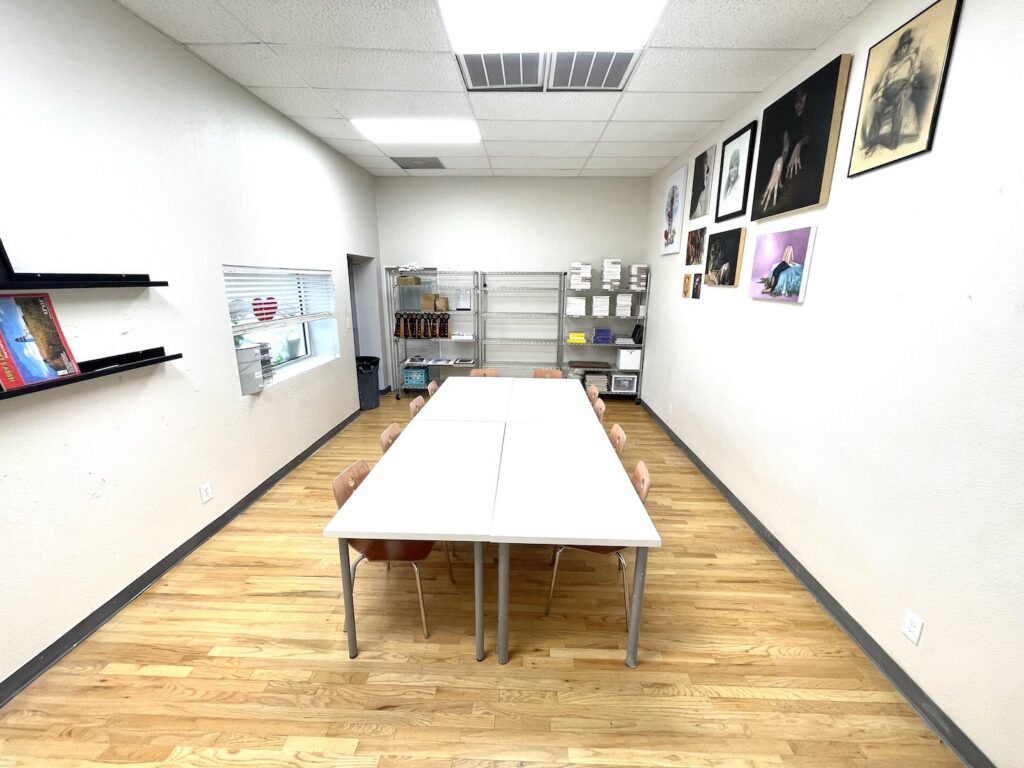
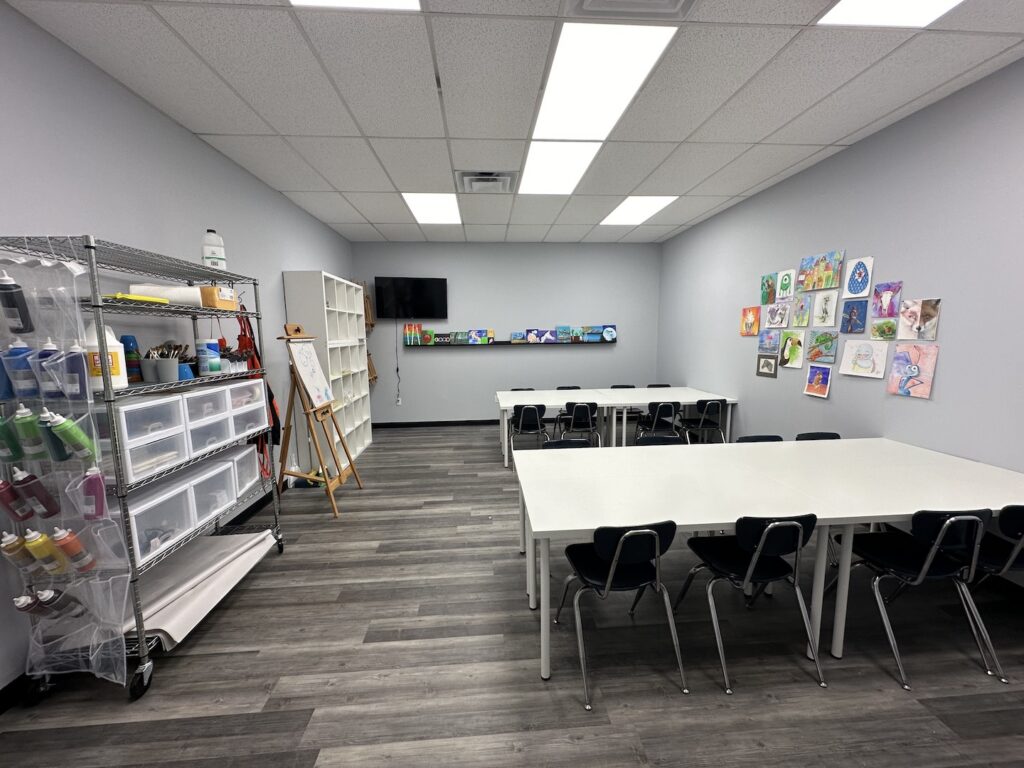
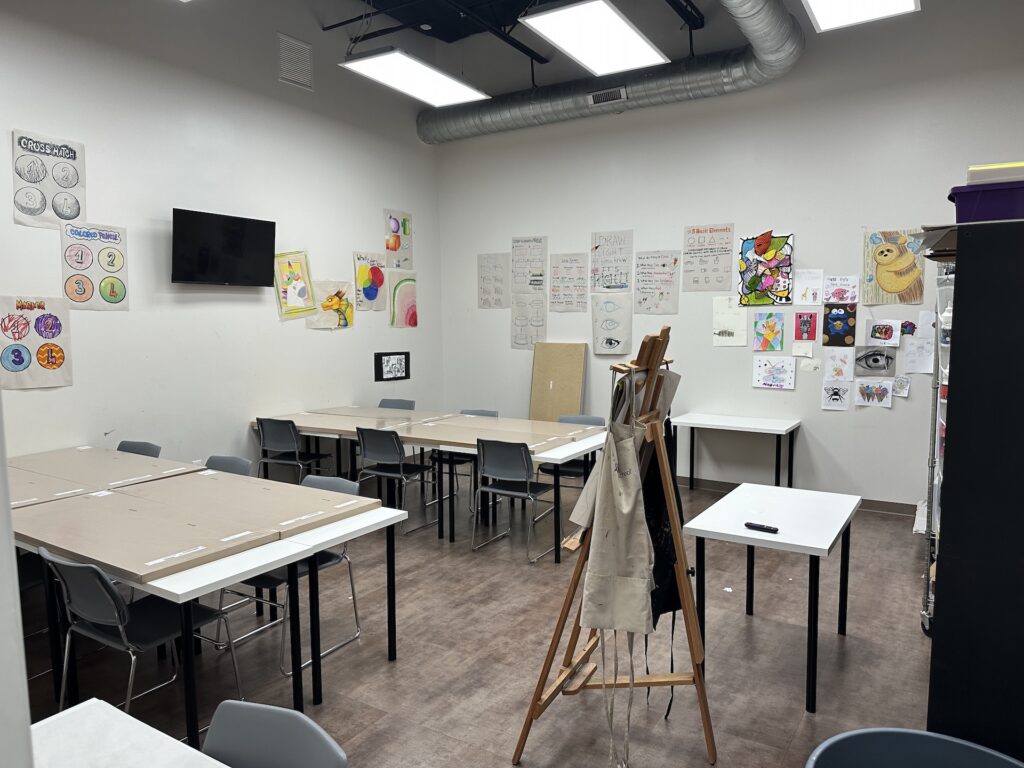
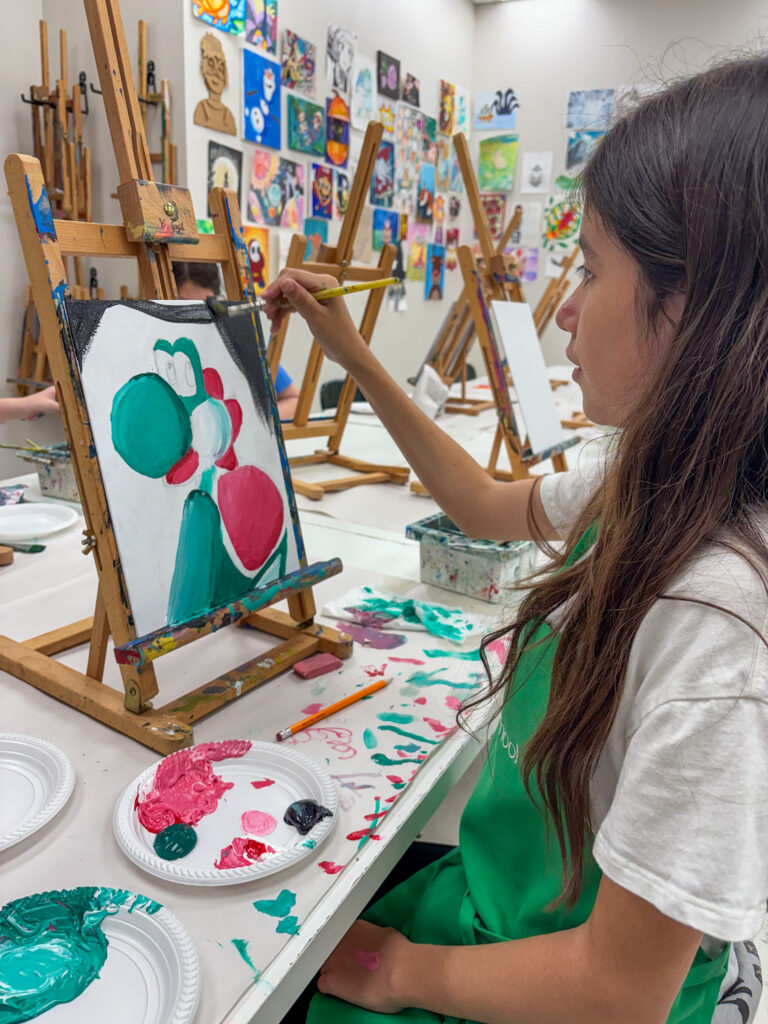
Art classrooms are designed in a way to inspire students the moment they walk through the doors. The classroom must be maintained clean so that creativity can thrive.
All classrooms have an easel with a newsprint pad for teachers to use as a tool to show students step-by-step.
Art Supply Shelves
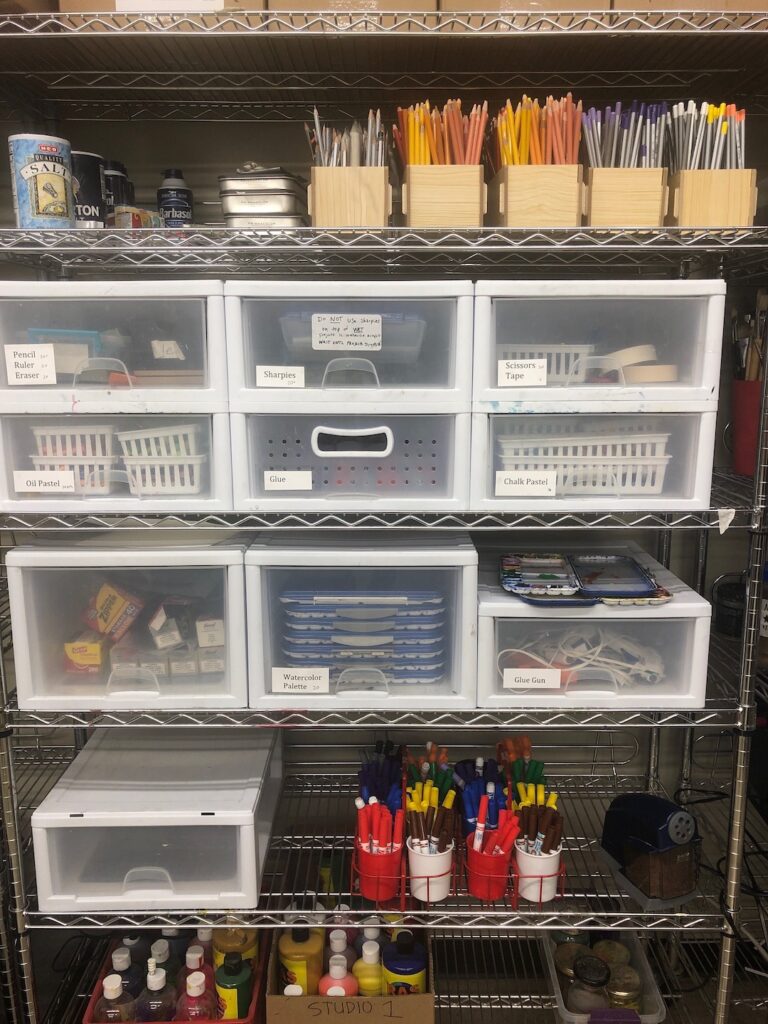
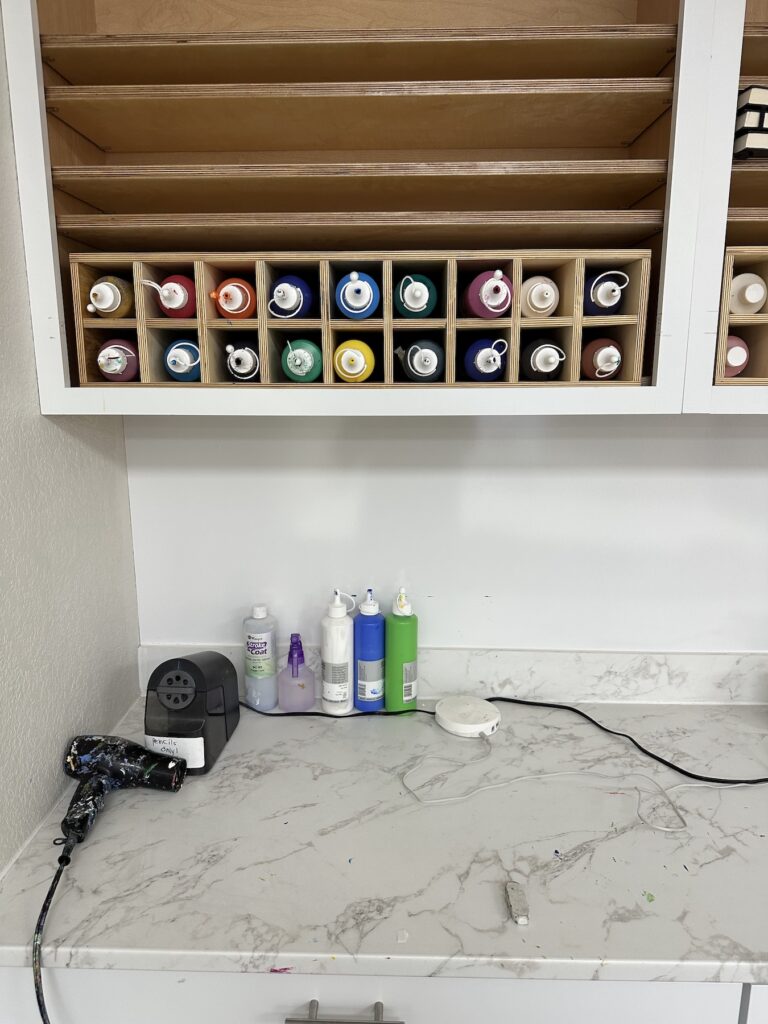
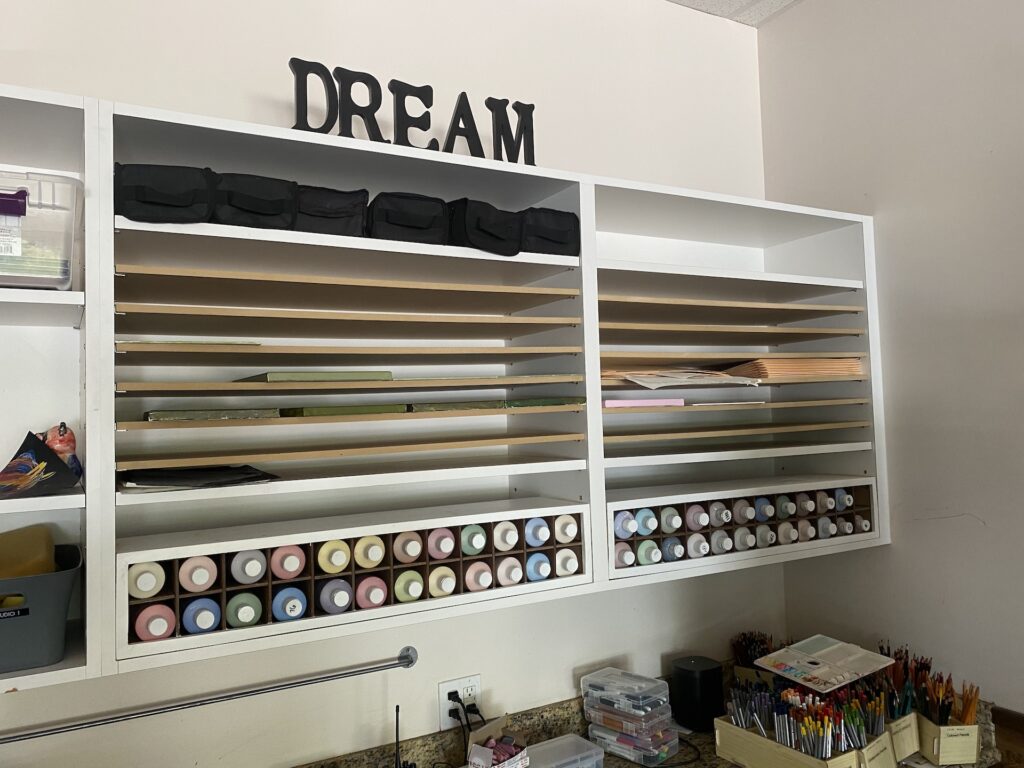
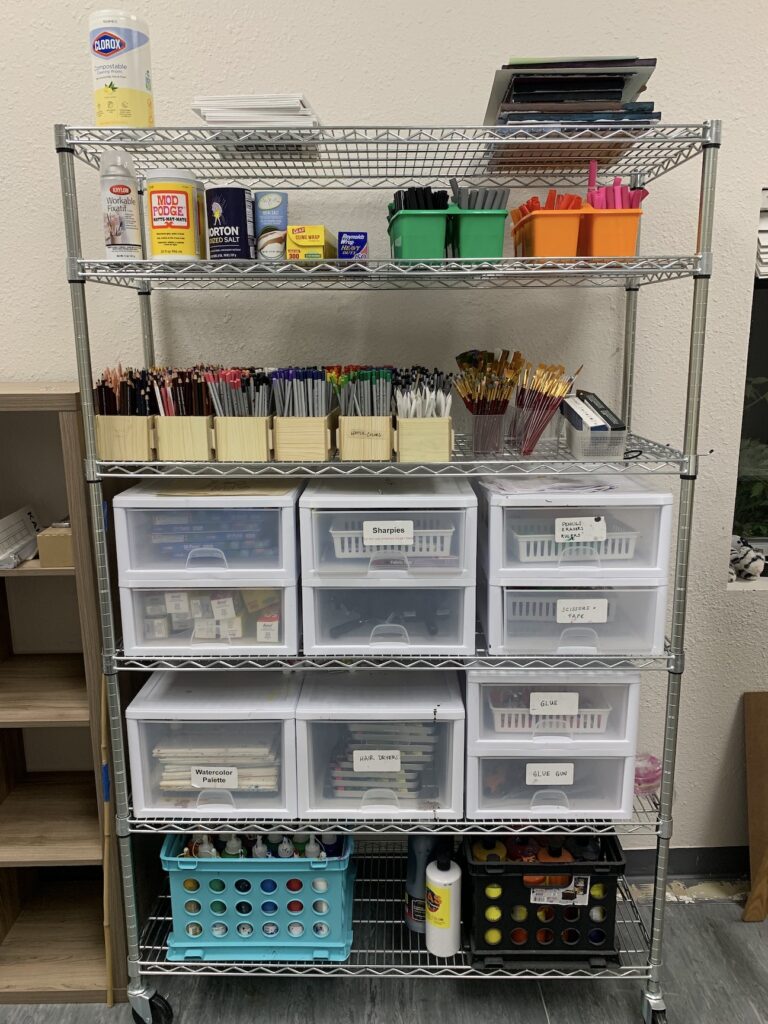
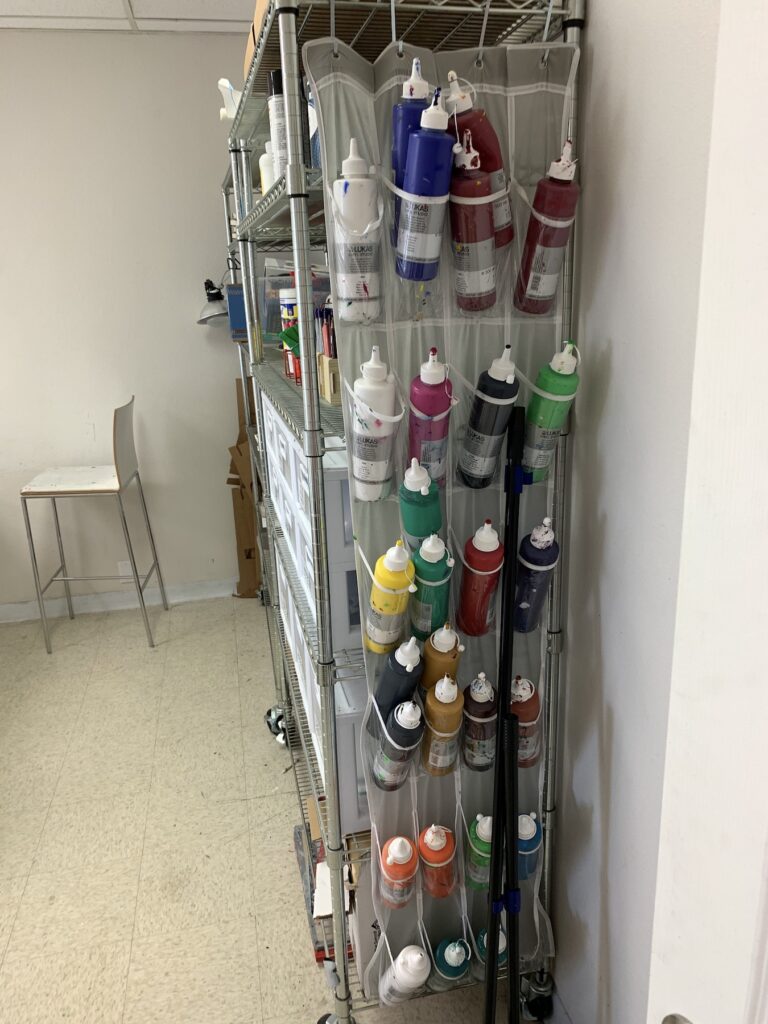
Each art classroom must have a minimum of two (2) art supply storage shelf units, each with a designated purpose:
- Rack #1 – Art Supplies: Used to store art supplies in a neat and organized manner. Supplies must be kept in the same designated location on the rack at all times so teachers can easily and consistently find what they need.
- Rack #2 – Leave Empty: This rack will be used to store student artwork during camps, keeping projects organized and safely stored until they are ready to be completed or taken home.
Clay Classrooms
Each studio should designate one classroom for all pottery classes to help contain clay dust and mess within a designated area. To maximize space, a pottery classroom may also serve as a regular art classroom.
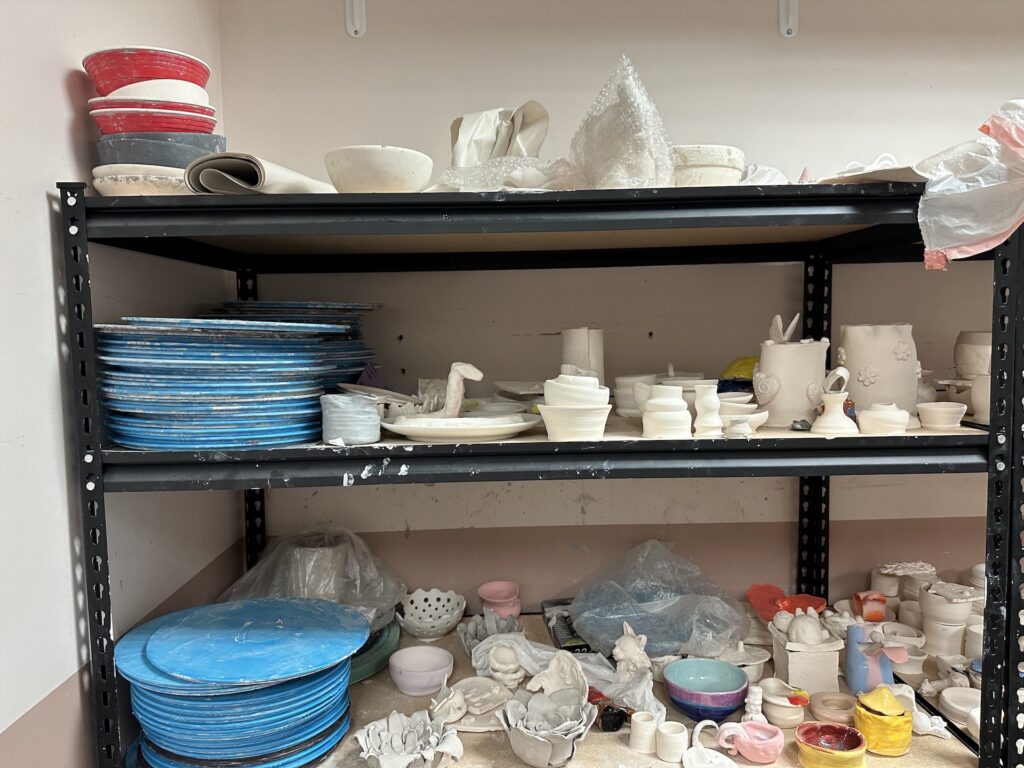
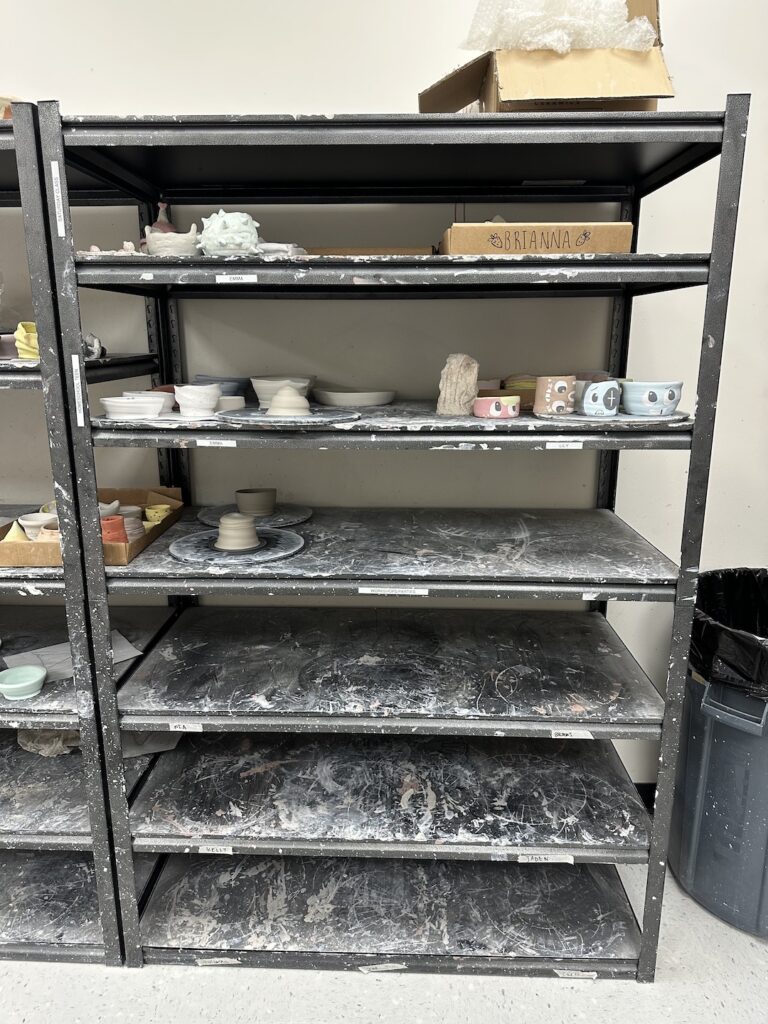
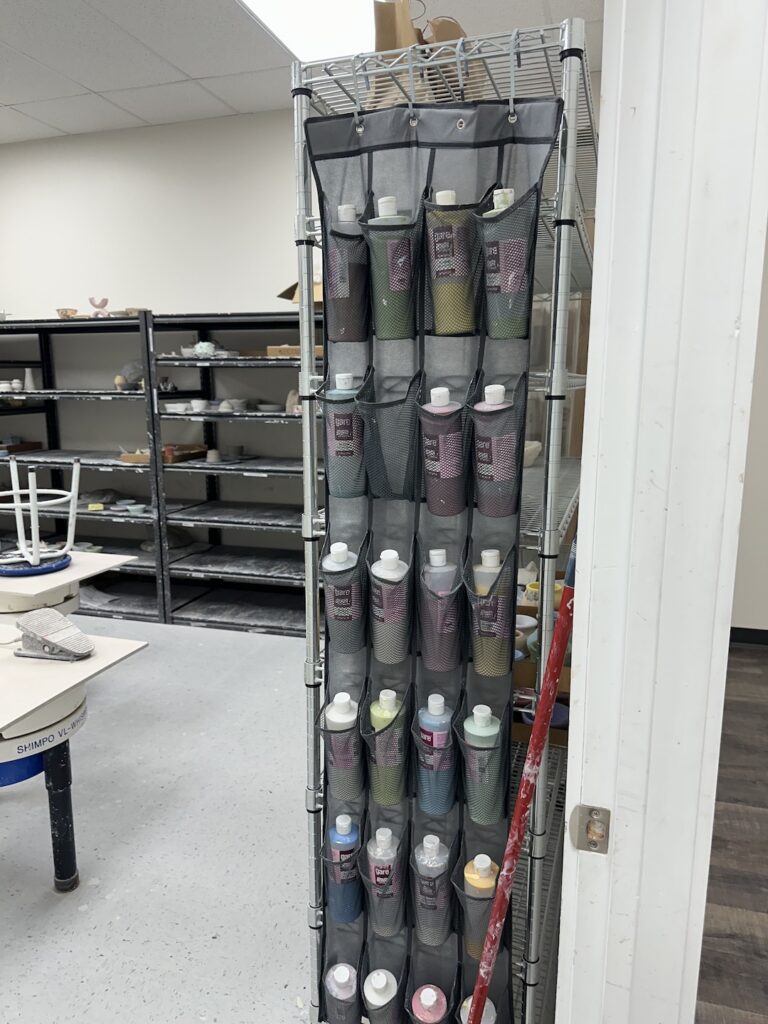
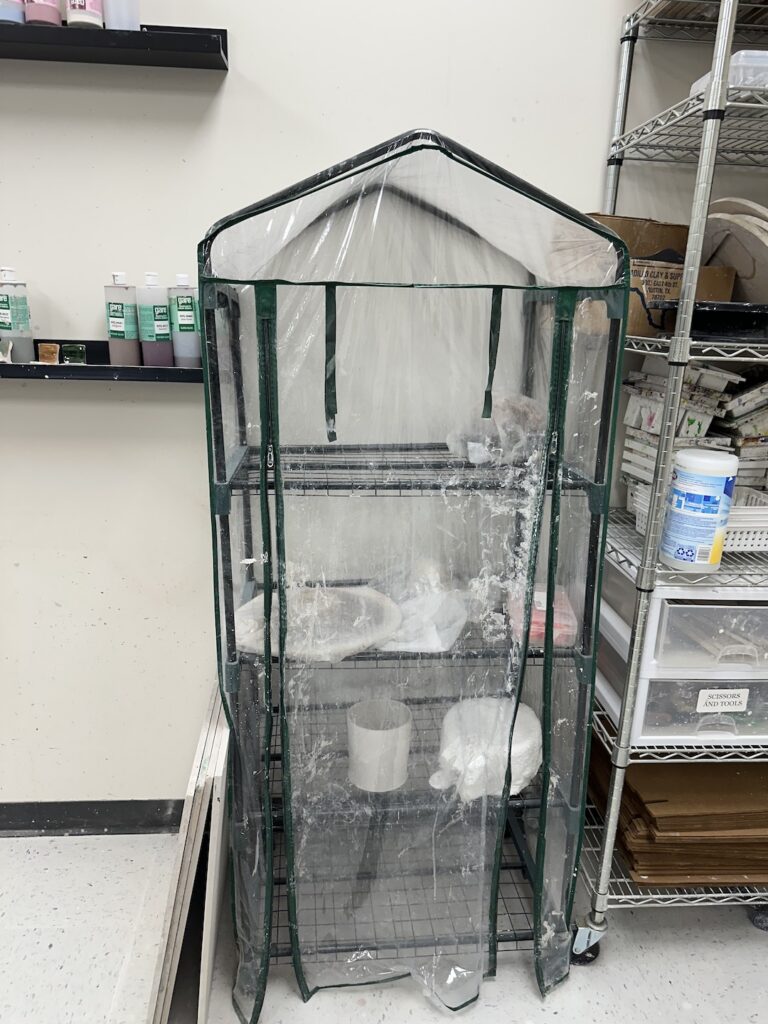
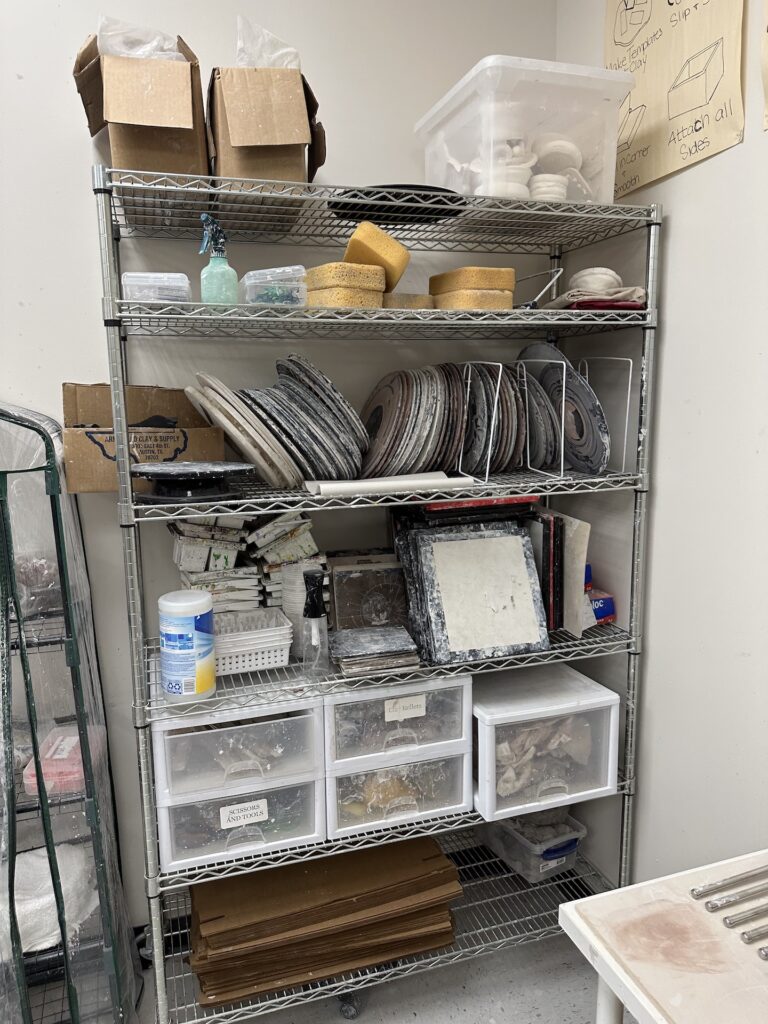
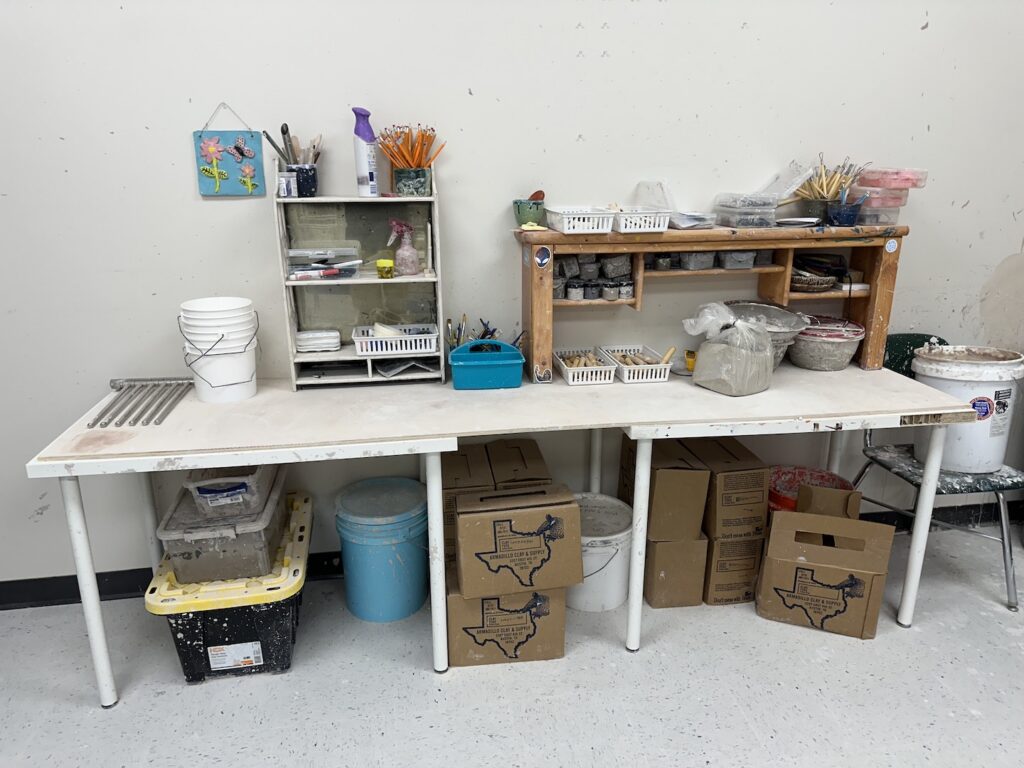
Clay/ Pottery Supply Racks
Each pottery classroom must have sufficient shelving to neatly organize and store pottery tools, supplies, and student clay projects. Shelving should provide designated spaces for tools and works in progress, ensuring materials are easily accessible and projects are stored safely.

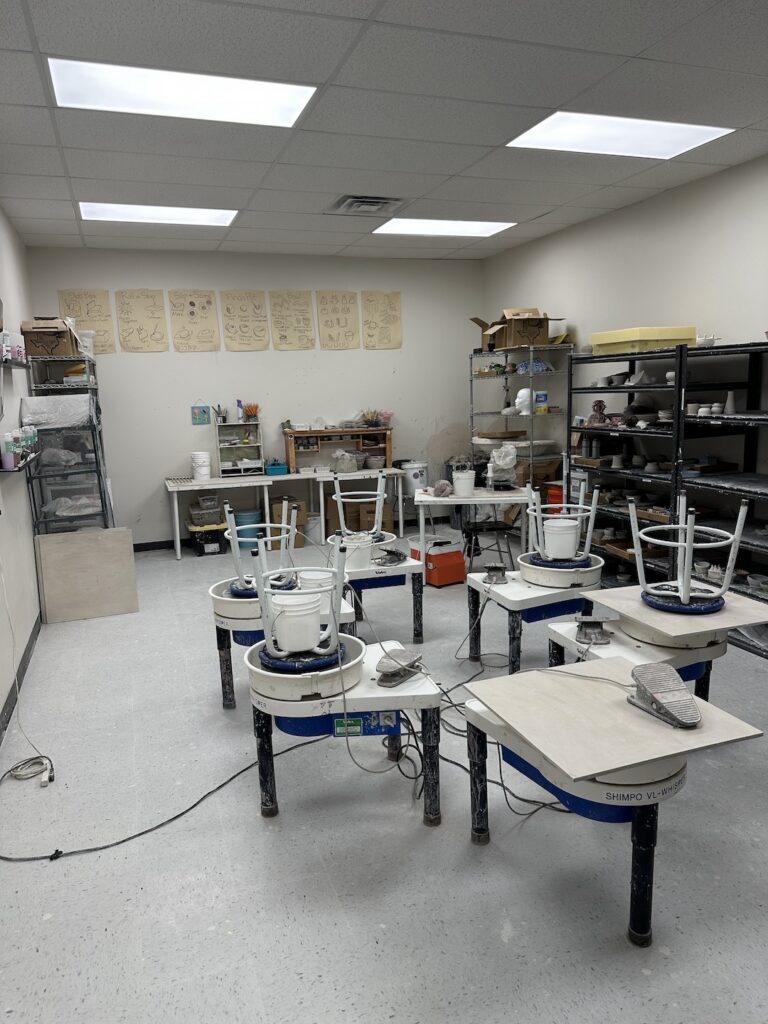
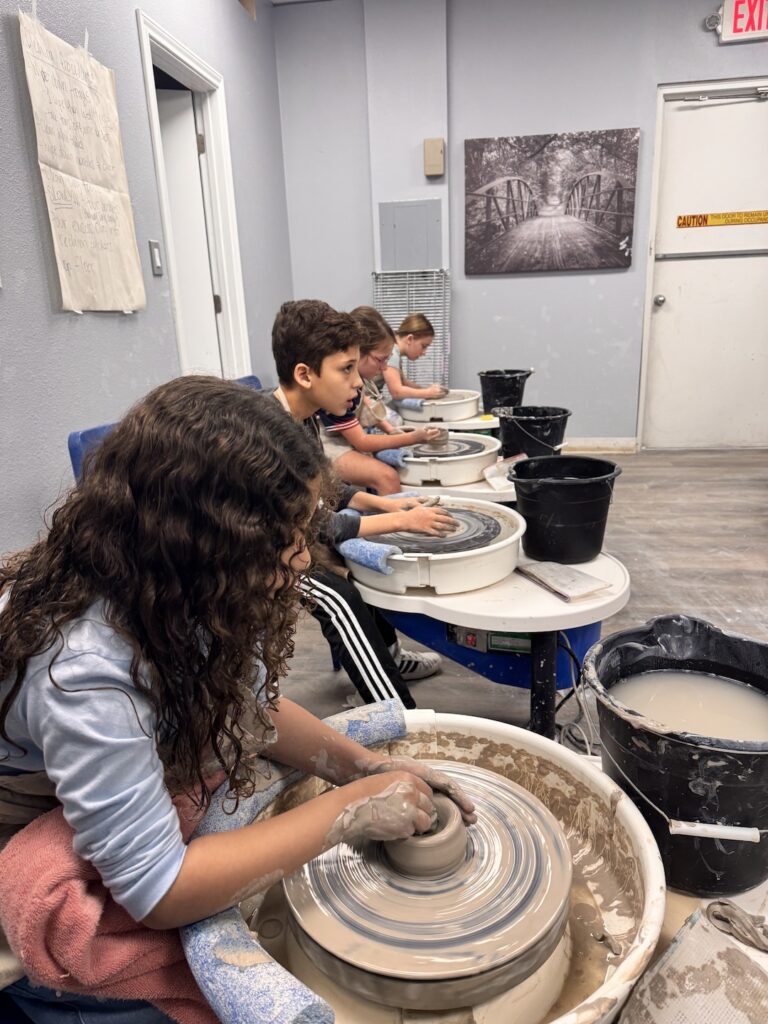
Wheel Classrooms (Optional)
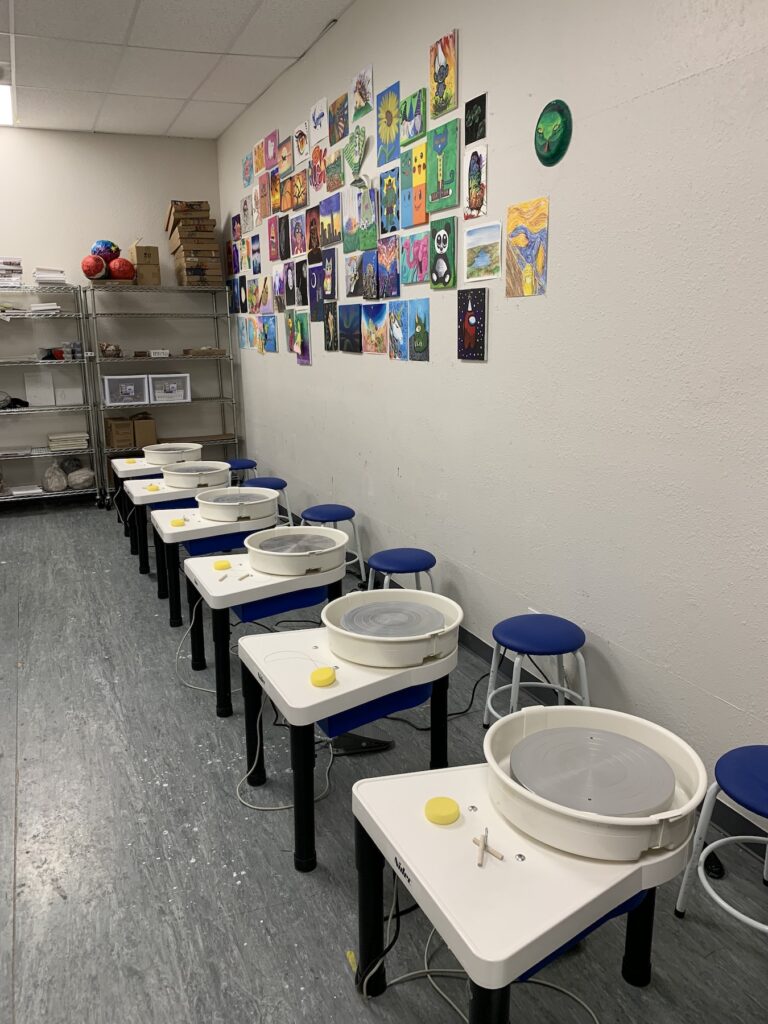
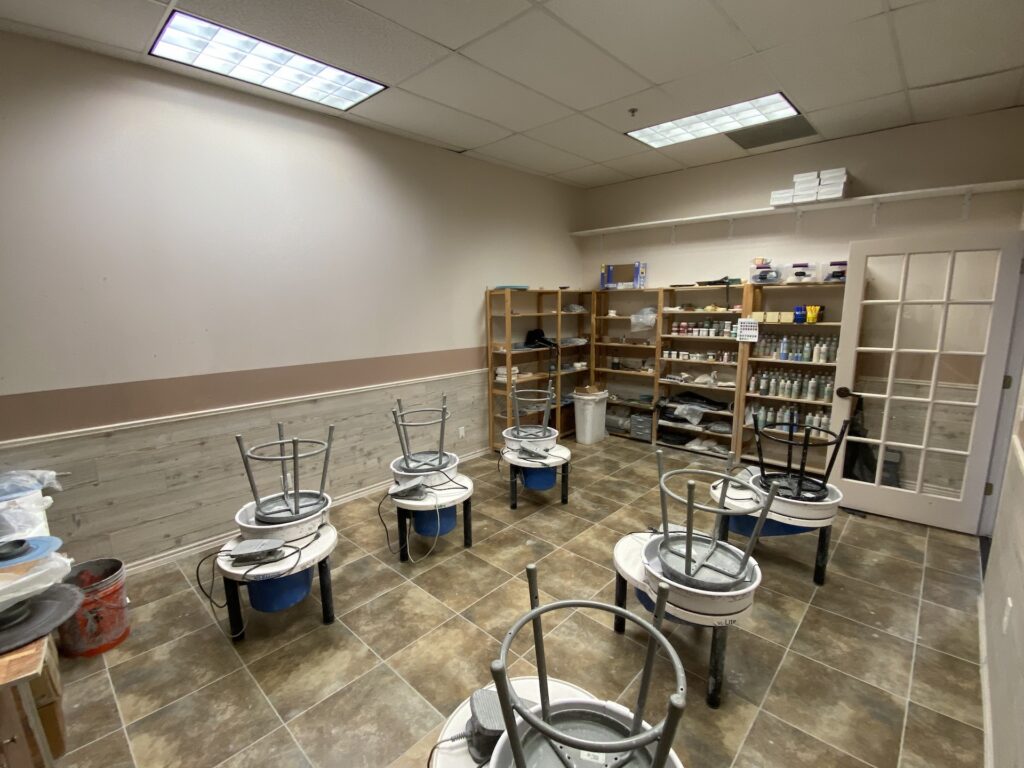
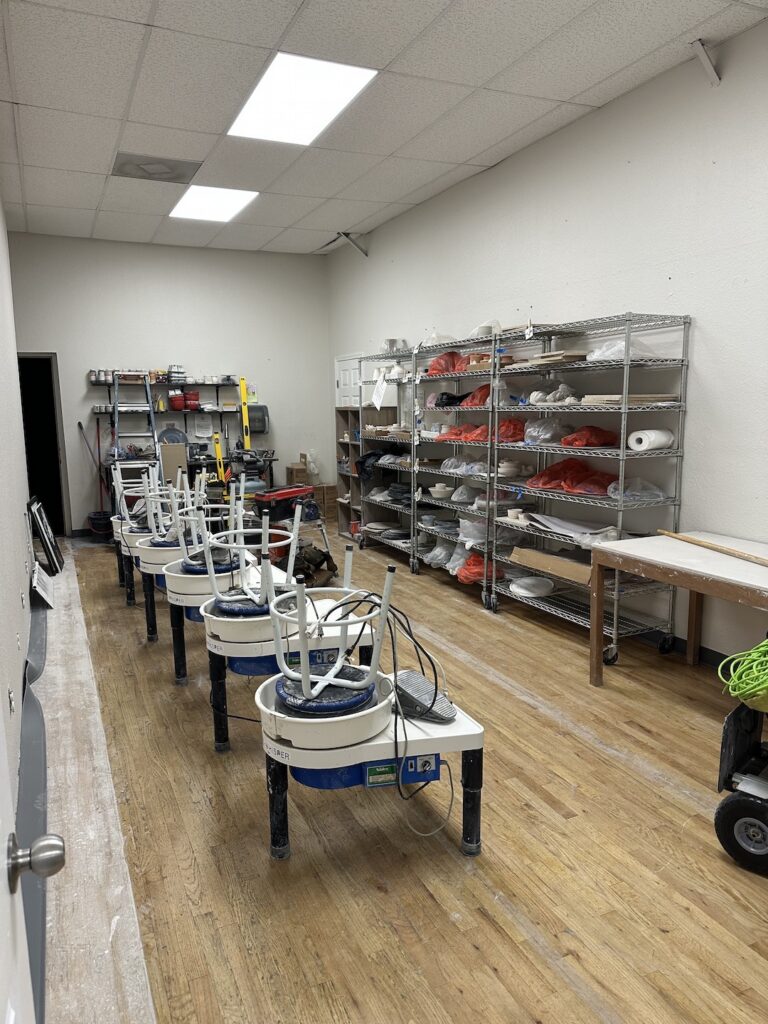
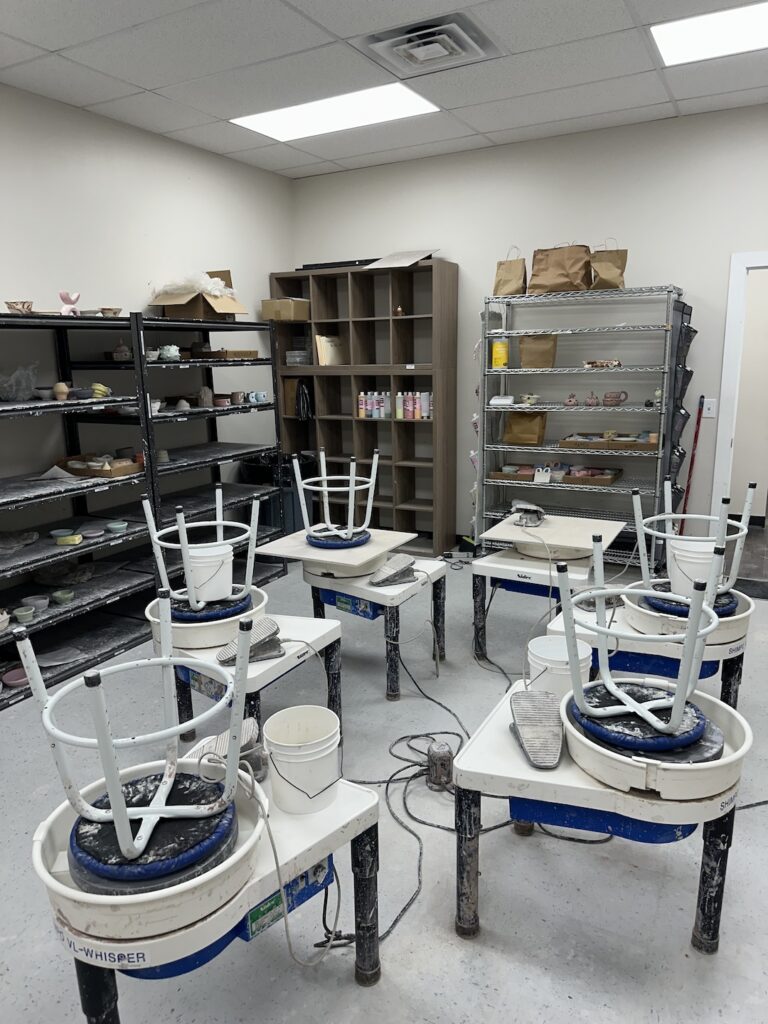
Space permitting, studios may choose to have a pottery wheel classroom.
Camps
Variety of Art Projects
Students will typically complete 2 projects during each 3-hour session of camp. One (1) lesson plan will be assigned, and the other lesson plan will be “Teachers Choice.” The teacher must submit their “Teachers Choice” project to the Manager in advance, and get approval.
If the camp title does not include “Clay” or “Pottery,” teachers should not include clay projects in that camp
“Teacher’s Choice” projects should provide variety and allow students the opportunity to experiment with different art mediums and techniques throughout the week.
Teen camp projects are typically larger, more detailed, and may last multiple days.
Example of how to incorporate a variety or art projects during a 5-day, Half-Day summer camp, which is (five 3-hour sessions).
Teachers are responsible for supervising their students throughout the entire three (3) hours of summer camp, including break times. Managers are not expected to supervise students during breaks, as they must remain focused on office and administrative duties while overseeing the overall operations and safety of the studio.
For additional details, see Form: Art Teacher Responsibilities.
Student check-in/ check-out
The Manager must be stationed at the front desk when students arrive for camp to greet families, assist with last-minute registrations, and answer any questions.
Upon arrival, students must check in at the front desk so the Manager can verify attendance. For safety reasons, Parents must initial the class roll at check-in and check out.
At pick-up, parents must go directly to their child’s classroom to check out their student. For safety reasons, parents must initial the class roll before their child is released.
Only parents, guardians, or other individuals listed on the student’s contact page in Jackrabbit may pick up a student. Under no circumstances may a student be released to anyone who is not listed as authorized for pick-up in Jackrabbit, even if the individual claims to have permission from a parent.
Camp Lunch Policy
Students registered for a full-day camp are not permitted to leave the studio during lunch for any reason, regardless of age or parent permission. For their safety, all students must remain in the studio for the entire camp day.
Parents are welcome to have lunch delivered to the studio for their child. However, the following guidelines must be followed:
Student to Teacher Ratio for Camps
| Students Enrolled 7 Days Before Camp | Teachers Needed | Notes |
| 1-7 students | 1 teacher | One (1) teacher can accommodate up to sixteen (16) students if enrollment increases. However, whenever possible, students should be divided into ages 5–7 and ages 8–12 to create a better student experience. As a general guideline, each camp should have a minimum of four (4) students before splitting into separate age groups. |
| 8-23 students | 2 teachers | 2 teachers can accommodate up to 32 students if enrollment increases. |
| 24+ students | 3 teachers* | 3 teacher can accommodate up to 48 students if enrollment increases. |
*When there are 24 students, it is preferable to have 3 smaller classes of approximately 8 students each, with one teacher per class and no assistant teachers, rather than 2 larger classes of 12 students + assistant teachers. Smaller class sizes allow for more one-on-one instruction and generally result in a better student experience and higher-quality art projects.
Assistant Teacher Ratio for Camps
| Age Group | Assistant Teachers Needed | Notes |
| Ages 5-7 | 10+ students in the same classroom | |
| Ages 8-12 | 12+ students in the same classroom | |
| Teens | no assistant teachers needed for teen classes |
Camp Rolls/ CampAssignments
Managers must provide teachers with the following information 1-2 weeks before the first day of camp to allow adequate preparation:
- The age group of students assigned to their camp
- The number of registered students (Managers must continue providing updates as new registrations are received)
- Their assigned classroom
This information allows teachers to plan and prepare age-appropriate art projects that match their students’ skill levels.
Teachers must also be prepared for last-minute and walk-in registrations. Each classroom should be set up with two (2) additional spots, including sufficient art supplies and materials, to accommodate unexpected enrollments. Having extra supplies available also helps teachers handle unexpected situations, such as spilled water, damaged artwork, or students needing to restart a project. It is always better to be over-prepared.
Dividing Students by Age
When multiple classrooms offer the same camp, Managers should divide students as evenly as possible so that teachers have approximately the same number of students. Students should generally be grouped by age.
For example, if a studio has 43 students registered for the same camp, ranging in age from 5–12, students could be divided as follows:
- Classroom 1: 15 oldest students
- Classroom 2: 14 middle-aged students
- Classroom 3: 14 youngest students
Summer Camp Teacher Training
Managers should hold a teacher training meeting approximately thirty (30 days prior to the beginning of summer camps each year.
Because summer camps typically have higher enrollment than other camp sessions, Managers must review the Art Teacher Responsibilities form individually with each teacher and have the teacher sign off on their summer camp schedule. This form helps teachers understand expectations, anticipate potential challenges, and prepare for a successful camp experience as they prepare ahead.
Managers must also review student safety procedures with all teachers and assistant teachers. These procedures are outlined in the “Art Teacher Responsibilities” form, with additional details provided in the “Safety of Students” section of this manual.
Student/ Class Management
Here are some tips for classroom management during camps:
Activities & Games for Camps
Art-related games, creative warm-up exercises, and team-building activities can be a fun addition to camps. These activities encourage creativity, build confidence, promote social interaction, and help students get to know one another.
Teachers are encouraged to incorporate age-appropriate art games and activities throughout the camp experience to create an engaging and positive classroom environment.
For younger students, occasional “brain breaks” from art projects can help them refocus and recharge. Over the years, teachers have found that short, engaging activities during transitions between projects are especially effective. Examples include:
- Reading a story (especially for ages 5–7)
- Fun contests, such as Hula Hoop or Limbo
- Interactive games, such as:
- Pictionary
- “I’m Thinking of an Animal,” where students ask questions to guess an animal during animal-themed camps
- 20 Questions
- Pokémon-themed games during Pokémon camp week
- Other activities related to the camp theme
Teachers are encouraged to share successful brain-break ideas with other team members.
Assistant Teacher Responsibilities
Assistant teachers can be assigned to plan and lead brain-break activities. Teachers should actively involve their assistants by providing clear instructions and specific responsibilities.
Because many assistant teachers are teenagers, they often benefit from direct guidance rather than being expected to recognize what needs to be done on their own. Most are eager to help and perform well when expectations are clearly communicated.
For additional details, see Form Assistant Art Teacher Responsibilities.
Students may not participate in outdoor activities unless specifically authorized by the Studio Owner.
T-Shirts
Each student should receive only one (1) camp t-shirt, even if they are registered for multiple camps. Students should receive their t-shirt during the FIRST camp they attend.
When a t-shirt is given to a student who is registered for multiple camps, Managers should add a note in Jackrabbit under “Roll Notes.” This allows staff to easily see on future camp rolls that the student has already received a shirt.
T-shirts should be handed out on Thursday so students can wear them on Friday.
Camp Coupons
On the last day of camp, students should receive the following three (3) coupon offerings. Use the 3 in1 coupon:
- $25 off their next camp
- $25 off their first month of Weekly Art Classes
- 15% off pottery painting (at studios offering PYOP)
During summer camps, Managers and Teachers may distribute these coupons along with camp t-shirts on Thursday or Friday.
These coupons are intended to reward loyal customers and encourage future registrations. Any customer who asks about these discounts may use them, even if they did not receive a coupon.
Teachers can encourage their students to enroll in another camp they teach!
Student Safety
Student Safety: For safety reasons, students must remain inside the studio throughout the entire camp session, including snack and lunch breaks. Once a student has been dropped off, they may not leave the building until an authorized parent or guardian arrives for pick-up.
Photography of Students
Student Photo Waiver
If a parent notifies the manager that they do NOT allow photos to be taken of their kids, this information must immediately be written on the student’s account in Jackrabbit. The manager and teacher must NOT take any photos of any child who does not have a photo release. See “Safety of Students: “No Photos of My Child Requests.”
Parents are prompted to give photo release permission by clicking a box at the time of online registration. Some parents will write in a comment at the time of registration or contacting the studio if they do not want to give permission. The manager is responsible to keep accurate records of any student that is not given a photo release, and make sure no photos are taken of those students. Managers will write this information on the student’s account in Jackrabbit, and it will show up on the class roll. The manager and teacher must NOT take any photos of any child who does not have a photo release.
Taking Quality Photos
If a parent does not want pictures taken of their child and opts out of the photo waiver, the manager must write a note inside the student’s Jackrabbit account, and also notify the teacher:
- > Misc Tab
- > Roll Notes box
- Add a note “No Photos”. This will show up on a printed camp roll so the teacher can see.
Parties
Staffing a Party
Two (2) employees should be scheduled during a party. One employee should serve as the Primary Host, who is typically the manager or staff memeber. The second employee should be either an Art Teacher (for Canvas Painting or Pottery Wheel parties) or a Staff Member (for PYOP parties). Both employees should work together to ensure the party runs smoothly and that guests receive excellent customer service throughout the event.
Primary Host Responsibilities:
- Room set up, room preparation and cleanliness
- Assisting guests during check-in and check-out
- Collecting final payment
- Supporting overall party operations and customer experience
- Helping ensure the party stays on schedule
- Assist the Art Teacher/ Staff Member as needed, including set-up and clean-up
- Making sure all guests leave the party with their completed artwork, party swag, and any Cordovan Art School coupons or promotional materials. For PYOP parties, remind guests that their pottery will be ready for pick-up approximately seven (7) days after the party to allow time for glazing, firing, cooling, and processing.
Art Teacher / Staff Member Responsibilities:
- Teaching and leading the party activity
- Art supply set-up and clean-up
- Creating a fun and engaging experience for each guest
- Monitoring supplies and materials during the party
Larger parties: For larger parties with more than 22 painters, it is recommended that a third employee be scheduled to assist with party operations and customer service.
Off-site Parties: Cordovan offers off-site parties. An extra fee should be added to the price of the party for travel and any extra work involved. Always consider the safety of the teachers when booking an off-site party.
Party Types
Cordovan Art School offers 3 different types of parties:
- Canvas Painting Party “The Louvre”
- PYOP Party “The Monte Carlo”
- Wheel Throwing Party “The Davinci”
1. Canvas Painting Party
- Nickname: “The Louvre“
- Led by an ART TEACHER
- Includes step-by step instruction throughout the party.
- The party theme is selected by the customer, and the art project should be designed around that theme.
- Guests take home their artwork at the end of the party.
2. PYOP Party
- Nickname: “The Rio” and “The Monte Carlo“
- Led by a STAFF MEMBER
- Includes general oversight helping guests paint their own pottery pieces at their own pace.
- Includes a custom party plate.
- The staff member must complete the Party Form to keep track of which pottery pieces belong to each guest.
- The Party Form must remain with all pottery pieces at all times until the finished pottery is picked up by the customer.
Keeping track of pottery: The Party Form is used for parties and large groups to track multiple pottery pieces that are associated with a single party reservation or transaction. Extra copies of the Party Form should be printed and kept in the party binder at the front desk.
It is extremely important to accurately identify each guest’s pottery piece. During parties, many guests may choose and paint the same type of pottery. For example, several guests may paint the same turtle, mug, or figurine. To prevent confusion, each painter—or a staff member assisting them—must write the guest’s name on the bottom of the pottery piece using a glaze pencil.
The Party Form should also include a description of each pottery piece painted by each guest. Having both the guest’s name written on the pottery and a detailed description on the Party Form makes it much easier to identify and return the correct piece to each party guest after the pottery has been glazed and fired.
The Party Form must be completed by the staff member assigned to lead the party. This form must remain with all pottery pieces at all times until the finished pottery is picked up by the customer.
Custom Party Plate: The Pottery Party-Small Pieces and Pottery Party-Large Pieces party packages include a complimentary custom Party Plate for the guest of honor.
Before the party, the Manager will ask the customer what theme or design they would like featured on the front of the plate. Examples may include a princess, cartoon character, animal, sports theme, or other age-appropriate design. The Manager will assign a talented staff member to paint the design. The artwork should be neat and personalized, but it does not need to be overly detailed or perfect. The Party Plate should be created at least 2–3 days before the party date so it is ready for guests to sign during the event.
The front of the plate should also include a personalized message such as “Happy Birthday Johnny” (birthday party) or “Worlds #1 Boss” (corporate party) Always double-check the spelling of the guest of honor’s name before painting the plate.
During the party, have all guests sign the back of the plate using a glaze pencil. Only glaze pencils should be used, as other writing materials will burn off during firing. The signatures create a personalized keepsake for the birthday guest.
Before signing the plate, all guests must wash their hands thoroughly. Signing typically takes place near the end of the party when guests may have food, frosting, grease, or other residue on their hands. Oils, frosting, or food residue transferred to the plate or glaze pencil can interfere with glaze adhesion and may cause defects during firing. Clean hands help ensure the finished Party Plate fires properly and becomes a lasting keepsake for the guest of honor.
3. Wheel Throwing Party
- Nickname: “The Davinci“
- Led by a POTTERY WHEEL TEACHER.
- Includes step-by step instruction throughout the party.
- Includes a custom party plate.
Follow all procedures outlined in the Pottery Wheel Classes section, with the following modifications:
Party Form: Use the Party Form instead of the Painter’s Form to track guest projects.
Custom Party Plate: The Davinci party package includes a complimentary custom Party Plate for the guest of honor. Follow the same Party Plate procedures outlined in The Rio and The Monte Carlo party sections.
Number of Classrooms: 2 classrooms are required for Pottery Wheel parties. The first classroom is the pottery wheel room, where guests receive wheel throwing instruction and create their pottery projects. The second classroom is flex space to be used for a hand-build clay activity station for larger parties, food and cake, gift opening, parent seating and gathering area, general overflow. Whenever possible, the second classroom should be located adjacent to the pottery wheel room to allow staff to easily supervise both areas and facilitate smooth transitions between activities.
Party Size: The maximum number of guests for a pottery wheel party is two (2) times the number of pottery wheels available. For example, if a classroom has six (6) pottery wheels, the maximum party size is twelve (12) guests. The teacher does not get a dedicated wheel. The teacher may borrow a student’s wheel to do demonstrations. Larger groups will split time between 2 different activities.
Two Activities for Larger Parties: If the number of guests exceeds the number of available pottery wheels, a second activity must be provided for guests while they wait their turn on the wheel. Typically, this second activity is a clay hand-build project. For these larger parties:
- Guests should be divided into two (2) groups.
- One group participates in pottery wheel instruction while the other group completes the hand-build activity.
- Groups switch activities at the half-way point so all guests participate in both experiences.
- It is recommended to extend the party duration by an additional thirty (30) minutes to allow adequate time for both activities.
Number of Pottery Pieces Included: Each artist is allowed to make up to two (2) pottery wheel pieces to take home as part of the party. For larger parties, each guest is allowed to take home one (1) pottery wheel piece, and one (1) clay hand build piece.
Set Up: It is the Teacher’s responsibility to set up the Wheel Stations prior to guests arrival, which includes weighing and portioning clay, filling water bucket, setting out sponges, ribs, chamois, and other pottery tools.
Clay Portions:
- Children should receive approximately 1 pound of clay per project.
- Adults should receive approximately 2 pounds of clay per project.
- Extra clay should be available for mistakes and additional attempts.
Some Teachers prefer to pre-center the clay before the party begins, while others prefer to allow guests to wedge and center their own clay as part of the learning experience. The studio manager and teacher may determine the best approach based on factors such as party size, guest age, available time, and instructor preference
Incomplete or Failed Projects: Teachers are encouraged to create demonstration projects during the party that can be used for instructional purposes. If a party guest does not finish their pottery wheel project, or if all of their projects are unsuccessful, the teacher may give the guest one of their demonstration pieces to take home. The goal is to ensure that every guest leaves with a positive experience and memories.
Glazing:
- OPTION 1: After the pottery has completely dried and been bisque fired, a designated staff member may glaze the pottery on behalf of the guest. (This is the preferred option)
- OPTION 2: After the pottery has completely dried and been bisque fired, the pottery wheel party guests may return to the studio and glaze their pottery pieces themselves.
- If this option is offered, the guest must follow these procedures:
- schedule an appointment to return and glaze their pottery before leaving the party.
- agree to pay an additional painter’s fee when they return to custom-paint their pottery piece.
- agree that if they do not return within three (3) months to paint their pottery piece, they are giving the studio permission to dispose of the piece.
- If this option is offered, the guest must follow these procedures:
Clear notes must be written on the Party Form, indicating which guests are painting their own pieces. Once a guest returns to the studio to glazes their pottery, it will fired again and made available for pick-up.
Returning to Paint a Pottery Wheel Piece: A guest who attended a pottery wheel party may return to paint their pottery piece, but only if all of the following requirements are met:
Ordering pre-mixed color glazes for PYOP parties: https://www.theceramicshop.com/store/category/10/36/the-ceramic-shop/Cone%2B06%2BLow%2BFire/
Tutorial on how to dip pottery wheel pieces into glaze or clear coat: https://www.amaco.com/clay_how_tos/169
Extra Compensation: Follow the same extra compensation policy for Pottery Wheel Teachers as outlined in the Pottery Wheel Classes section.
Party Pick-Up Procedures: The person who booked the party should pick up all completed pottery pieces at the same time. It is their responsibility to distribute the finished pottery pieces to the guests who attended the party. Any exception to this pick-up policy must be clearly communicated to both the person who booked the party and the artist who created the pottery piece. All exceptions must also be clearly documented on the Party Form.
Food and Drink Policy: Absolutely no food or drinks are allowed in the pottery wheel room at any time. Food and beverages can contaminate clay and damage equipment.
Pottery Wheels
Not all studios have pottery wheels. If a studio elects to have pottery wheels, they should add pottery wheel into its schedule for classes, camps, parties, and workshops whenever possible.
Weekly Classes
Class Size: The number of students enrolled in a pottery wheel class must not exceed the number of pottery wheels available in the classroom. Teachers do not receive a dedicated wheel for themselves. For example, if a classroom has six (6) pottery wheels, the maximum class size is six (6) students. The teacher may borrow a student’s wheel to do demonstrations.
Set Up: The pottery wheel teacher is responsible for arriving early to complete any preparation work and set up the classroom before class begins.
The teacher may prepare pre-weighed portions of clay in individual bags before class and distribute them to students as class begins. Managers may assist with classroom setup and preparation as needed.
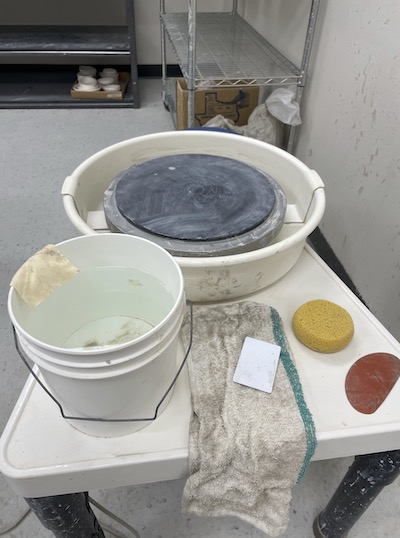
The photo below shows an example of a properly organized pottery wheel workstation for a student.
Clay Amount: Students are allotted one (1) pound of clay per project. Older or more experienced students may increase to 1.5 pounds of clay once they demonstrate the ability to successfully center and manage larger amounts of clay. Always weigh the clay before distributing it to students to ensure consistency and proper material usage.
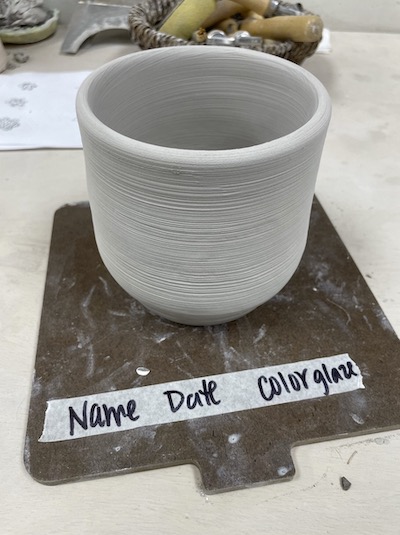
Labeling Student Projects: It is the teacher’s responsibility to ensure that all pottery pieces are properly labeled with the artist’s name and tagged with a paper label or description as needed before the end of class. Managers should remind teachers if this step is overlooked.
For pottery wheel classes, a Painter’s Form should be attached or taped to the bat to identify the artist and their work. Proper labeling is essential so pieces can be accurately tracked, fired, and returned to the correct student.
The photo below shows an example of how pottery wheel projects should be labeled and organized at the end of class.
Clean-Up: Student Responsibilities: Approximately 25–30 minutes before the end of class, students should begin cleaning their workstations and washing any tools, bats, buckets, and equipment they used during class. Students should also assist with general classroom cleaning tasks, including mopping, wiping down work surfaces, cleaning around sinks, and helping return the classroom to a clean and organized condition before leaving. If students are able to complete clean-up efficiently, the teacher may reduce the amount of time allotted for clean-up as appropriate.
Clean-Up: Teacher Responsibilities: After class has ended, the teacher is paid for an additional thirty (30) minutes. This time should be used to complete any remaining clean-up and classroom organization tasks. Responsibilities may include:
- Finishing classroom clean-up
- Organizing shelves and labeling student work
- Transporting pottery to the kiln room for drying or firing
- Cleaning and storing tools and equipment
- Sweeping and mopping as needed
- Preparing the classroom for the next class
Clean-Up:Manager’s Responsibilities: It is the teacher’s responsibility to leave the classroom clean, organized, and ready for the next instructor. Any cleaning or organizational tasks not completed by the teacher become the responsibility of the manager. Managers are also responsible for cleaning and maintaining pottery wheel bats to ensure they are ready for future classes.
Extra Compensation (Wheel Teachers Only): Pottery wheel teachers should add an additional thirty (30) minutes to their timesheet for each pottery wheel class, camp, workshop, or party they teach. This additional paid time is intended to cover setup, labeling, transportation of student work, classroom organization, and clean-up responsibilities unique to pottery wheel instruction.
This additional paid time applies only to pottery wheel programs and does not apply to any other type of art class.
Removing Projects from the Bat: The responsibility for removing a student’s pottery project from the bat is determined by the studio manager in consultation with the pottery wheel teacher(s). Each studio may establish the process that works best for its staffing and workflow. At some studios, the teacher removes the projects from the bats, while at others the manager performs this task. When a project is removed from the bat, the teacher or manager may carve the student’s name into the clay to help identify the piece throughout the drying, firing, and glazing process. Whatever system is used, it should ensure that each student’s work is properly labeled and easily identifiable.
Drying: Pottery wheel pieces require time to dry before they can be glazed. The amount of drying time will vary depending on the size and thickness of the piece, as well as humidity levels within the studio.
Pottery should not be glazed until it is completely dry and has been bisque fired. Attempting to glaze pottery that has not fully dried can result in cracking, breakage, or other firing defects. Teachers and managers should ensure that all pottery wheel projects are completely dry before moving them to the kiln room for firing.
Note: Non-fired clay will soak the moisture very quickly causing it to soften, and it can break. Glazing non-fired clay pieces is NOT recommended, and can lead to the pottery breaking. However, if there is not enough time to fire the pottery, non-fired pottery wheel pieces can be glazed by hand–as long as the glaze is BRUSHED ON using a paintbrush (not dipped).
Glazing Student Projects: Once the students’ pottery projects are completely dry and have been bisque fired, the students glaze their own pieces using the colors of their choice. The teacher’s role is to guide students through the glazing process, demonstrate glazing techniques, and provide assistance as needed. Teachers should encourage creativity while helping students apply glaze properly to achieve the best possible results during firing. Students are responsible for selecting their glaze colors and decorating their pieces.
Organizing Wheel Throwing Projects: Wheel throwing projects should be organized on the shelves inside the wheel room while they are drying. Shelves may be organized in whatever manner makes the most sense for the studio, such as by teacher, class, age group, student, camp, party, or workshop. To prevent damage and confusion, the only person who should move wheel throwing projects on the drying shelves is the TEACHER. Students and other staff members should not move, rearrange, or handle pottery wheel projects unless specifically directed to do so by the teacher. This helps ensure projects remain properly labeled, protected, and organized throughout the drying and firing process.
Transporting Projects to the Kiln Room: The only person authorized to move a pottery wheel project from the classroom to the kiln room is the teacher. A project should only be moved when it is completely dry and is clearly labeled with the student’s name. A teacher may also take a photo of the piece for identification purposes. Because many pottery wheel projects can look similar, proper identification is critical to ensure each piece is returned to the student who created it.
The Painter’s Form must remain with the piece throughout the drying, firing, glazing, and pick-up process.
Firing Wheel Throwing and Hand-Build Projects: Pottery wheel and hand-build clay projects should never be fired in the same kiln load as PYOP projects. Whenever possible, studios should have two separate kilns: one kiln designated for PYOP projects and one kiln designated for pottery wheel and hand-build clay projects. However, if a studio has only one kiln, PYOP projects and pottery wheel/hand-build projects must be fired in separate batches.
Before loading any pottery into the kiln, the manager should double-check that each piece is properly labeled and identifiable. After firing, the manager should ensure that each piece is reunited with its’ Painter’s Form, and restored to the appropriate shelf, rack, or storage area along with its corresponding Painter’s Form.
Post-Firing Storage and Organization: Once a pottery wheel project has been fired, it is the manager’s responsibility to return the finished piece to the pottery wheel classroom or designated pick-up area.
There should be a separate shelving area designated for all post-fired pottery wheel and hand-build projects. These shelves should be organized in a manner that allows teachers and students to easily locate finished pieces.
Depending on the size and layout of the studio, post-firing shelves may be organized by teacher, class, age group, student, camp, party, workshop, or another logical system. Regardless of the organization method used, all finished pieces must remain properly labeled and accompanied by their Painter’s Forms so they can be accurately identified and returned to the correct student.
Food and Drink Policy: Absolutely no food or drinks are allowed in the pottery wheel room at any time. Food and beverages can contaminate clay and damage equipment.
Parties & Workshops
SEE PARTIES: 3. WHEEL THROWING PARTY
Camps
Clay Ordering for Camps: As a general rule of thumb, order one (1) box of clay for every three (3) half-day camp students per week. Actual clay usage may vary depending on student age, project size, and the number of clay projects completed during the camp. Managers should monitor clay inventory and adjust orders as needed.
Assistant Teachers for Pottery Wheel Camps: If there are eight (8) or fewer students enrolled in a pottery wheel camp, the teacher must manage the camp without the assistance of an assistant teacher. Additional staffing should be considered when enrollment exceeds eight students or when student needs warrant additional supervision and support.
Clean-Up During Camps: During pottery wheel camps, a staff member should be assigned for classroom cleaning and organization during the lunch hour, allowing the pottery wheel teacher to take a lunch break. The staff member should receive a break either before or after the lunch period.
However, at the end of each camp day, the pottery wheel teacher should remain for an additional thirty (30) minutes to complete clean-up and organizational tasks. Responsibilities may include cleaning the classroom, organizing shelves, labeling projects, transporting pottery to the kiln room once pieces are completely dry, and preparing the classroom for the next day.
Teachers should follow the same clean-up, labeling, storage, and pottery-handling procedures outlined in the “Pottery Wheel: Weekly Classes” section.
Wrapping and Packaging Camp Wheel Projects: Once a student’s pottery wheel projects have been fired and are ready for pick-up, the pieces should be carefully wrapped and placed in a customer pick-up bag to help protect them during storage and transport.
Labeling: The customer pick-up bag should be clearly labeled with the student’s name and phone number on the outside of the bag, so staff can easily contact the student when their pieces are ready for pick-up. Any accompanying labels, Painter’s Forms, or identification paperwork should remain with the project until it has been picked up by the student or parent.
Wheel Pottery Camp Delivery: See Section on Clay Camp Delivery
Parent/Student Complaints
If a teacher or manager receives a complaint from a parent or student regarding a teacher, class, or classroom experience, the Manager should make every reasonable effort to resolve the issue.
If the manager is unable to resolve the concern independently, the manager may invite the parent or student to meet after class with both the manager and the teacher present. The purpose of this meeting is to openly discuss the concern, listen carefully, and work together toward a resolution.
The manager should notify the teacher in advance of the meeting so both the manager and teacher can be prepared to discuss the situation professionally and constructively.
In these situations, it is important that both the manager and teacher listen respectfully and seek to understand the concerns being expressed so the parent or student feels heard and valued.
All complaints, concerns, and significant follow-up actions should be documented in the student’s Jackrabbit account for future reference and recordkeeping.
Cordovan Perks
Managers, teachers, and staff members receive the following perks for working at Cordovan Art School:
- Free weekly art classes for themselves and their immediate family members (spouse and children only). This benefit does not extend to extended family members, relatives, friends, or guests.
- 50% off Paint Your Own Pottery (PYOP) for themselves and any guest they bring to paint with them. The employee must be present and participating with their guest(s) in order for the discount to apply.
Teacher Substitutes and Emergency Coverage
Teachers are responsible to find a substitute if they are unable to teach a class or camp. However, there may be times when emergencies happen and a manager needs to step up and help.
Managers should work to build strong relationships with art teachers and maintain a reliable network of qualified instructors. Having a strong pool of teachers makes it easier to find substitutes when unexpected emergencies occur.
In cases of extreme emergencies, the manager may need to step in and teach a class themselves. However, this should be the exception rather than the rule. The manager’s primary responsibility is to oversee studio operations, and every effort should be made to secure a substitute teacher before the manager assumes teaching duties.
Teacher Storage Space
Teachers should not store personal equipment, personal art supplies, artwork, teaching materials, or other personal belongings in Cordovan Art School classrooms, storage areas, or workspaces. They are expected to take their personal belongings home at the end of each class, camp, workshop, or party. Keeping classrooms free of personal items helps maintain an organized, professional environment and ensures that studio space remains available for studio operations.
Pro-tips for higher quality art projects
Watercolors
Use these pro-tips to help students create higher-quality watercolor paintings
- Always paint in a background. This can really help with covering smudges on the paper and also helps the paintings look finished. Even if it’s just a solid color it will always look better than raw canvas or paper as a background. Try sponge painting or using a wet paintbrush to spread paint more easily.
- Use a hair dryer to blow dry in between layers or colors! This really helps the colors not mix together, and also encourages the kids to slow down a bit.
- Remind the kids to go from big to small. Big stuff first then small details.
- Pre-paint your subject with white paint on top of dark background colors if using transparent colors over the background. This really helps the colors pop. You can also have the kids mix a small amount of white paint into the transparent colors to help the opacity. You can tell which colors are transparent by the small square symbol on the bottle. Black square is opaque, white square is transparent, half white/black is semitransparent. Remember acrylic paint darkens as it dries. I’ve included a key attached to this email. I included a work in progress painting of a toucan. The greens are all very transparent and will show up better on the white silhouette than just straight on the blue background.
- Use watercolor pencils (grey) to sketch your image before painting. This was a trick one teacher found to be really, really helpful. It’s much easier for students to erase the watercolor pencil with a damp paper towel, or the pencil line will just dissolve into the paint once it’s painted over. This is especially helpful for heavy-handed students.
- Tape edges down on watercolor, Bristol or pastel paper to a drawing board. This is a little time consuming to set up, but it really elevates the quality of the finished artwork. Not only does it help watercolor paper lay flat after getting wet, it prevents the kids from bending or creasing their work. Use blue tape! Masking tape will tear the paper. Plus, the kids really love taking the tape off. This will leave a crisp border and will really elevate the presentation.
Art Supplies
Cordovan Art School provides a variety of art supplies for teachers and students to use during classes, camps, workshops, and other studio activities. These supplies are intended to support the curriculum and help students create successful art projects while learning a variety of artistic techniques and mediums.
Teachers should use studio supplies responsibly, help students care for materials properly, and notify the manager when supplies are running low or need to be replenished. All supplies should be cleaned, organized, and returned to their designated storage areas at the end of each class.
Off-Site Use of Supplies
If teachers need to take supplies off-site for classes, camps, workshops, parties, or special events, they are responsible for returning those supplies to the studio promptly after use. Managers are responsible for tracking studio inventory and ensuring that all supplies are returned and properly stored.
Specialty Art Supplies
Teachers may request specialty art supplies when needed for a class, camp, workshop, party, or special project. Specialty art supplies are defined as any materials that are not included on the list of standard approved studio supplies.
It is the manager’s responsibility to review and either approve or deny all specialty supply requests. When evaluating requests, managers should consider factors such as cost, educational value, safety, availability, and how the supplies support the lesson objectives.
If a specialty supply request is approved, the manager is responsible for ordering the items and paying for them using approved studio purchasing procedures. Teachers should not purchase specialty supplies without prior manager approval unless specifically authorized to do so.
Art Supply Care
Oil Painting Supplies
Oil paints are used exclusively in classes, camps, workshops for teen and adult students where oil painting is specifically designated.
Oil Paint Safety
Do not pour oil painting materials down a sink. These items include:
- Oil paints
- Turpentine
- Mineral spirits
- Oil painting mediums
- Paint-contaminated solvents
When turpentine or other solvents need to be replaced, the used solvent should never be poured down the sink. Instead, absorb the old solvent with paper towels or other approved absorbent materials and dispose of it according to local regulations and studio safety procedures. Managers and teachers are responsible for ensuring that all oil painting materials are handled, stored, and disposed of safely and responsibly.
Oil Brushes
Each studio should maintain one classroom set of brushes designated exclusively for oil painting.
Oil painting brushes must never be mixed with watercolor or acrylic brushes. Brushes used for oil paints should only be used for oil painting and should not be used with any other medium such as watercolors or acrylics.
Managers are responsible for making sure teachers know which brushes are designated for oil painting and understand the proper procedures for their use, cleaning, and storage.
To prevent accidental use, oil painting brushes should be stored separately from watercolor and acrylic brushes, typically on a high shelf or in another clearly designated storage location away from general classroom supplies.
Oil painting brushes are intended for use by teen and adult students only and should only be used during approved oil painting classes, camps, workshops, or private lessons.
Cleaning Oil Brushes
Students should be taught to “dry clean” their brushes by wiping as much paint as possible onto a paper towel before cleaning the brush in the Silicoil container. Removing excess paint first helps keep the cleaning solvent cleaner and reduces the buildup of oil paint sludge at the bottom of the container.
Because the sludge contains organic materials, it can decompose over time and become very smelly. The Silicoil container should only be used to clean brushes that have a minimal amount of paint remaining on them.
To help preserve the quality of oil painting brushes longer, they should be cleaned with the masters brush cleaner after cleaning them in the Silicoil jar.
Turpentine/ Gamsol Containers
Turpentine, Gamsol, or odorless mineral spirit containers should be cleaned at least once per semester to prevent odor buildup and maintain a clean working environment.
Cleaning Procedure:
NEVER, NEVER, NEVER EVER dump the mineral spirits/ gamsol oil down the sink. If you do, the sinks will start to smell really, really bad, and there is no way to fix it.
- Pour the used Gamsol or odorless mineral spirits into an old glass jar or approved waste container.
- Take the used solvent to an oil change facility or other approved hazardous waste collection site for proper disposal.
- Remove the Silicoil coil from the container.
- Wipe out the residue at the bottom of the jar, commonly called “sludge,” using paper towels until the container is clean. The sludge is the primary source of unpleasant odors.
- Reinsert the Silicoil coil into the cleaned container.
- Refill the container with fresh Gamsol or odorless mineral spirits to approximately 1 inch above the coil.
- Dispose of the used paper towels in the trash.
Safety Notes:
- Paper towels containing Gamsol, mineral spirits, or sludge may be combustible if exposed to excessive heat. Store them in a safe location away from heat sources until they are disposed of.
- Wear gloves if desired while cleaning the container.
- Wash hands thoroughly with soap and water after completing the cleaning process.
Acrylic/ Watercolor Brushes
Students should thoroughly wash their paint brushes at the end of each class and place them brush-tip up in the drying container or drying rack. Teachers should inspect all brushes after student clean-up to ensure they have been properly cleaned and placed brush-tip up. Managers should regularly replace worn, damaged, or unusable brushes as needed.
Pouring Acrylic Paint and Glazes
Students under the age of 16 should not be allowed to pour acrylic paints or pottery glazes. It will cause a lot of paint to go to waste. Teachers/ assistant teachers should always pour paints and glazes.
Refilling Watercolor Paint Palettes
At the end of class, used watercolor palettes should be placed on the shelf and left open so the paint can air-dry. Watercolor paints should NEVER be washed down the sink or thrown away. Unlike many other types of paint, watercolor paints can be reactivated with water and reused repeatedly after they have dried, again and again.
Managers should inspect and refill watercolor palettes regularly to ensure they remain stocked and ready for use. After refilling a palette, allow approximately 2–3 days of drying time before placing it back into classroom use so the paint can properly set and harden.
At a minimum, refill watercolor palettes at the beginning of each semester and one week before camps begin.
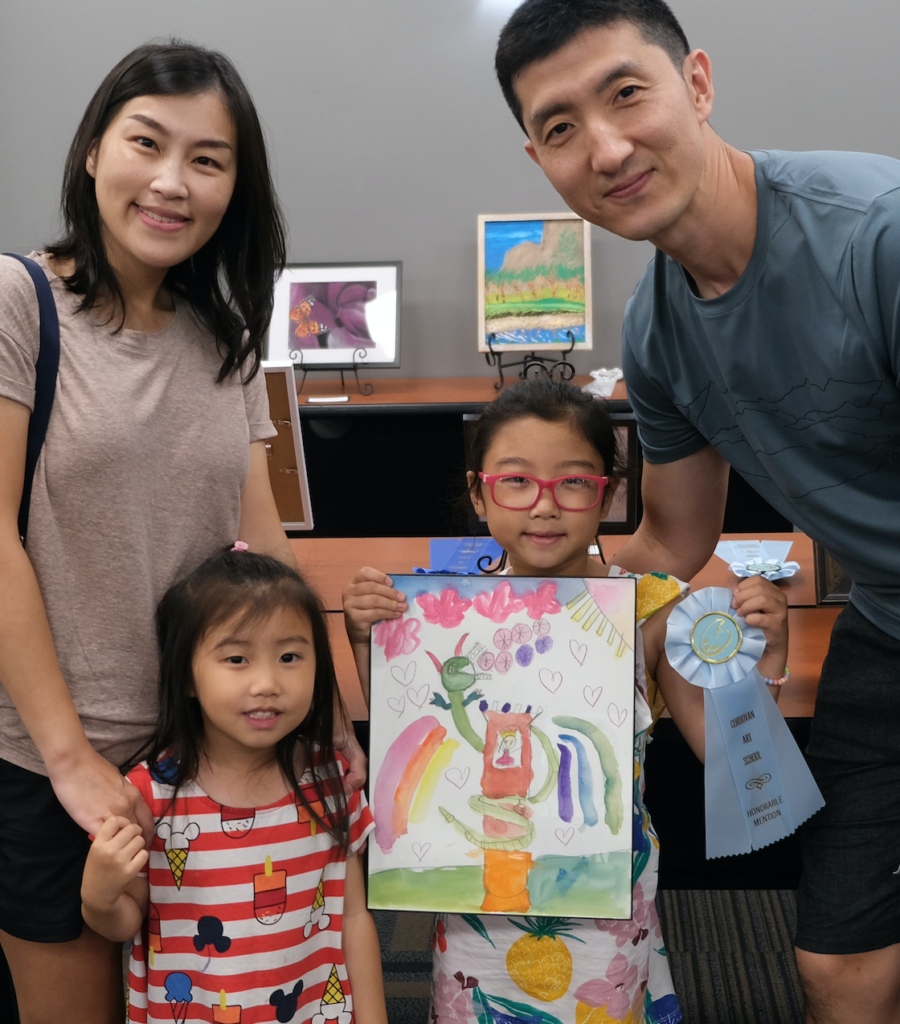
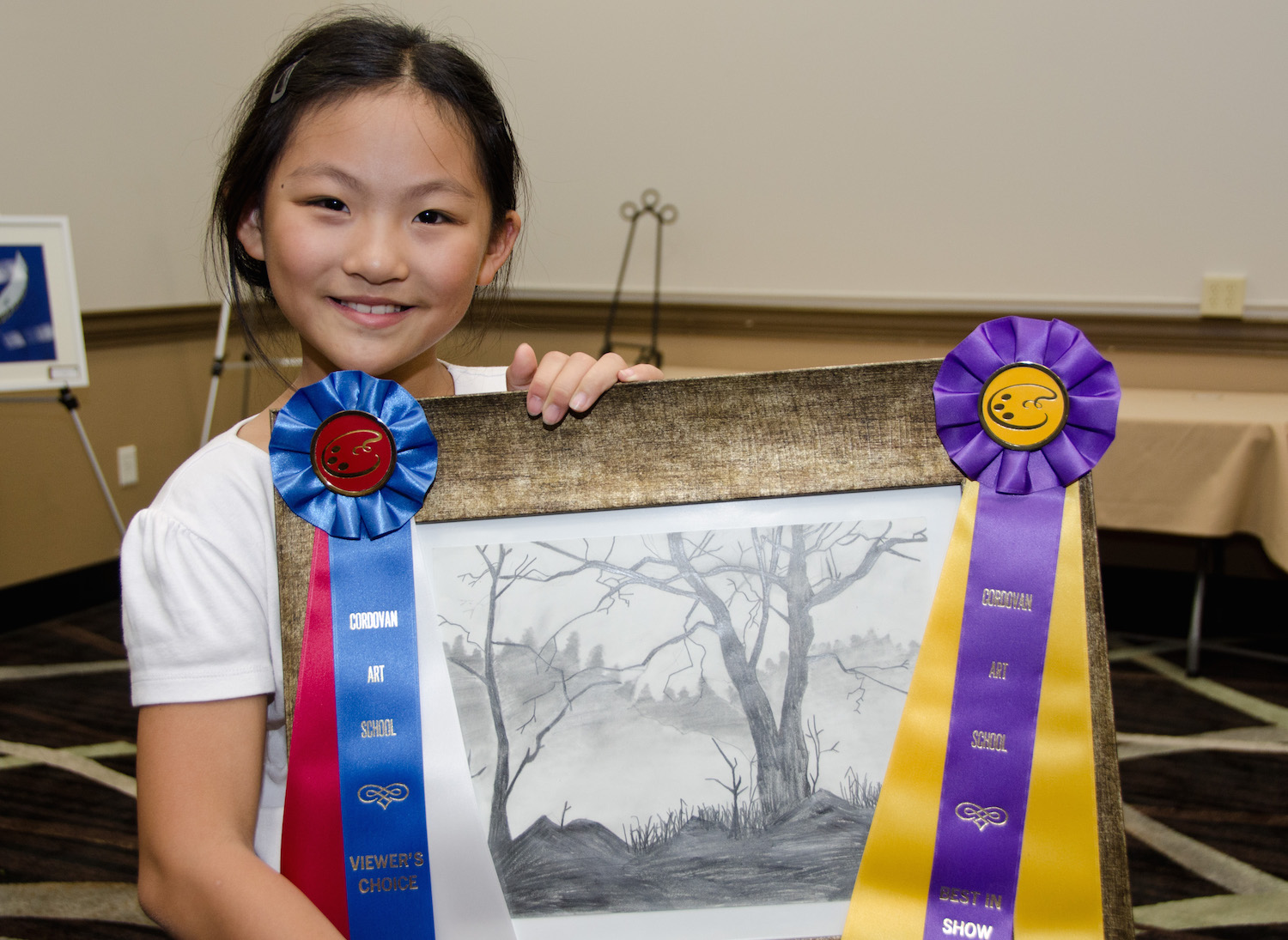
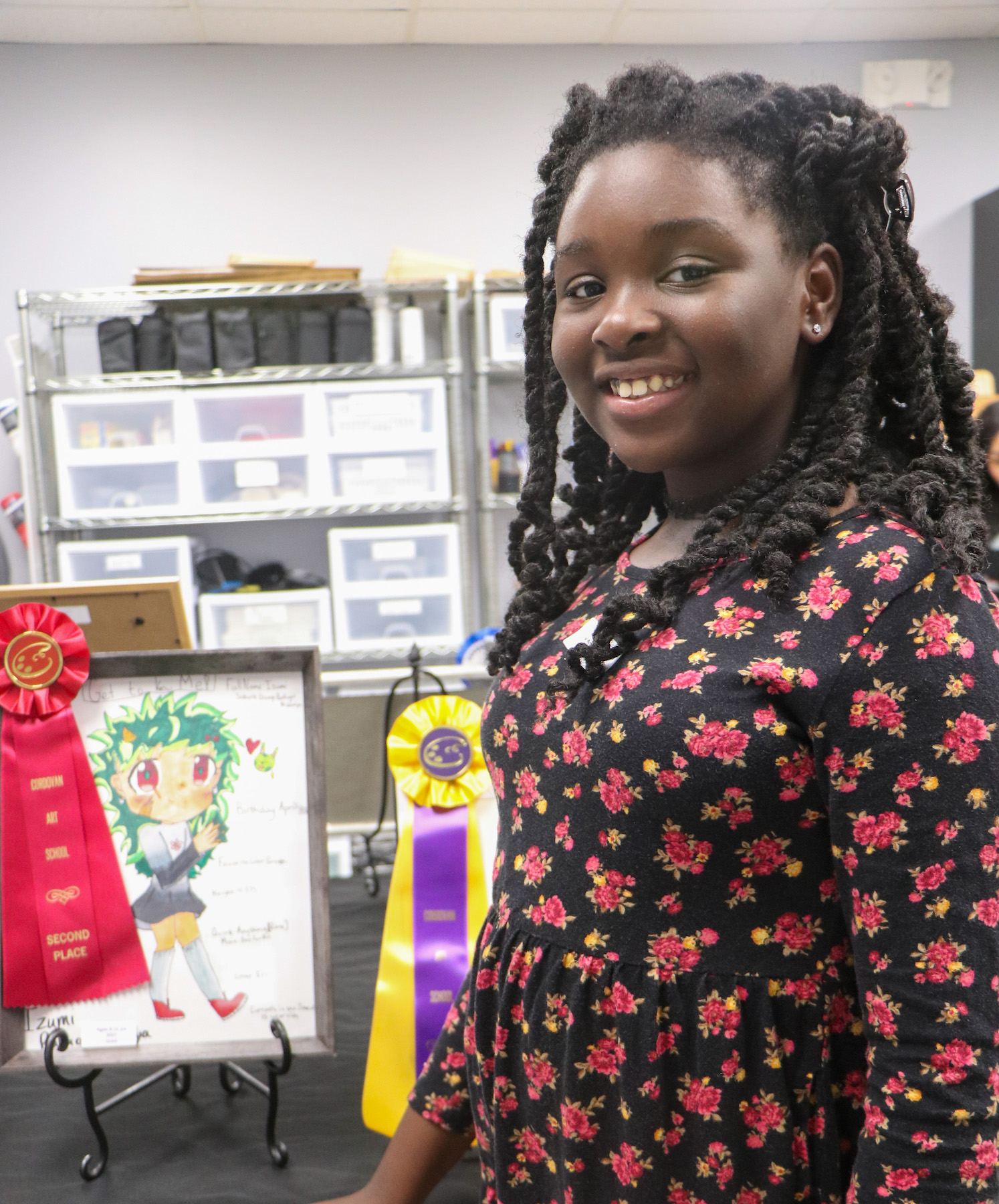
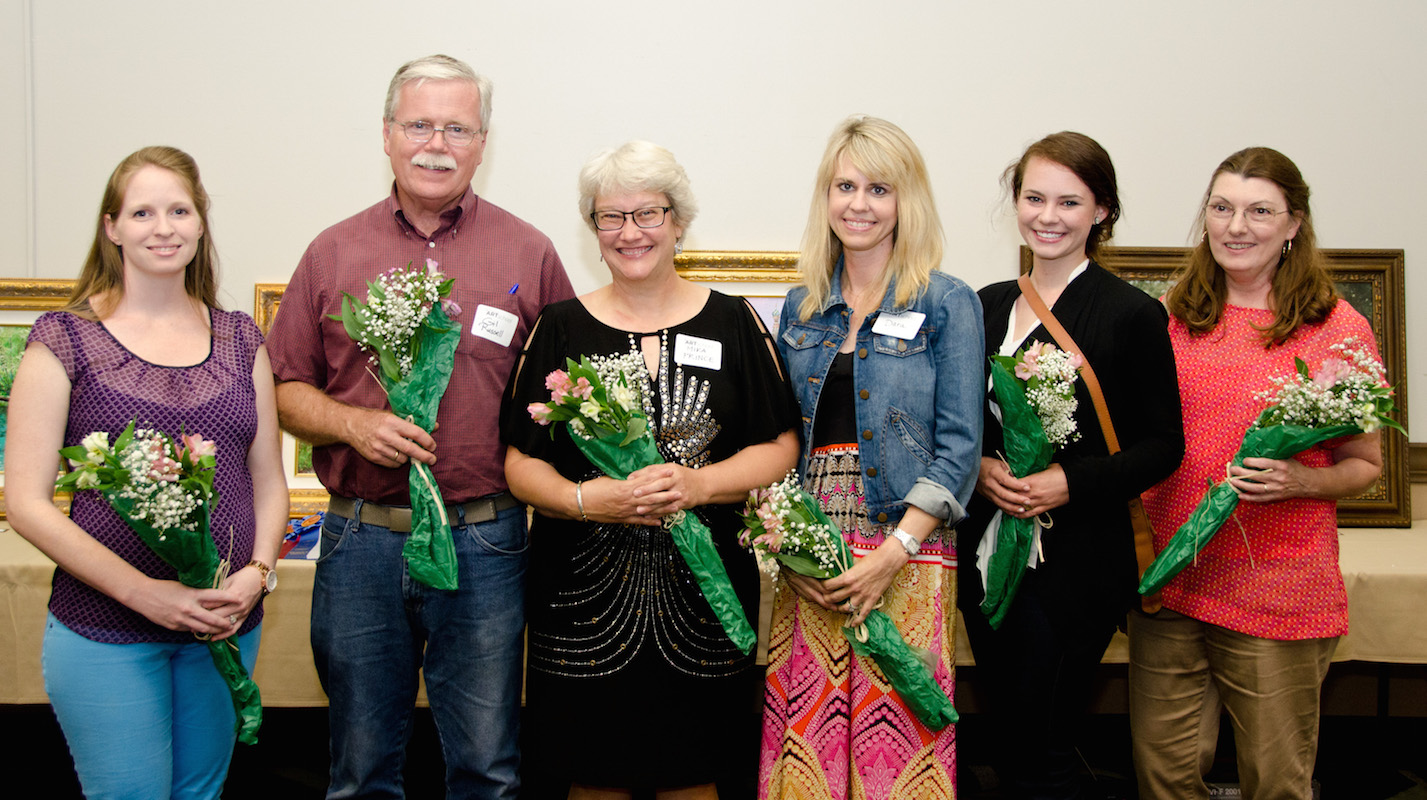
Annual Student Art Show
Overview
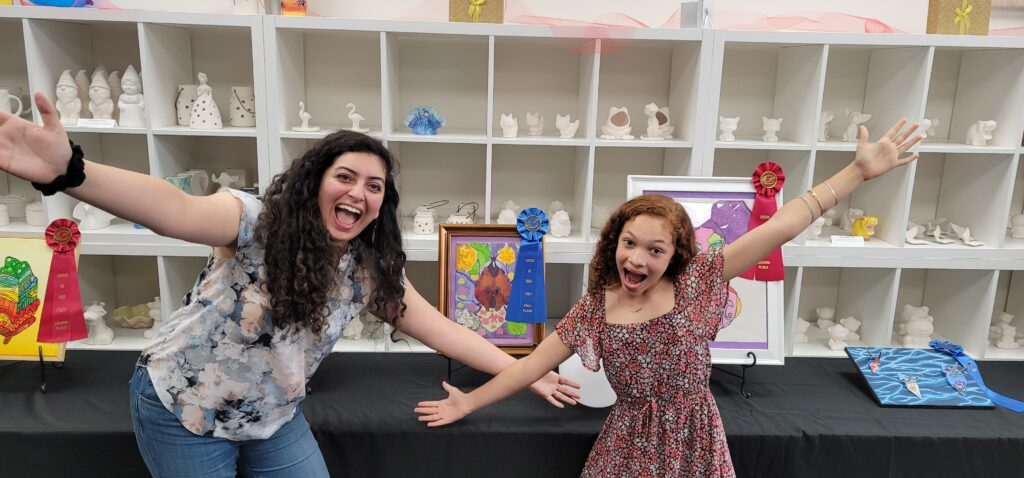
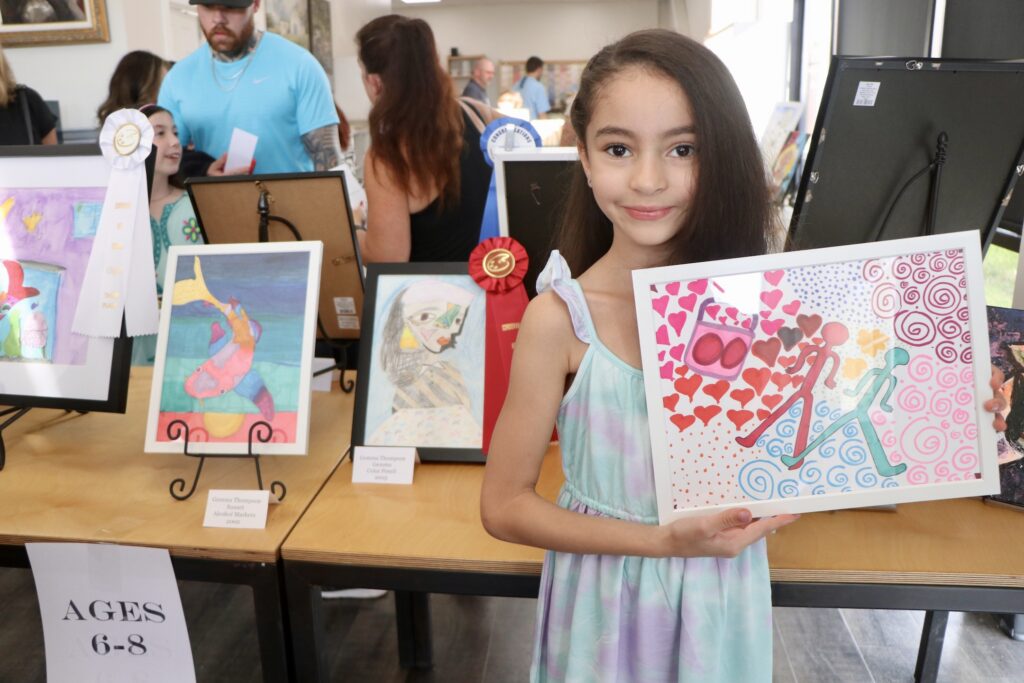
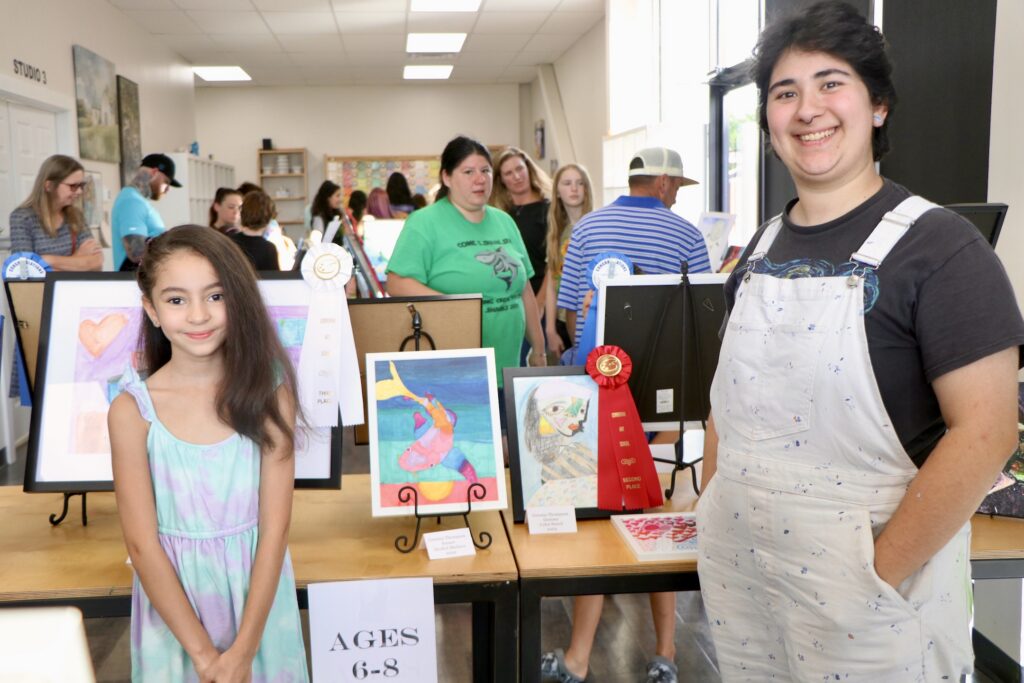
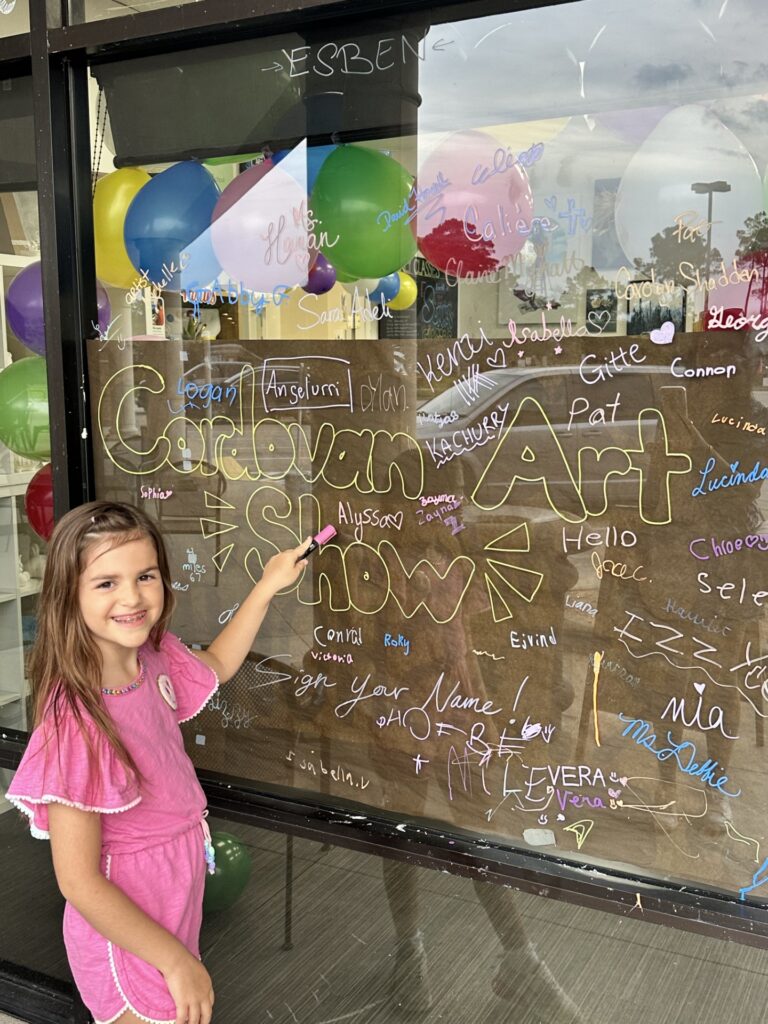
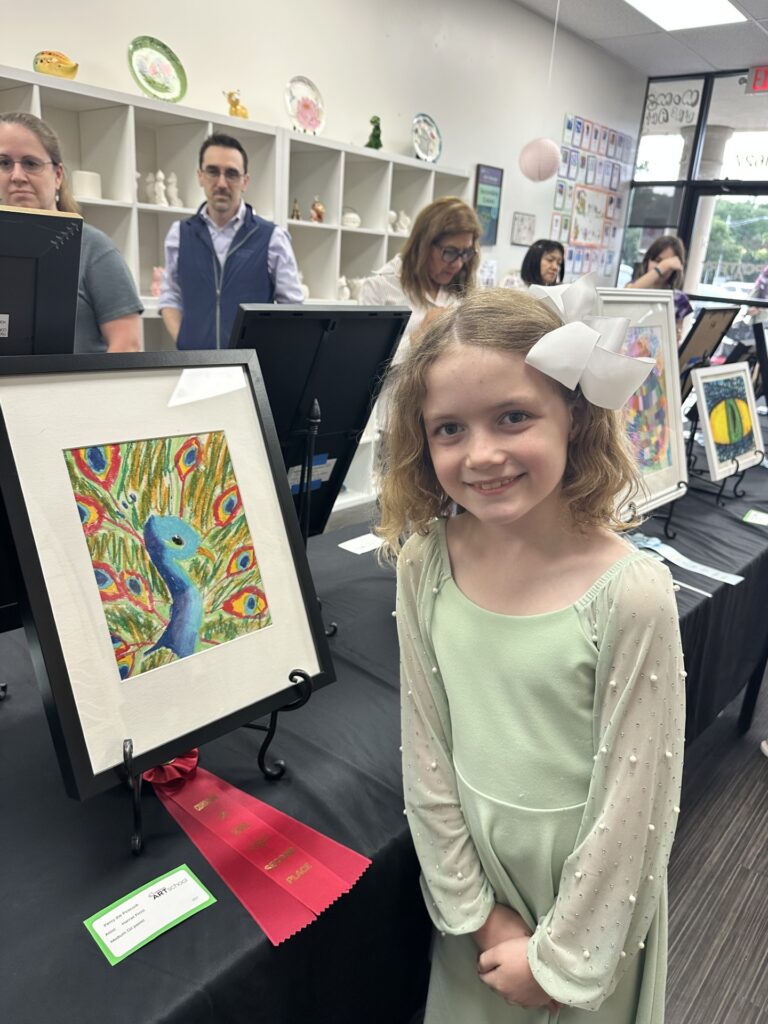
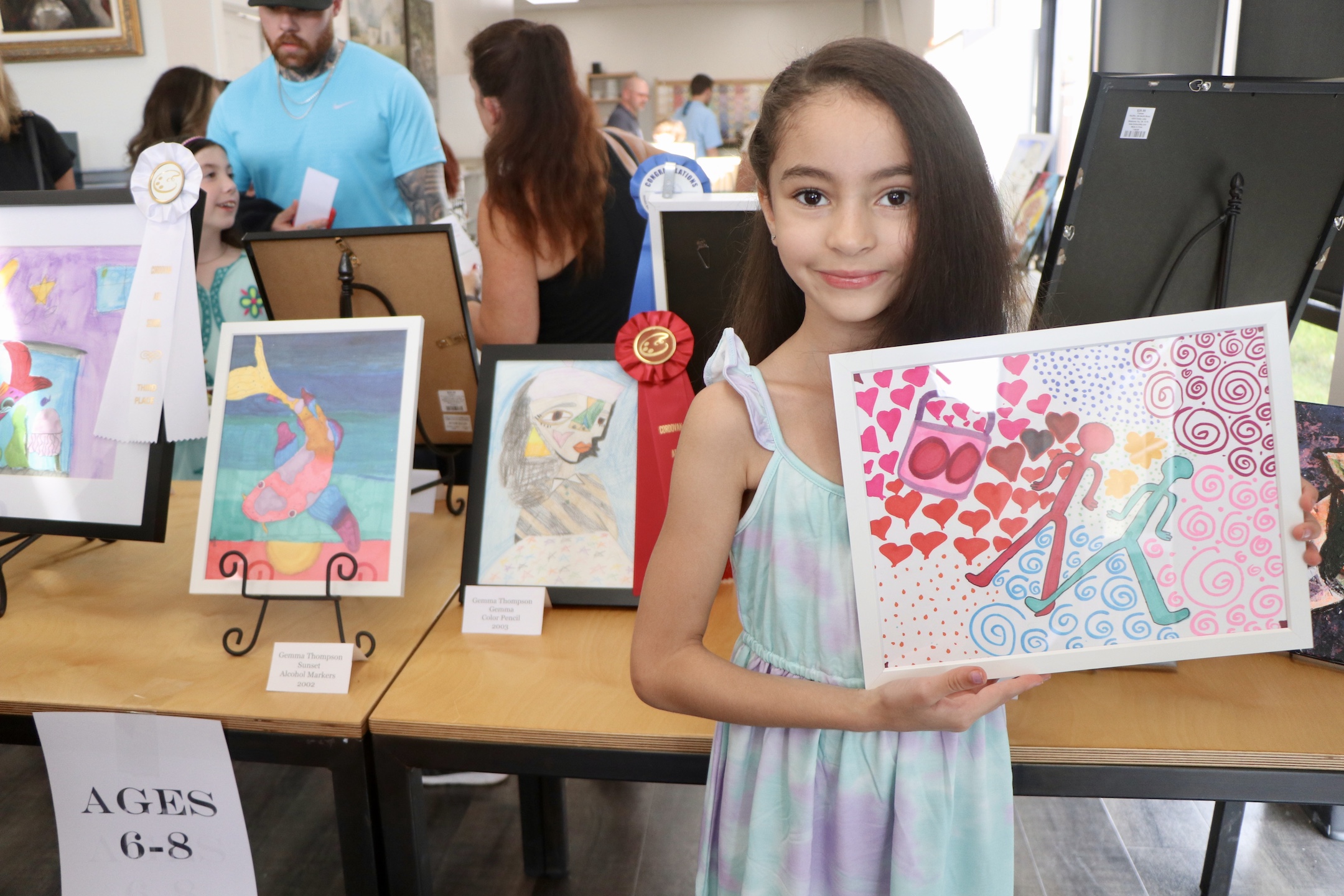
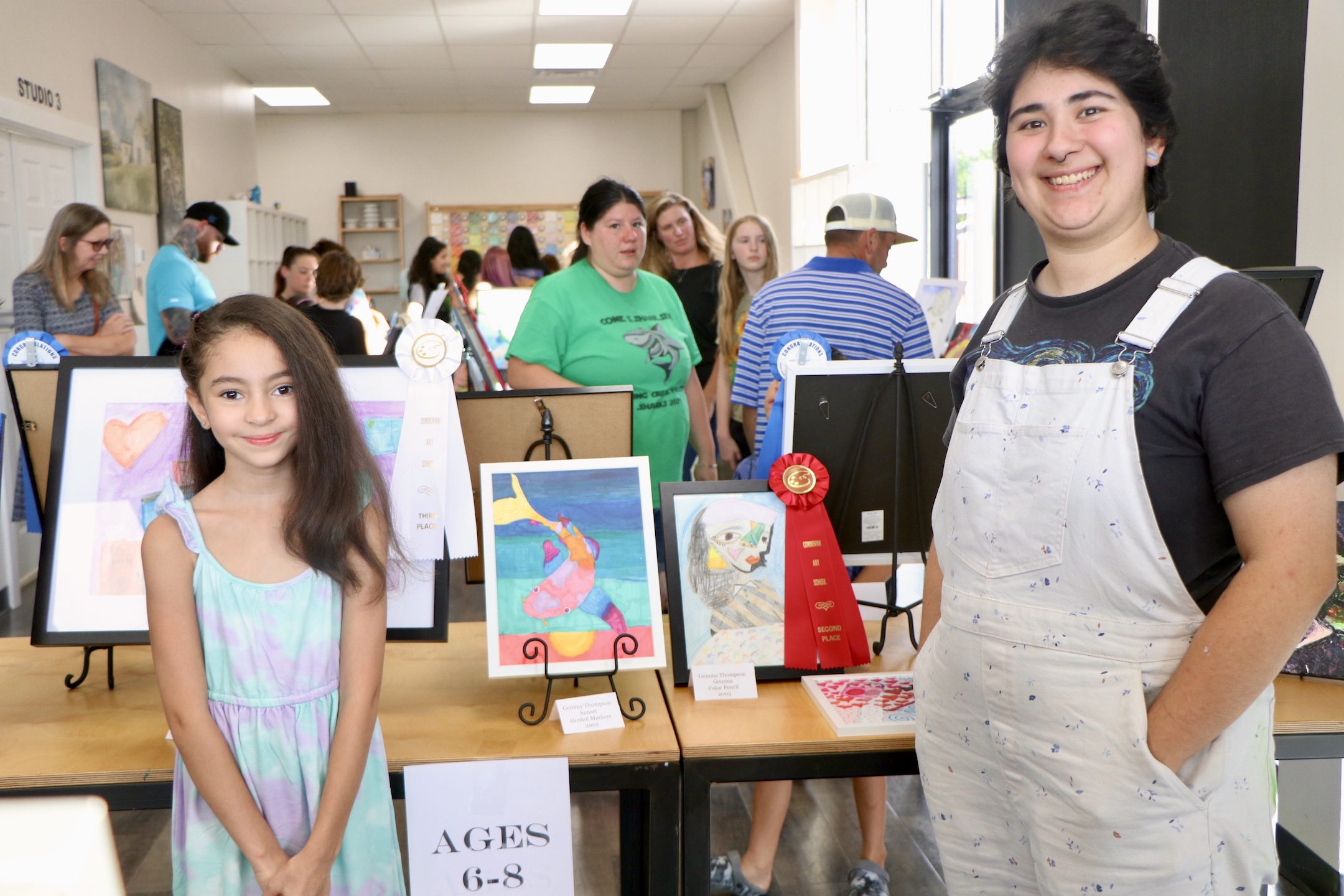
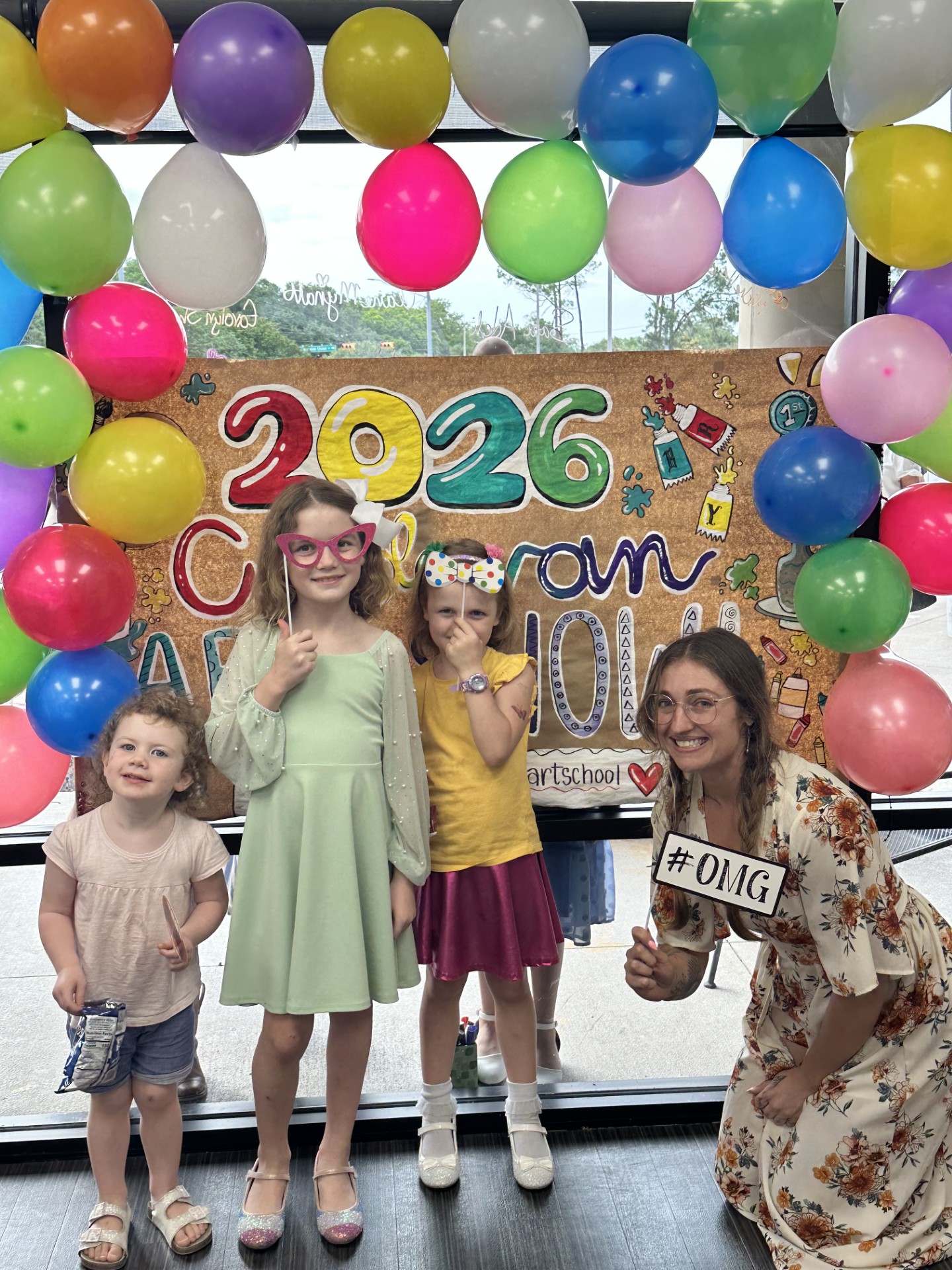
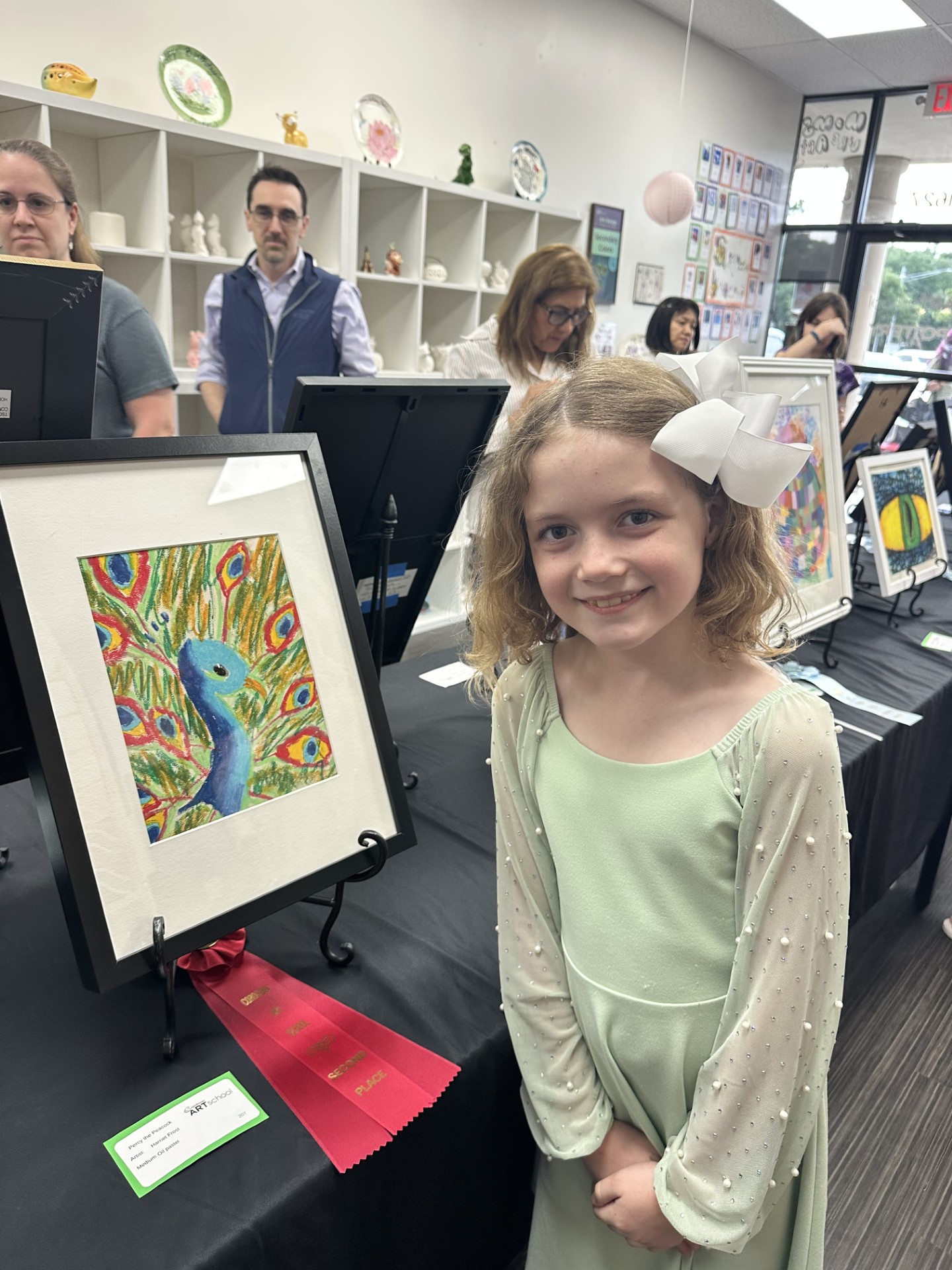
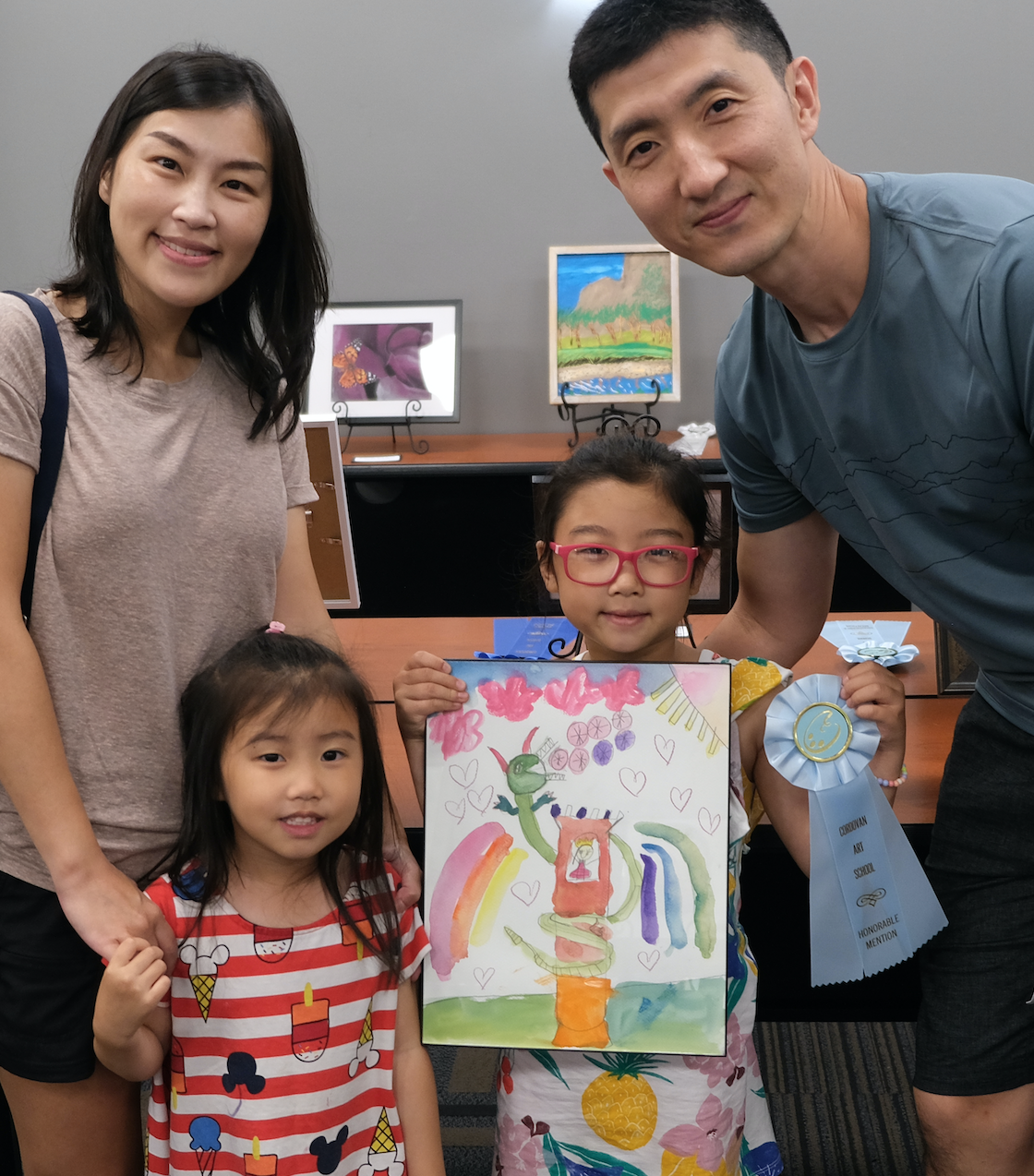
Cordovan Art School hosts an Annual Student Art Show each year, typically held at the conclusion of the Fall–Spring semester in May. The Annual Student Art Show is an event that celebrates the artistic achievements of Cordovan students and teachers.
Students may submit two (2) to three (3) pieces of artwork, depending on available exhibition space. Teachers are also encouraged to submit one (1) piece of artwork for display to help inspire their students.
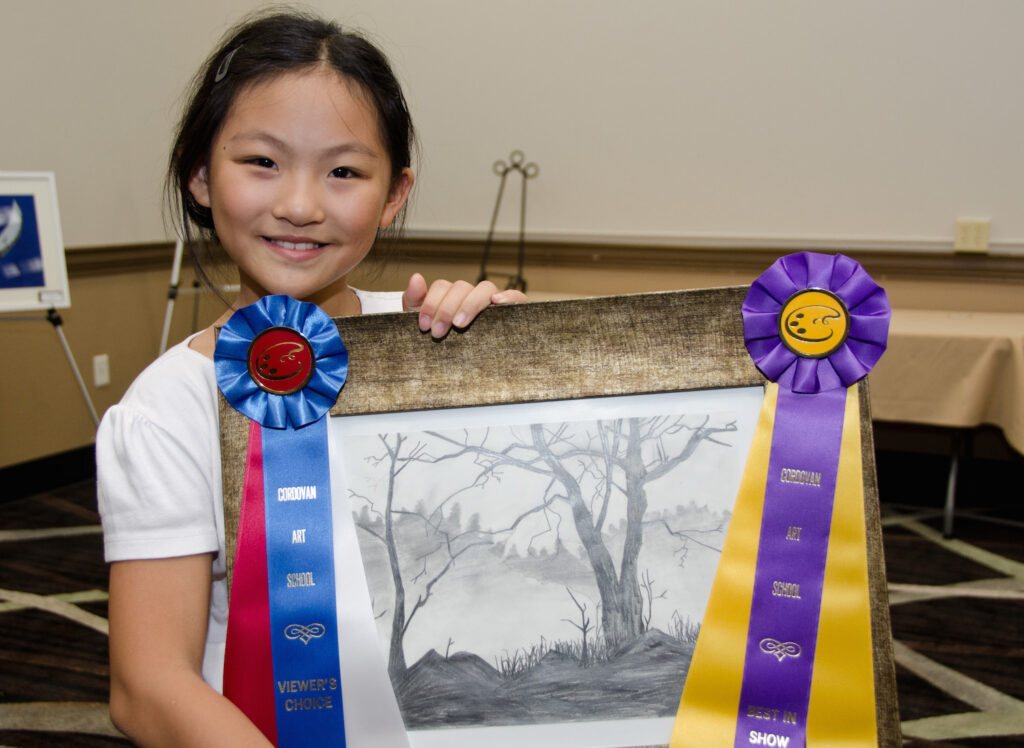
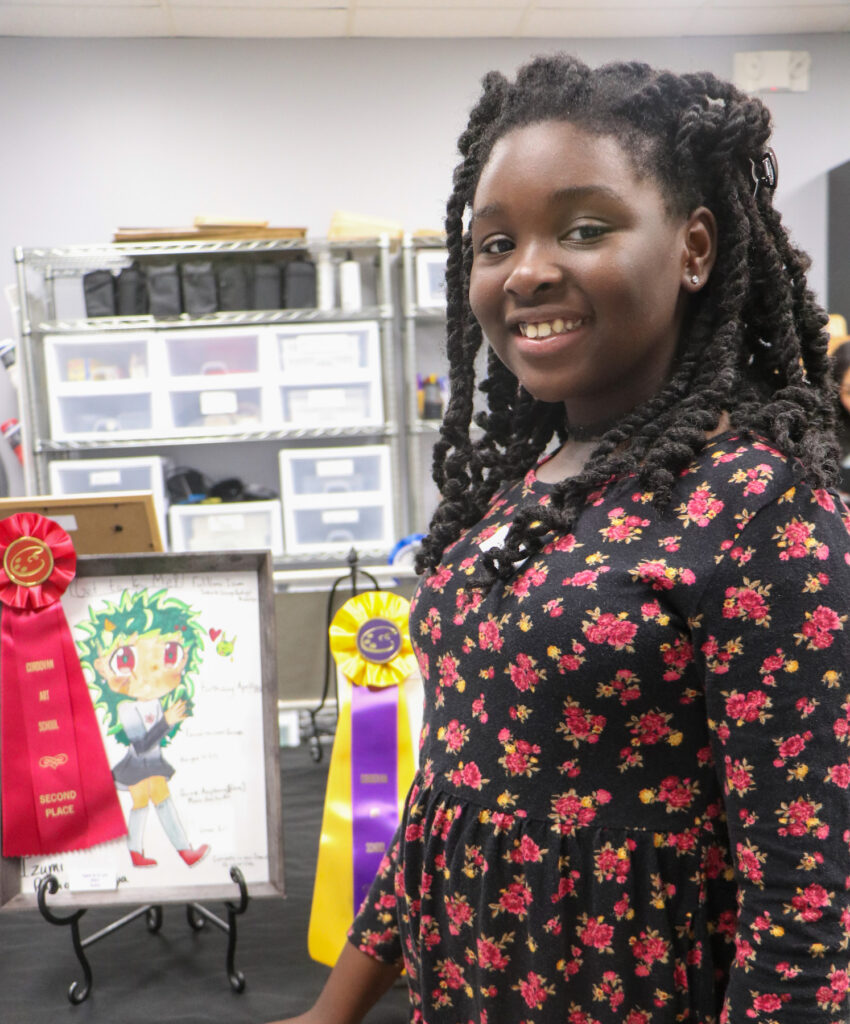
Ribbons, awards, and special recognitions should be presented to students for outstanding artwork.
Because students develop strong relationships with their teachers, it is highly encouraged that teachers attend the Annual Student Art Show. Teacher attendance demonstrates support for students and helps strengthen the sense of community within the studio.
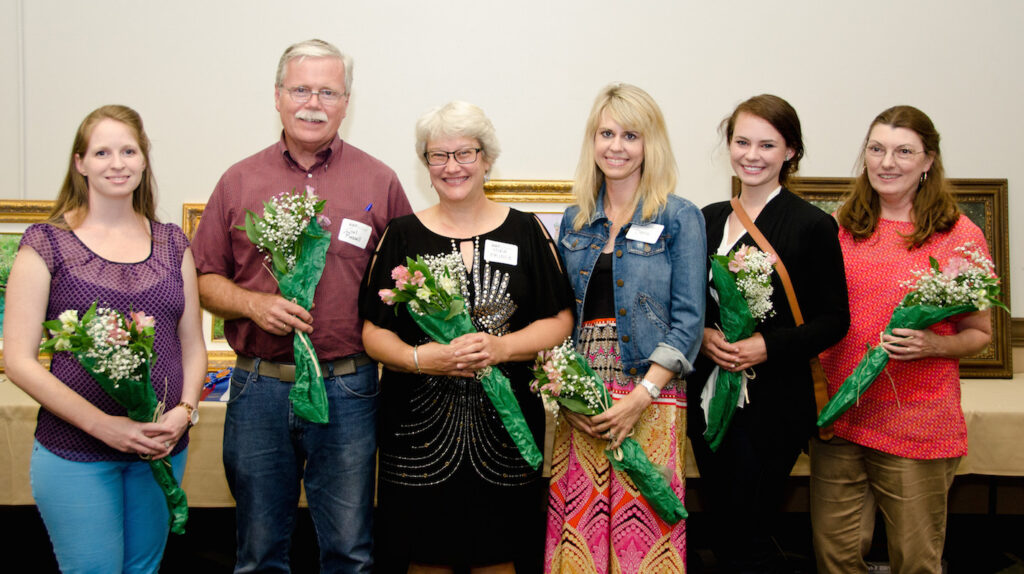
Managers and studio owners should also recognize teachers during the event for their efforts throughout the year. Teachers play a vital role in helping students develop their artistic abilities, and their contributions should be acknowledged and celebrated.
To create a positive and encouraging experience for all participants:
- Ribbons and awards are presented to students
- If a student does not receive a Best of Show, 1st, 2nd, or 3rd place ribbon, they must receive one (1) Honorable Mention Award for at least one of their submitted entries.
- Special pins can be awared
- The event should celebrate the student’s creativity, effort, learning, and artistic achievement for all skill levels.
The Annual Student Art Show is an important opportunity to showcase student artwork, strengthen community connections, recognize teacher contributions, and celebrate the mission of Cordovan Art School: “We Create Artists.”
Make it Your Own!
All art shows have their own personality. Have fun, and make it yours!



Student Safety
Classroom Supervision
Students must NEVER be left in a classroom without adult supervision. At all times, a teacher, assistant teacher, manager, or other authorized staff member must be present with the students.
If a teacher needs to leave the classroom for any reason, even briefly, another staff member must cover the class until the teacher returns. If the class or camp does not have an assistant teacher assigned, the manager should have a plan in place to provide coverage whenever needed.
If an emergency arises: In smaller studios, a teacher may be able to step to the classroom doorway and notify the manager that coverage is needed. In larger studios, teachers should call, radio, or otherwise communicate with the manager or another staff member to come supervise the class before leaving the room.
Camp Check-In/ Check-Out
All students must check in and check out each day of camp.
Check-In:
- Students should check in at the front desk upon arrival.
- The parent or authorized guardian should initial the camp attendance sheet during check-in.
Check-Out:
- Students should be checked out by a parent or authorized guardian at the end of camp.
- The teacher should have a copy of the camp roll and obtain the parent or guardian’s initials during check-out.
Authorized Pick-Up Procedures
Student safety is a top priority.
Students may only be released to a parent, guardian, or other individual who is listed as an authorized pick-up contact in the student’s Jackrabbit account.
If an individual arrives to pick up a student and is not listed as an authorized contact in Jackrabbit Class, the manager should contact the parent or guardian before releasing the student. When necessary, identification may be requested to verify the identity of the person picking up the student.
If there is any uncertainty regarding who is authorized to pick up a student, the manager should contact the parent or guardian before releasing the child. Student safety should always take priority.
Student Behavior Issues
If a student is causing a disruption, harming another student, or creating a safety concern, it is the manager’s responsibility to take the lead in resolving the situation.
Remove the Student from the Situation:
If appropriate, invite the student to step into the lobby or another supervised area to take a break and calm down. Most of the time, a short break and a quiet, positive-energy conversation can help the student reset and return to class successfully.
Managers, teachers, assistant teachers, and staff members should never physically restrain or touch a student, and should never take personal photos or videos of students.
If a student refuses to leave the classroom, focus first on maintaining the safety of all students and staff. If necessary, contact the student’s parent or guardian for assistance.
Show Kindness and Stay Calm
Remain calm, patient, and respectful. Listen to the student, give them time to calm down, and avoid escalating the situation. Many behavior issues can be resolved through kindness, consistency, and clear communication.
Prevention
The best way to handle behavior issues is to prevent them whenever possible. Managers and teachers should address concerns early, maintain a positive classroom environment, and intervene before minor issues become larger problems.
Strong leadership, communication, and consistency help make Cordovan Art School a safe, positive, and welcoming place for all students.
Medications and Emergencies
Managers, teachers, and staff members should never give medication to a student. This includes pills, liquid medications, ointments, creams, eye drops, cough drops, or any other form of medication.
Without parent involvement, staff should limit care to basic first aid measures such as:
- Soap and water
- Band-Aids
- Ice packs or cold compresses
- Wet paper towels
It is the responsibility of the parent or guardian to administer any medication to their child.
Medications
Parents should disclose any significant medical conditions, allergies, medications, EpiPens, or other special medical needs during registration. Managers should review registration information and be aware of students who may require special attention in an emergency.
If a student has an EpiPen or other emergency medication, the manager should discuss a plan with the parent or guardian before the student attends class or camp.
Emergency Situations
In any life-threatening emergency, staff should call 9-1-1 immediately.
If a parent has provided an EpiPen and authorized staff to assist during an emergency, staff should follow the agreed-upon emergency plan while emergency services are being contacted. Student safety should always be the highest priority.
Food Allergies
Managers, teachers, and staff should be aware of student allergies, especially during snack and lunch times.
To reduce the risk of allergic reactions, Cordovan Art School employees should not provide food, candy, treats, or beverages to students unless specifically authorized by the parent and approved by the manager. Parents should be responsible for providing any food or snacks for their children.
First Aid
Teachers should notify the manager immediately anytime a student is sick, injured, or involved in an incident, and the teacher should send the student to the lobby. For minor injuries, the manager may provide basic first aid using the studio’s first aid kit. If the injury appears serious or requires medical attention, the manager should contact the parent or guardian immediately.
Injuries and Health Concerns
If a student is injured in any way or reports feeling unwell, always call the parent and let them know immediately when it occurs. Examples include:
- Falls or minor injuries
- Headaches
- Stomachaches
- Hair Pulling
- Stepped-on toes
- Pencil pokes
- Accidental cuts, bruises, or bumps
- Any other injury, illness or health-related concern
Conflicts and Hurt Feelings
If a student is being picked on, repeatedly has hurt feelings, or becomes involved in an argument or conflict with another student, the teacher should notify the manager. It needs to be taken care of on the same day as the incident occurred.
The manager should address the issue promptly and discuss the situation with the parent or guardian during student pick-up. If the manager doesn’t talk to the parent on the same day, the student might go home and make the incident appear to be much worse than it actually was. Concerns should not be delayed until a later date, as misunderstandings can grow when parents hear only one side of the story.
Respectful Communication
Managers, teachers, and staff should treat all students and families with kindness, courtesy, and respect.
Staff should not proactively ask students to identify or share personal information regarding gender identity, pronouns, or similar topics as part of classroom discussions or activities. Such conversations can be personal in nature, and students should not feel pressured to discuss them in a classroom setting.
If a student or parent voluntarily shares this information, Cordovan representatives should listen respectfully and respond in a professional and considerate manner.
When a student or parent requests that a specific name or pronouns be used, managers, teachers, and staff should make an effort to honor that request as a matter of courtesy, respect, and professionalism. All conversations regarding personal matters should be handled privately and respectfully.
Inclusive Environment
Cordovan Art School is committed to creating an atmosphere of acceptance, kindness, and respect for all students, parents, teachers, staff, and guests. We strive to maintain a welcoming environment where everyone feels safe, valued, and comfortable participating in our programs.
To help foster a positive studio culture, managers, teachers, staff, students, and guests should avoid engaging in discussions about politics, religion, or other potentially divisive or emotionally charged topics while participating in Cordovan Art School activities.
The focus of the studio should remain on art education, creativity, personal growth, and building positive relationships within the community. By treating one another with courtesy and respect, we can help ensure that Cordovan Art School remains a welcoming place for everyone.
Photo Release Requests
If a parent requests that photos not be taken of their child, the manager will document this request in Jackrabbit and ensure that all teachers and staff members are aware of the restriction.
Emergency Medical Treatment
If a student sustains a severe injury requiring emergency medical treatment notify the manager immediately. Then work together with the manager to:
- Call 911
- Call for local help and seek assistance until the paramedics arrive
- Use the victim’s emergency contact numbers to reach out to their family
Teacher’s Bio on Website
Teachers should provide a short biography and head shot to the manager to place on the Cordovan Art School website. Some students like to see their teacher’s online portfolio before enrolling in a class.
FAQ’s
Make up classes
Tuition reserves a student’s spot in the class and covers the ongoing costs of operating the program, regardless of attendance. Cordovan Art School does not offer make-up classes for students who miss class for any reason, including illness, vacations, scheduling conflicts, extracurricular activities, or inclement weather.
Pets/ Animals in Studio
Students, teachers, staff, and guests should not bring pets or personal animals into the studio during classes, camps, workshops, parties, or other studio activities.
The only exception is for service animals that are permitted by law.
This policy helps maintain a safe, clean, and comfortable environment for all students and staff, including those who may have allergies, sensitivities, or concerns around animals.