Brand Standards Manual: Pre-Opening

Cordovan Art School
Brand Standards Manual: Pre-Opening
COPYRIGHT © 2025
BY
Cordovan Arts Franchising, LLC
No part of this publication may be reproduced in any form without written permission.
Franchisees are responsible for maintaining confidentiality of all contents of this Brand Standards Manual.
Failure to do so is a violation of the Franchise Agreement.
Welcome
Dear Franchisee,
Welcome To Cordovan Art School!
We are thrilled to extend our warmest greetings and congratulations on joining our esteemed franchise program. Your decision to become a part of the Cordovan Art School Team is a testament to your entrepreneurial spirit and commitment to success.
At Cordovan Art School, we take pride in fostering a collaborative and supportive community where each franchisee plays a crucial role in our shared success story. Your dedication and enthusiasm align perfectly with the values that define our brand, and we are confident that you will bring unique skills, perspectives and contributions!
As you embark on this exciting journey with us, rest assured that you are not alone. Our experienced team is here to provide guidance, support, and resources to help you navigate the intricacies of our business model. From comprehensive training programs to ongoing assistance, we are committed to ensuring that you have all the tools you need to thrive in your new venture.
In the coming weeks, you will have the opportunity to connect with our team, participate in training sessions, and familiarize yourself with the resources available to you. We believe that open communication and a strong sense of community are essential to your success, and we encourage you to reach out whenever you have questions or need assistance.
Once again, welcome to the Cordovan Art School family. We look forward to building a prosperous and enduring partnership with you. Together, we will achieve new heights and create a legacy of success.
If you have any immediate questions or concerns, please don’t hesitate to contact our dedicated franchise support team.
Congratulations on this exciting new chapter, and we wish you the very best in your journey as a Cordovan Art School franchisee.
Sincerely,
The Franchise Management Team
New Franchisee Onboarding
Corporate Headquarters
Address: 3810 Gattis School Road, Suite #108, Round Rock, TX 78664
Website: www.cordovanartschool.com
Contact Information
During the Onboarding process you will be introduced to key members of the Cordovan Art School leadership team that will help you along your journey as you get set up your business.
| Director of Franchising | Matt Fowers (702) 378-4517 matt@cordovanartschool.com |
| Director of Operations | Nancy Phipps (512) 632-5440 nancy@cordovanartschool.com |
| Director of PYOP & Events | David Howell (512) 627-2579 david@cordovanartschool.com |
| Creative Marketing Manager | Ashly Williams (512) 884-2890 ashly@cordovanartschool.com |
| Founder, CEO | John Howell (512) 673-8646 john@cordovanartschool.com |
| Your Field Consultant | Will be assigned to you prior to your Grand Opening event |
Use of Approved Operations Materials
Welcome to the Cordovan Art School Training Website, this platform will provide storage and access to essential documents, manuals, and operational resources needed to run a Cordovan Art School franchise business. Franchisees are expected to regularly utilize these resources and stay up to date with revisions and updates provided through the platform. In addition, franchisees will receive access to additional training materials, including the Manager’s Manual and supporting documents, during Franchisee Training.
Statement of Confidentiality
Franchisees must read and sign this Statement of Confidentiality immediately upon receipt receiving a login to the Cordovan Training System website, which gives them access to the Brand Standards Manual. Franchisees, please print, sign and forward to the Corporate Office.
Introduction to the Manual
The captions of the sections of this manual are to assist the parties in reading this manual and are not a part of the terms or provisions of the manual. The singular shall include the plural and the plural shall include the singular when required by the context of this manual. The masculine, feminine and neutral genders shall each include the other. All references to sections shall be directed to those sections set forth in this manual. The headings used in this manual are inserted only as a matter of convenience and does not define or limit the scope of this manual or the intent of any provision thereof.
Ownership of the Manual
This manual contains confidential and proprietary information related to the operation of a Cordovan Art School franchise business. The materials available through the Cordovan Art School Training System website are intended solely for the use of authorized Cordovan Art School franchisees and their approved staff.
These materials include, but are not limited to, this manual, training documents, videos, lesson plans, operational procedures, forms, templates, and other resources. The contents may not be copied, distributed, shared, reproduced, or used for any purpose other than the operation of an authorized Cordovan Art School franchise without the express written consent of Cordovan Art School.
Unauthorized use or disclosure of any information contained within the Cordovan Art School Training System is strictly prohibited.
Gender Statement
In this manual every attempt has been made to use gender-neutral terminology. Occasionally, however, the use of gender-specific terminology was unavoidable. Regardless of the language used, the Franchisor unconditionally offers the opportunity to become a franchisee equally to persons of any gender.
General Disclaimer
As a franchisee, you are responsible not only for following the proper steps in managing the business, but also for the completion of all daily operating responsibilities associated with the business. For example, only you are responsible for hiring and training a team to fulfill all necessary job functionalities of the business. In this Brand Standards Manual, we identify several recommendations or suggested practices related to various operational aspects of the business – we recommend you implement these systems within the business model.
In addition, Cordovan Arts Franchising, LLC will provide required measures for franchise system compliance. This Brand Standards Manual will clearly distinguish the content that is of high importance and value to the franchise. In those instances, the required standards exist to protect our interest in the franchise system and trademarks, not for the purpose of establishing any control or duty to manage those matters that are reserved to you.
This manual summarizes the mandatory policies and required practices relative to the operation of the franchise. Additional guidelines and recommendations are provided to assist you in forming your own policies where it is appropriate for you to do so. Some of these recommendations may not be the most appropriate for your locale. Consequently, it is your responsibility to ensure that you operate the business per the laws, regulations, and customs in your region.
Not only are you solely responsible for your own business policies and practices, but you are also accountable for the statements and actions of every person you employ. Franchisees are required to utilize their own legal (“legal counsel”, “attorney”) and financial (“accountant”, “CPA”) counsel when necessary and for verifying compliance with all laws and regulations.
In the event of inconsistencies or conflicts between this Brand Standards Manual and the Cordovan Arts Franchising, LLC Franchise Agreement, the latter document shall take precedence.
Definitions
- Franchise Operations Manual refers to this document. Synonymous with Brand Standards Manual.
- Corporate Office refers to the Franchise Corporation.
- Franchisor is the individual(s) who owns the rights to the company trademark and operates the Corporate Office.
- Franchisee is an individual buying rights to use the trademarked name. In some cases, the term ‘franchisee’ may be adapted to encompass a partner or cooperative agreement.
- Trademarks are the symbols and names legally registered to represent the company.
Manual Revisions
In the event the Corporate Office develops a more practical or efficient procedure in any specific area, the manual will be updated accordingly.
A Field Consultant from the Corporate Office will review with you the Brand Standards Manual during regularly scheduled visits to verify understanding of our systems and processes.
Submitting Manual/Policy Suggestions
Based on your experience, you may believe that a section or some specific information herein is unnecessary or incorrect. However, our business success is based upon the exact procedures and policies stated in this manual, and the strength of our franchise system depends upon the consistent adherence to these policies throughout the network by all franchisees.
Nevertheless, the principals at the Corporate Office recognize that you may have valuable experience or information that could be useful to others in the system. A major benefit of a franchise operation is the cumulative experience throughout the entire franchise organization. You are encouraged to send your suggestions or ideas to the Corporate Office using a Suggested Policy or Procedure Change Form (sample follows).
Suggested Policy or Procedure Change Form
Nine Common Mistakes of Novice Entrepreneurs
Once a realistic plan of action has been established, the key to your success lies in the ability to execute that plan consistently and effectively. We have identified “Nine Common Mistakes of Novice Entrepreneurs” that commonly prevent successful achievement of goals. Each of these first-time business mistakes is survivable, however, they can be (and often are) fatal when they hit all at once.
#1. Not Accepting Full Responsibility
The most common mistake is for the entrepreneur to not take full responsibility for everything that happens in his or her business. It is easy to make money when the economy is strong, and/or you are the first to penetrate a new market. However, when the economy takes a downturn, or the competition catches up, “losers” blame and make excuses; “winners” assess the facts and stay focused on results. True entrepreneurs are not whiners, they are winners. Whiners offer reasons and excuses while winners offer results and solve problems.
“If the desire to succeed in business is not followed by success, the desire is not to succeed in business.”
It’s been our experience to see a business fail and have the owner blame the economy, the competition or their own employees; but then see another individual with a similar market and turn it into one of the most successful in the country. Make the following declaration to yourself:
- I accept full responsibility for everything that happens in, and to the business.
- I am the author, creator of the business and everything that happens in and to the business.
- Who I am makes the fundamental difference in all outcomes of the business.
- There is no other responsible party, there are no rationalizations, justification, or explanations; whatever happens is a result of what I did or did not do.
- It is a reality and certainty that I am responsible.
- I believe it, I know it, and will experience it.
- I take this stand willingly, not for blame’s sake, but because it gives me the power to make a difference in the results.
#2. Hiring and/or Confronting Employees
One of the most common mistakes made by first-time entrepreneurs is not screening and hiring the best possible employees; much of your success is uncertain when making this decision. If you get lazy, you may start thinking, “This person seems likable and I need them now, so I will not check references before hiring or do a thorough interview to discover facts about their work habits, integrity, and goals.”
The cost for using this “quick fix” approach is extremely high in lost revenue, retraining time, use of the Franchisee’s time, etc. Using this approach, unless you really get lucky, will cause you to run through many employees before accidentally finding a good match. Do not allow yourself to be held “hostage” by incompetence.
“There’s no such thing as an indispensable employee.”
A chain is only as strong as its weakest link; employees quickly learn what level of incompetence you will tolerate. To reduce incompetence, you must know how to “straighten people out” without destroying relationships. It is natural to want to be liked, but our fear of confrontation often makes us hesitant to correct an employee. This merely compounds the problem by exposing an apparent weakness.
A successful confrontation avoids two traps:
1. Argument – Letting emotion get involved removes any chance for communication.
2. Digression – Letting yourself be sidetracked off the subject allows you to get distracted from your objectives.
When a confrontation is needed, always do it in private, and the sooner the better; the only question is how best to do it.
- Know the facts – Before making accusations, be sure you know what happened and why. Confronting someone without accurate and complete information quickly destroys your credibility.
- Be direct – If something disagreeable needs to be said, get it out in the open; hesitating to do so will only suggest you are unsure of yourself.
- Be clear – Let the employee know how you feel, express your concerns and frustrations, and clearly define why this behavior creates a problem for you, the company, and the employee.
- Keep your objectivity – Rarely are situations completely clear-cut; extenuating circumstances need to be analyzed. Do not attack the person, just the problem; let the facts speak for you.
- Listen – For a confrontation to be resolved, both parties must expose their positions. Be certain you know the other side. Only then is refutation or compromise possible.
- Get a commitment – You may get some satisfaction from “telling someone off, or putting them in their place,” but if you do not get the change you want, your feelings will only be temporary.
Remember, if you hire the right people, give them the right training, and provide a reward system that encourages individual expression, you will receive a depth of commitment that permits both the organization and the individual to prosper, and greatly reduce your turnover rate.
#3. The Inability to Effectively Manage Cash Flow
One of the potentially fatal mistakes made by first-time entrepreneurs is the inability to manage their cash flow; having the self-discipline to set aside income for rainy day emergencies, taxes, and down turns in the economy.
At Cordovan Art School, summer camp revenues arrive many months before summer camp season begins. You must have the discipline to hold onto cash until the end of camp season and all summer camp bills are paid.
“CASH FLOW IS KING!!!!!!!”
Failure to manage cash and expenses on an accrual basis and take out money for one’s self on a disciplined and prescribed basis, is a recipe for failure. Here is a hint: set up a separate, basic savings account which will serve as your “tax account,” as well as a business checking account. When you generate revenue, deposit it in your checking account; then take out for your estimated quarterly taxes, and only then pay yourself.
#4. Procrastination
Once you have completed your training and returned to your home territory, you must hit the floor running, and keep on running until you hit your goal. As the leader of your business, you should assign your time to high pay-off activities rather than have it consumed by the demand of other forces. There are many reasons people procrastinate, re: fear of failure or being wrong; unclear about how to accomplish the task; inability to prioritize; fear of confrontation or criticism; fatigue, etc.
To overcome procrastination:
- Know your strengths and weaknesses – get help when you do not know what to do.
- Get emotionally involved in your business – know your customers.
- Plan your work and work your plan – there is no such thing as an insurmountable lead in business.
- Prioritize – constantly ask what needs to be done now.
- Write down your fears – confronting them can diminish their hold on you.
- Visualize yourself-completing your tasks – focus on what is needed, not what is wanted.
#5. “Egocentrics”
To be “egocentric” is to focus on one’s self; where this becomes fatal in business is when the owner focuses on what he or she wants, instead of what is needed, or best for the company. The owner’s inflated ego may not allow him or her to admit they do not know what to, and their pride often prevents them from getting the help they need. The single and most recurring cause of failure of a business is rooted in the ego of the business leader.
“The person who will not be taught; cannot be taught.”
Most often, ego problems are something we feel other people have; we do not believe we have it, and we do not recognize it when it is there. Ego and true self-confidence are at opposite ends of the scale. Use of money is often tied to the ego of the business owner, not to the benefit of the business and its ultimate profitability. More businesses fail because of improper control of ego than lack of money.
#6 Getting Overwhelmed
Francoise Gilot once said, “Either you find yourself equal to a task that you undertake, or you do not undertake it. To be overwhelmed is for babies or children.” First-time entrepreneurs often get overwhelmed with having to solve all the problems, all the time. They fail to see that problems are merely opportunities in disguise, opportunities to learn more about one’s self, their employees, and/or the marketplace.
A dilemma, by definition, is an unsolvable problem; successful entrepreneurs have learned that there are very few true dilemmas in business; there’s always a way to get from where you are, to where you need to be, regardless of your education, income or status in life.
It has been said that when you are prepared you have no need for fear. Being overwhelmed is the sense of helplessness we feel when we do not believe we are going to be able to solve the problem at hand. The most difficult part of problem solving is not in coming up with the solution, but in accurately defining the problem.
Most business (and personal) problems will fall into the following five categories:
- You are going in the wrong direction.
- You do not have enough information.
- You are trying to solve the wrong problem.
- You are asking the wrong question.
- You are fighting the wrong fight.
#7 Majoring in the Minors
To “major in the minors” is to focus one’s energy at being efficient instead of being effective. One can be highly efficient, but not very effective; one can be highly effective, but not very efficient. The entrepreneur who spends his or her day running errands, organizing their office, or checking the mail may be well organized and highly efficient; but if, at the end of the day, they fail to bring home the money, they will not have been very effective in building their business. On the other hand, the individual spends his or her day targeting new accounts, making cold calls, setting up appointments, and closing new accounts, may not be well organized and efficient, but will be extremely effective in bringing new accounts and cash into the business. Do not put procedures over profit.
#8 Not Focusing on the Bottom Line
The dictionary defines the word “capitalism as, “The economic system in which all or most of the means of production and distribution are privately owned and operated for profit.” The key words here are “operated for profit.” The primary reason for operating a business is to make a profit. Most first-time entrepreneurs do not go onto business for profit motives.
Their focus is on being the boss, having power, stroking their egos, making a difference, etc. It is not that these are incorrect or inappropriate, but if the focus is not on the bottom line, the business will not survive. Everything you do should be tied to the bottom line. If your activity does not show measurable, tangible results over a reasonable period, cut your losses, learn from your mistakes, regroup your troops, and chart another course of action.
#9. Growing weary
It has been said that the world does not care how many storms you encountered, only if you brought the ship in. Sometimes new entrepreneurs that are struggling, “My territory is different!” If you are not producing, look at your training; if your profit margins are not working, look at how you are operating your business; if customers start dropping, look at your service.
More people quit than fail.
How does one avoid these mistakes? Create a plan of action, work your plan, test viability, make the necessary adjustments and do not look to the right or the left until you achieve the desired outcome. This requires clear, distinct objectives plus regular evaluation of your plans and strategies.
We have been where you are now, and we are here for you!!!
About Cordovan Art School
John Howell founded Cordovan Art School in 2009 after a lifelong passion for art. By focusing on enrichment, education, kindness, and the needs of each individual artist, Cordovan Art School has been able to build a more sustainable and successful business that the traditional art “paint and sip” model that is so prevalent in the franchise world. Since the beginning John has utilized his unique combination of experiences to shape something incredibly unique and impactful. In John’s words:
“I started painting at age 5 when my mother enrolled me in a watercolor class. Week after week, I would look forward to going to class to paint a new picture. Without exception, at the end of each class I was so proud of what I had accomplished. In those early years, there was something about the creative process that was very rewarding for me.
When I was a teenager, I knew that I wanted to pursue a career in the arts, so I began working toward that goal by taking art classes and drawing any chance I could. My junior year in college, I married my wife, Jamee. It was during our courtship that I started wondering how I was going to explain to her parents that I was going to be an “artist”. How would they react to this news? As I reflect back on those thoughts, I wonder what would cause me to think that there is anything wrong with wanting to be an artist. For years I believed that success was packaged in the form of becoming doctor, a lawyer, or an accountant. I somehow had been led to believe that my left brain was more valuable than my right brain. In high school and college, I got good grades and remained at the top of my class. I could have become a doctor, a lawyer, or an accountant. But, at the end of the day, it just wasn’t me.
I began my art career by opening an art school in Temecula, California. I was also doing free-lance illustration work at that time. Both were creative endeavors that I enjoyed. However, my art career took an unexpected detour when I began a side business in real estate. What started as a hobby in real estate quickly turned into a full-time business, so I moved my family to Texas. I tell you this part of the story because, in a way, my hobby in commercial real estate was just another “empty canvas”; I used my creative thinking skills that I learned as an artist to put big real estate deals together. It was during this time that I started realizing that my right brained thinking, served me in many ways, and I was glad that I had developed my creative side. One of the benefits of developing our right-brains is the ability to adapt, think, and solve problems.
In 2009, I opened the doors of a new endeavor, the Cordovan Art School. I could not stay away from the paints, brushes, canvases, and the association with other talented artists and students. The arts continue to inspire me. Even though I have been painting professionally for many years now, the thrill of creating something from a blank piece of paper never grows old.
The name Cordovan comes from my favorite color NuPastel that I used in my college figure drawing classes. (Similar to the shade of brown that Leonardo DaVinci used in his drawing of his self-portrait). I went through so many NuPastels and newsprint pads that I lost track. It was difficult for me to learn to draw, and it took a lot of time and practice. Today, when I look at my early drawings, I can see how far I’ve come. It took a lot of trying and failing, but every step along the way was an exciting learning experience.
At Cordovan Art School our teachers teach the principles of art and design. Our students and teachers have a lot of fun working side by side and learning together. Come, exercise your right brain, and be amazed at the creativity that lies within you!”

Our Vision
To become the leading art education brand in the world by delivering exceptional classroom experiences and building vibrant arts hubs within every community we serve.
Our Mission
To enrich lives through a lifelong learning of the arts.
Our Slogan
We create artists!
Our Motto
We are a company that builds people up and makes people better, and by doing so, we make the world better.
Our Company Culture
We accomplish our vision, mission, slogan and motto by building the next generation of artists and leaders. It all starts as we become “servant leaders” ourselves. We build artist-leaders by how we treat our students, our teachers, and anyone we interact with at Cordovan Art School.
Cordovan is a customer service company, and our kindness comes across in the way we communicate with our customers, our teachers and our staff. We show kindness by the way that we immediately greet people when they enter our lobby, the way we talk, the way we send an email, the way we go the extra mile to make someone happy, and the way we create a friendly culture. We have a saying at Cordovan: “Smile/ Smile”. Whenever anyone walks through the door, they should be immediately greeted with a smile. And, when they walk out the door, they should have a smile on their face because of the experience they had while at Cordovan. Here are a few more things Cordovan stands for: Cordovan is a place where everyone can fit in and feel safe and loved; Cordovan is a place that is fun and filled with creativity; Cordovan is a place to learn art skills and leadership skills; Cordovan is a place to bond and create lasting friendships; Cordovan is a place that unites people together through a love of art; Cordovan employees give back by looking for ways to get involved with community art events. Cordovan employees and staff are friendly and happy.
Products and Services
The Cordovan Art School model is simple and structured efficiently to provide profitability and ease of operating management, which allows for ease of replication and will make for a straightforward training program with new franchise partners. Franchisees will offer similar, if not identical, products and services to the prototype location.
Cordovan Art School utilizes a variety of classes, camps, parties, and events to establish a consistent revenue stream at each location. The franchise offers a unique mix of offerings for both kids and adults. The full list of offerings/events include:
- Weekly Art Classes
- Art Camps
- Spring Break
- Summer
- Thanksgiving
- Winter Break
- Other Holidays when school is out
- Parties
- Canvas painting
- Paint Your Own Pottery (PYOP)
- Wheel Throwing (Select Locations)
- Workshops & Events
- Customized
- Corporate
- Girl Scouts
- Paint Your Own Pottery (PYOP, select locations)


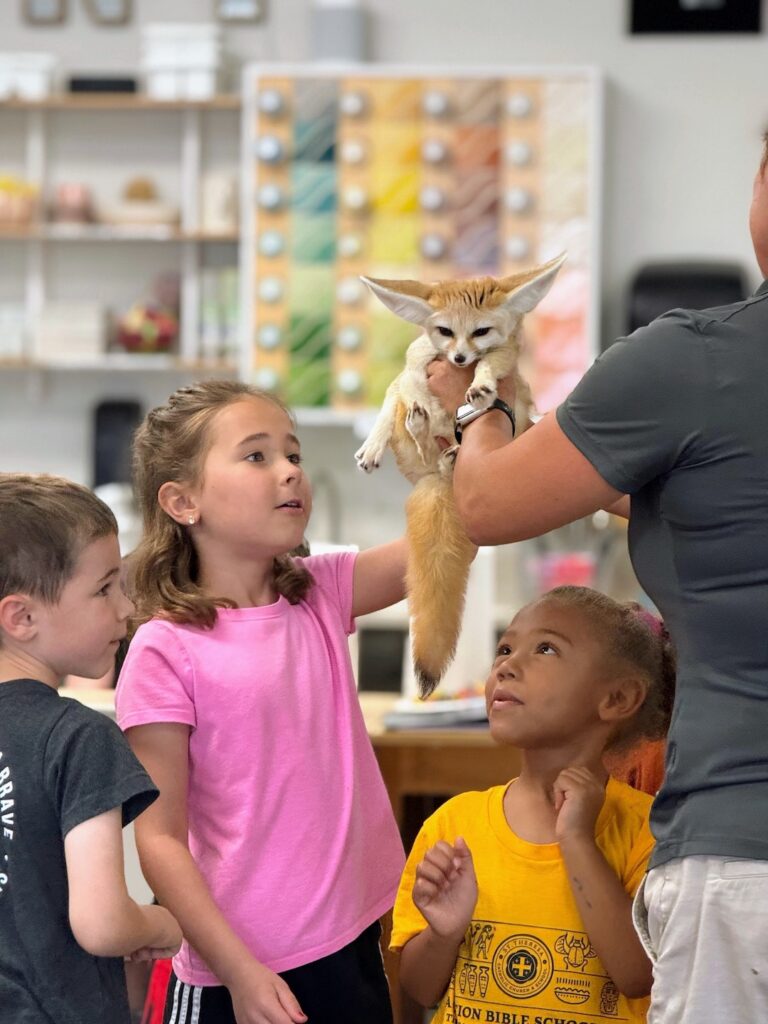
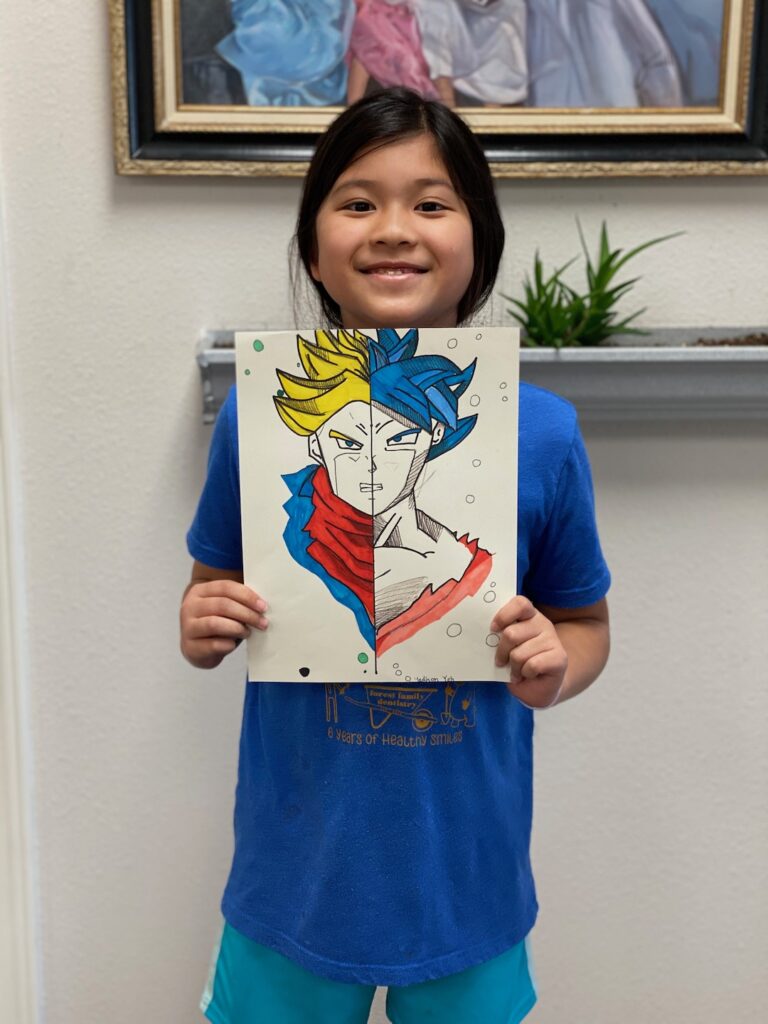
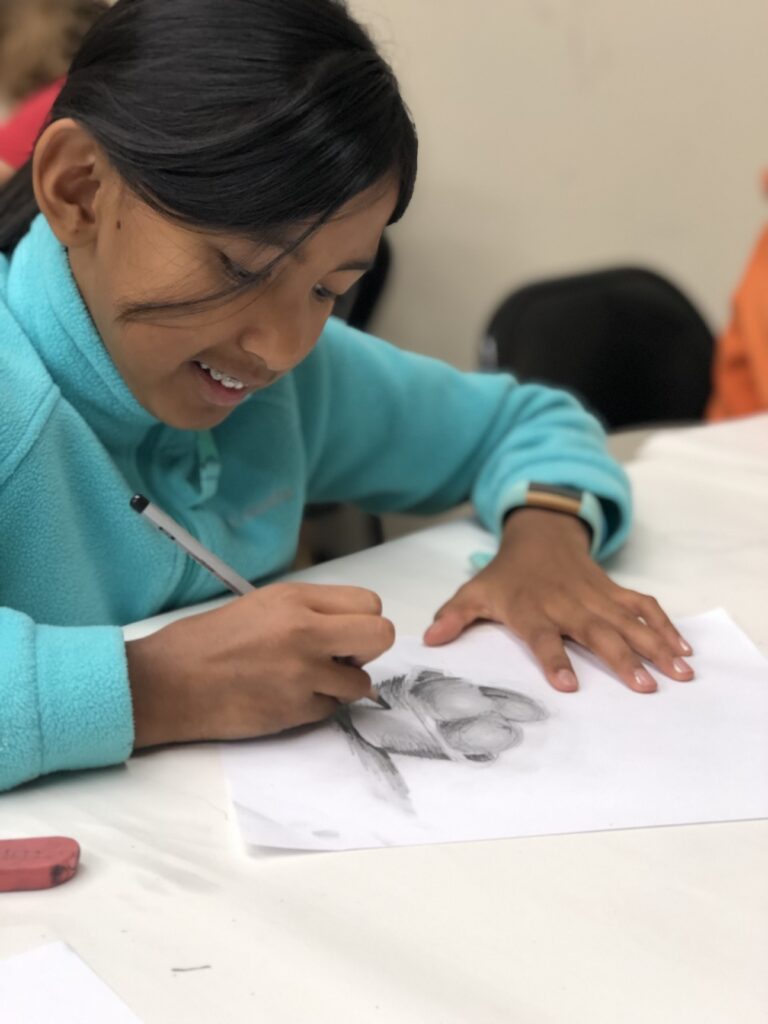
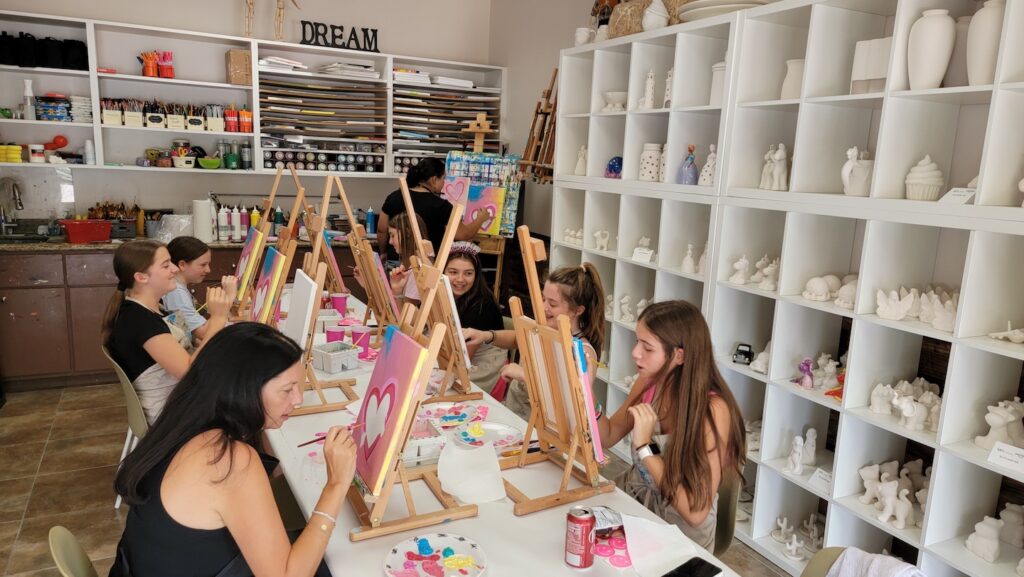
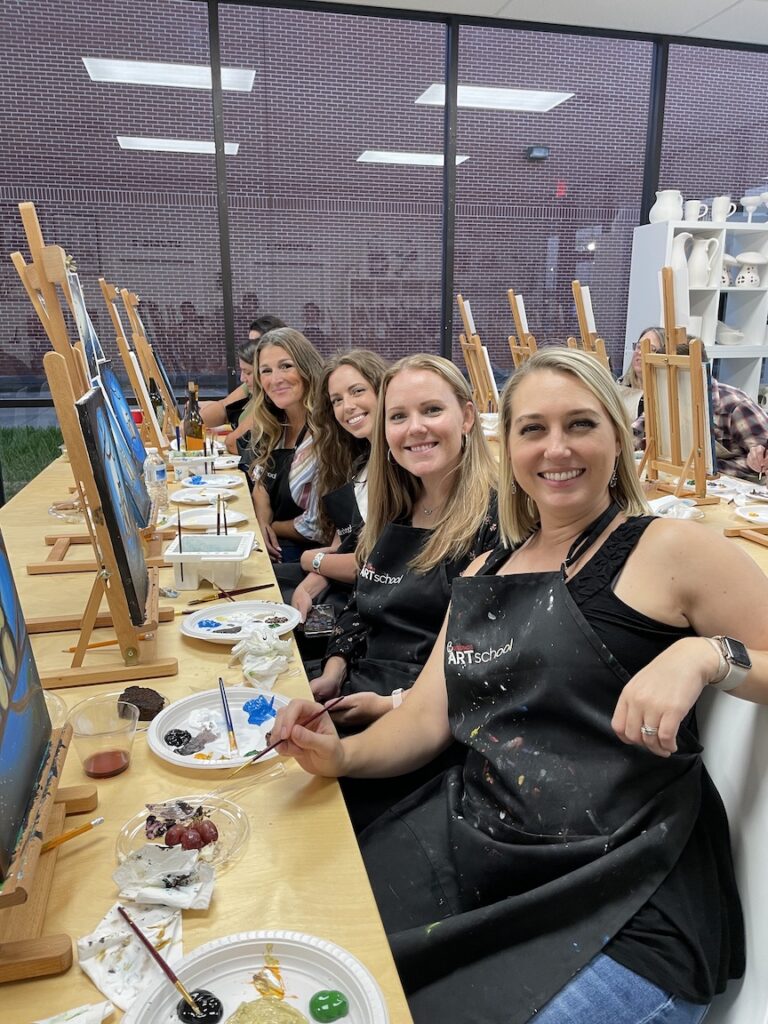
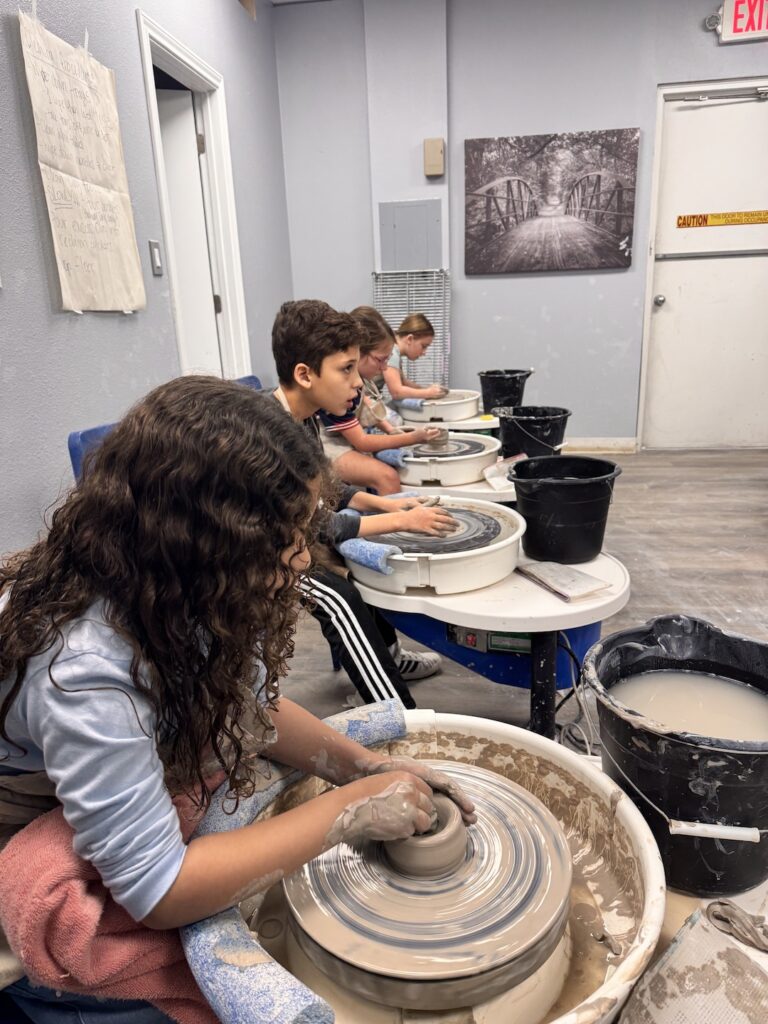

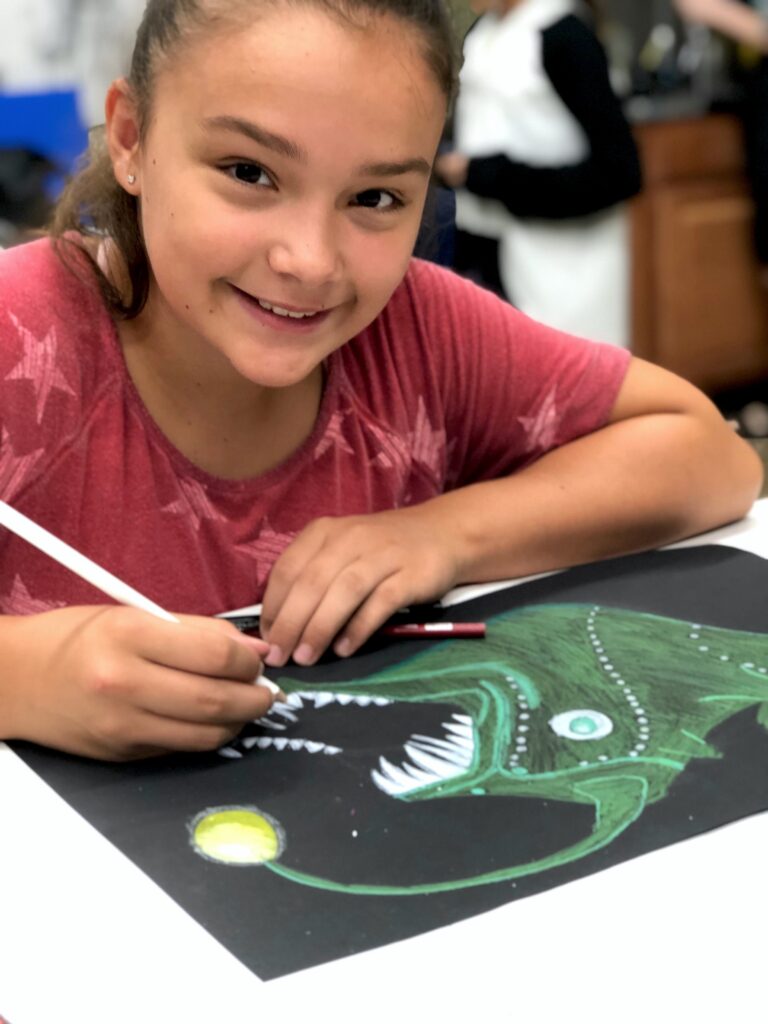


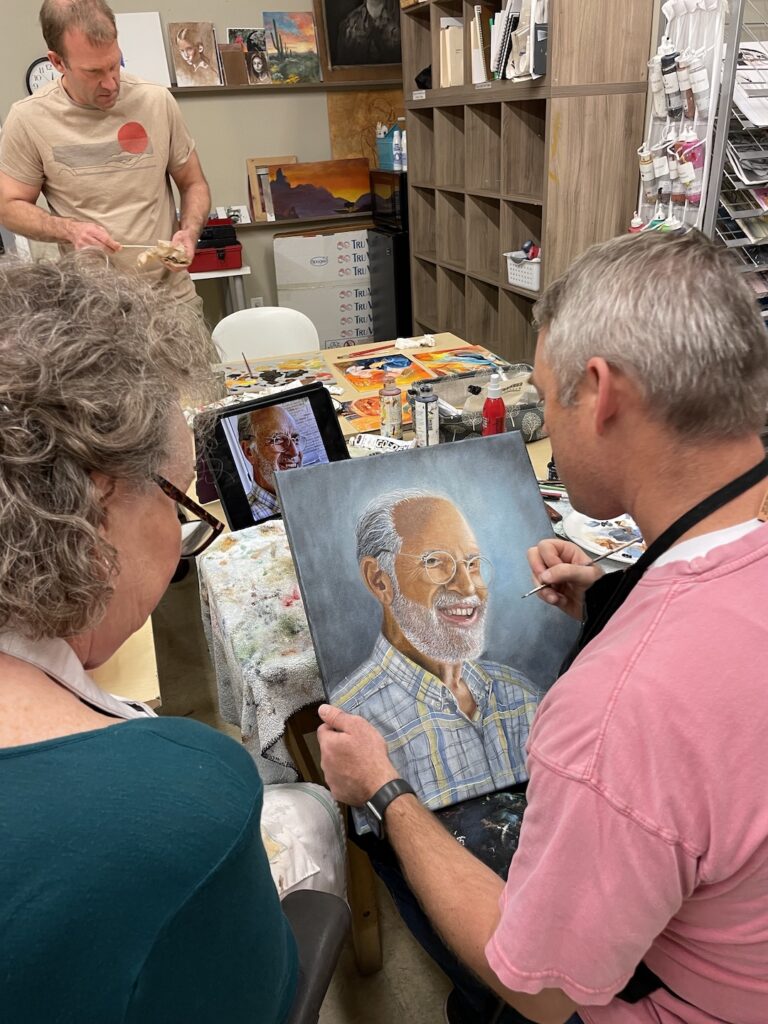
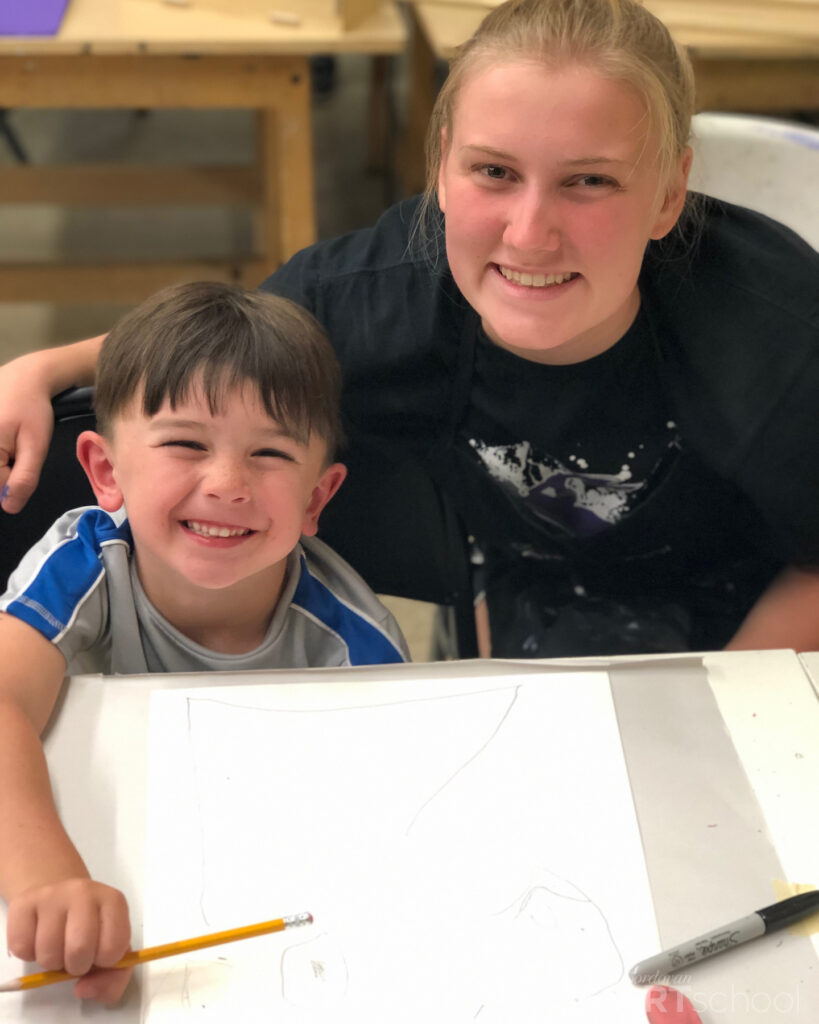
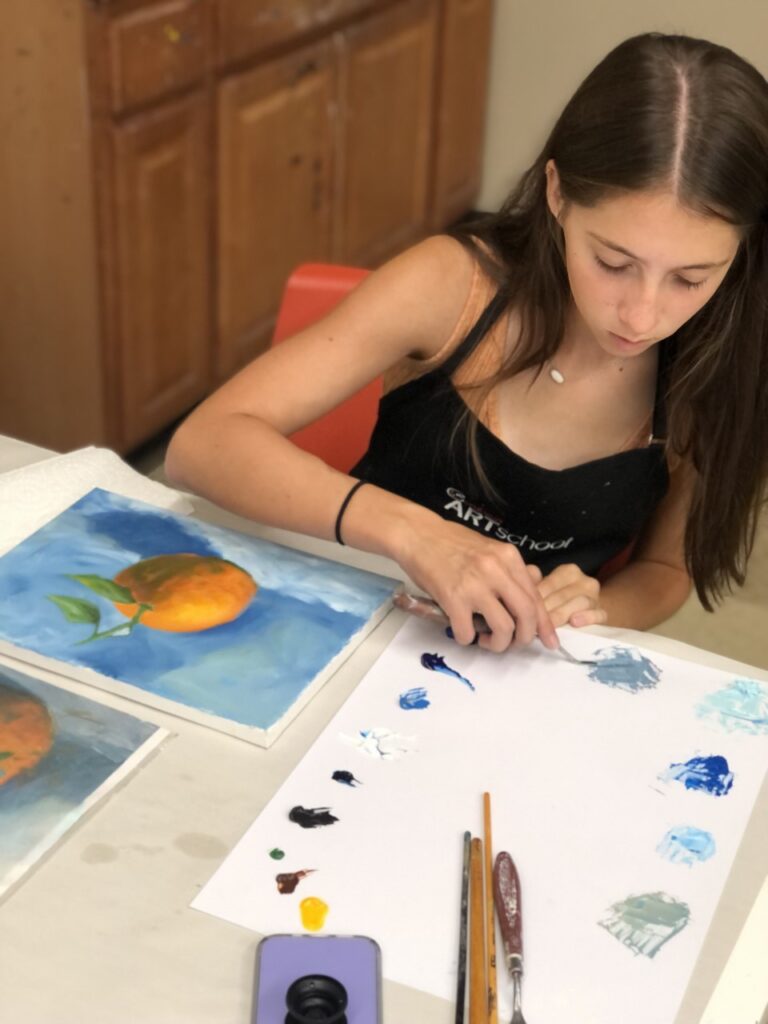
A fundamental part of the Cordovan Art School experience is the hands-on involvement of our employees and instructors. Customers should be encouraged to explore their creativity, develop new skills, and learn from knowledgeable team members who are passionate about teaching and inspiring others.
Cordovan Art School prides itself on providing a fun, welcoming environment where people can be themselves while learning and creating art. The community-focused approach embraced by each franchisee is essential to building strong relationships and a strong business model.
Cordovan’s Franchise System
Throughout training, each franchisee will become knowledgeable about our unique service approach. You will learn techniques to develop positive client relationships, efficiently operate the business, and market your services.
Franchisee Training
No franchisee will be allowed to commence operations until the franchisee has successfully completed the initial training program. The franchisee will not be permitted to continue operations until successfully completing the technical aspects of the initial training program. If the franchisee fails to meet the initial requirements specified by the franchisor, the franchisor may, at its option, require the completion of additional training or may cancel the Franchise Agreement.
At Corporate Headquarters
Cordovan Art School will provide each franchisee with approximately three to four days of initial training at the Franchisor’s headquarters in Texas, or at another location determined by the Franchisor. Training will begin approximately three to four weeks before the franchisee’s opens for business.
The franchise owner and, if applicable, the individual who will serve as the Studio Manager should attend the training to ensure a thorough understanding of the business model, operational procedures, and day-to-day management of the studio.
The training program will cover administrative, operational, technical, sales, and marketing topics, as well as instruction related to art classes and the PYOP (if offered by the franchisee). Training will also include hands-on, practical in-studio experience designed to prepare participants for successful studio operations.
Initial training is provided for the franchise owner and up to two additional team members.
At Franchisee location
On-site training is typically conducted during the week the franchisee opens for business and is intended to support the successful launch and operation of the new Cordovan Art School franchise.
An experienced Cordovan Art School trainer will provide approximately three to four days of on-site training and support. This training generally begins immediately prior to opening and continues through the first few days of business operations. Whenever possible, the on-site training will coincide with the franchisee’s Grand Opening Event.
During this time, the trainer will work directly with the franchisee and staff to reinforce operational procedures, assist with studio setup and class execution, provide guidance on customer service and administrative processes, and support local marketing and community outreach efforts. The training is designed to provide hands-on experience in a real operating environment and help the franchisee gain confidence in managing the day-to-day operations of the business.
The primary objective of the on-site training program is to ensure a smooth opening, establish sound operating practices, and position the franchisee for long-term success.
Ongoing Support & Training
Refresher Courses
Franchisees may be required to attend up to two refresher training sessions each year. Each session may last up to two days and will provide updates on operational procedures, marketing initiatives, best practices, new programs, and other developments within the Cordovan Art School system.
Subject to available space, the Franchisor may permit franchisees to send additional personnel to attend refresher training sessions. This training will be provided at no cost. However, franchisees are responsible for all travel, lodging, meals, wages, and other related expenses incurred by themselves and any attending personnel.
Weekly Zoom Calls
In addition, newly opened franchisees will be invited to participate in a regularly scheduled Zoom support meeting. Zoom calls are designed to provide additional guidance, coaching, and operational support as franchisees establish and grow their businesses. The meetings also create opportunities for new franchisees to collaborate, share experiences, and learn from one another while receiving direct support from the Franchisor.
Topics will focus on the seasonal needs and best practices associated with each stage of the business cycle throughout the year.
Letter of Completion: Franchisee Training
Roles/ Responsibilities
Franchisor
The Franchisor will provide:
- Ongoing support and guidance to help Franchisees successfully operate their businesses. Support may include phone calls, virtual meetings, and occasional in-person visits from the Franchisor or a Field Consultant.
- Access to approved systems, resources, suppliers, and operational tools, and will assist with ordering materials and supplies as outlined in the Franchise Agreement.
- Approved marketing and promotional materials in accordance with the Franchise Agreement. Any additional marketing materials must be created or approved by the Franchisor before being used.
- Additional support and guidance as needed. Franchisees are encouraged to contact the Corporate Office whenever they need assistance, guidance, or support.
Franchisee
Franchisees are responsible for:
- Operating their business in accordance with the terms of the Franchise Agreement and all Cordovan Art School policies and procedures.
- Maintaining high standards of service and communicating professionally with customers, team members, other franchisees, and any applicable local, state, and federal agencies.
- Paying royalties, marketing fund contributions, and any other required fees in a timely manner.
- Providing sales reports and other data-tracking information to the Franchisor when requested.
- Following approved standards for pricing, branding, operating hours, and daily business operations while protecting all confidential and proprietary information.
- Creating a positive, safe, and supportive work environment, including providing fair compensation, effective communication, regular feedback, and coaching to team members.
- Leading by example, fostering open communication, supporting team development, and encouraging a culture of professionalism and respect. (Teachers and staff will follow the leadership of the franchisees and managers!)
- Representing the Cordovan Art School brand with integrity and providing an exceptional experience for every customer.
Regional Franchisees Groups
Regional Franchisee Groups are responsible for:
- Identifying opportunities to collaborate on local marketing efforts and involving members of the franchise team when larger-scale marketing initiatives are planned.
- Protecting and strengthening the Cordovan Art School brand. A franchise system is only as strong as the reputation of its brand, and every franchisee plays an important role in maintaining that reputation.
- Participating in initiatives, programs, and directives established by the Franchisee Network & Council. Working together allows franchisees to address common opportunities and challenges more effectively.
- Safeguarding all proprietary and confidential brand materials and ensuring they are not shared with competitors, visitors, or the general public.
Customers
- Customer referrals are one of the most effective ways to grow your business. Providing an exceptional experience encourages customers to share their positive experiences with friends, family, and the community.
- Always approach customer interactions with patience, professionalism, and a willingness to help. As the saying goes, “The customer is always right, even when they are not!” While this may not always be true, every customer deserves to be treated with respect and care. When challenges arise, focus on creating a positive experience that builds trust and encourages customers to return.
- Every customer relationship is valuable. Today’s customer could become a future team member, strategic partner, or even a future franchisee. Treat every interaction as an opportunity to build a lasting relationship and represent the Cordovan Art School brand in a positive manner.
Field Consultants
Your Field Consultant is your primary resource for operational support and guidance. Field Consultants are partners in your success and are available to provide training, coaching, and assistance as you grow your business.
Field Consultants can assist with:
- Understanding and implementing brand standards
- Improving operations and efficiency
- Vendor and contractor relationships
- Customer service and customer experience
- Marketing and community outreach
- Networking and referral opportunities
- Business reports and recordkeeping
- Facility maintenance
- Staff scheduling and team management
- Hiring, onboarding, and employee development
- Collaboration and communication within the franchise network
Franchisees are encouraged to contact their Field Consultant whenever they need support, guidance, or assistance.
Contact Info
John Howell
Phone: 512-673-8646
Email: john@cordovanartschool.com
Matt Fowers
Phone: 702-378-4517
Email: matt@cordovanartschool.com
Studio Audits
Representatives of the Corporate Office, including Field Consultants, may periodically visit your studio or territory to provide support, training, and operational guidance.
The purpose of an audit, or field visit, is to provide support, training, encouragement, and accountability. Audits are designed to help studio owners and managers strengthen operations, maintain brand standards, and improve overall profitability. While most visits will be scheduled in advance, occasional visits may occur without prior notice.
Audits should be viewed as a collaborative process focused on continuous improvement and long-term success.
During a Studio Audit, the Franchisee Owner (or designated Manager) will work together with the Field Consultant to complete the Audit. The purpose of the audit is to identify strengths, opportunities for improvement, and areas where additional support or training may be beneficial. At the conclusion of each visit, the franchisee may be asked to complete a Field Visit Confirmation Form acknowledging that the visit occurred.
The Franchise Audit Form and evaluation criteria are outlined in the following section.
Studio Audit Form
Field Visit Confirmation Form
The Corporate Office will also conduct regularly scheduled meetings and conference calls to share important information and best practices. Attendance at required meetings is mandatory.
Pre-Opening Checklist
The Pre-Opening Checklist is designed to guide you through the process of opening your Cordovan Art School franchise, from your initial decision to become a franchise owner through your Grand Opening. A member of the Cordovan Art School team will work alongside you throughout the process to help ensure each step is completed successfully.
Each item on the Pre-Opening Checklist corresponds to a section in this manual, where you will find additional information, guidance, and resources related to that step.
Steps to Opening
Please note that the following steps to opening your franchise location are intended as a general guideline. The process is often fluid and may vary depending on market conditions, permitting timelines, vendor availability, and other factors specific to your situation. As such, these steps may not occur in the exact sequence listed below, and certain tasks may overlap or require adjustment based on your location’s unique circumstances. The Corporate Office will provide support and guidance throughout the process to ensure a smooth and timely launch.
1. Purchasing Your Franchise
Congratulations! By the time you are reading this manual, you have already completed the initial steps of becoming a Cordovan Art School franchise owner.
Franchise Disclosure Document (FDD)
You received and reviewed the Franchise Disclosure Document (FDD), which provided important information about the franchise opportunity, fees, obligations, and business operations.
Franchise Agreement
You signed the Franchise Agreement, establishing your relationship with Cordovan Arts Franchising and granting you the right to operate a Cordovan Art School franchise within your approved territory.
Franchise Fee
You paid the initial franchise fee, securing your franchise rights and access to the training, support, systems, and resources provided by the Franchisor.
2. Obtaining Financing
Franchisees are responsible for securing any financing needed to start or operate their business. Financing may be available through banks, credit unions, the U.S. Small Business Administration (SBA), or other commercial lenders.
Franchisees are encouraged to work with qualified financial professionals to determine the financing option that best fits their needs.
While the Franchisor does not guarantee financing or loan approval, the list below provides names of companies taht offer financing. In addition, your Field Consultant may be able to connect you with lenders that offer financing solutions for small businesses and franchise owners.
| Xbizfunding | Geoff Suval 866-966-6111 gsuval@xbizfunding.com www.xbizfunding.com |
| ConnectOne Bank | Daniel Martin Assistant Vice President | Commercial Loan Portfolio Manager dmartin@cnob.com |
| Business Finance Depot | Marisol Cruz (954) 613-6390 marisol@businessfinancedepot.com www.businessfinancedepot.com |
3. Setting Up Your Business
Setting Up a Legal Business Entity
One of the first decisions a franchisee must make is how to legally structure their business. Several business entity options are available, each with different legal, tax, and liability considerations. Franchisees are strongly encouraged to consult with a local attorney and accountant before making this decision.
Once you have selected a business structure, you can register your business through your state’s filing office or by using a business formation service.
Common business structures include:
Sole Proprietorship
A business owned and operated by one individual. This structure is simple to establish but does not provide protection from personal liability.
Partnership
A business owned by two or more individuals. Partnerships can be structured in different ways, including general partnerships and limited liability partnerships.
Limited Liability Company (LLC)
An LLC provides liability protection for its owners while offering flexibility in management and taxation. This is a common business structure for franchise owners.
Corporation
A corporation is a separate legal entity from its owners and can provide liability protection. Common types include C Corporations and S Corporations.
Cooperative
A cooperative is owned and operated by its members, who share in the benefits and services provided by the organization.
The information above is intended as a general overview only and should not be considered legal or tax advice. Franchisees should seek professional guidance to determine the business structure that best fits their individual circumstances.
Naming your Business
Franchisees may not use the Franchisor’s trademarks as part of their legal business entity name. Instead, franchisees must form a separate legal entity and operate the franchise using a D/B/A (Doing Business As) designation.
For example:
Roger Smith, LLC d/b/a Cordovan Art School Bellaire
The name “Cordovan Art School” should only be used when referring to:
- The products and services offered by the franchise
- The Cordovan Art School brand and organization
- The Cordovan Art School franchise opportunity
All business entity names and D/B/A registrations must comply with the requirements outlined in the Franchise Agreement and any applicable state or local regulations.
Business name examples:
| ACCEPTABLE | NOT ACCEPTABLE |
| Robert Smith, LLC | Cordovan Art School, Inc. |
| d/b/a Cordovan Art School Bellaire | Cordovan Art School Corporation |
| Cordovan Art School of (locale) Inc. |
Registering Your Business
Depending on the type of business entity you choose, registration with your state government may be required. Because registration requirements vary by state, franchisees are encouraged to consult with an attorney, accountant, or other qualified professional regarding the formation and registration of their business.
If you choose to operate as a sole proprietorship, state-level registration may not be required. However, many states require sole proprietors to operate under their legal name unless they file a Doing Business As (DBA), also known as a trade name or fictitious business name.
Franchisees are responsible for ensuring their business entity and any DBA registrations comply with all applicable state and local laws, as well as the requirements of the Franchise Agreement.
https://www.sba.gov/business-guide/launch-your-business
Opening a Business Bank Account
Franchisees should open a business checking account to manage the financial operations of the franchise. Building a relationship with a business banker can provide valuable guidance and support as your business grows.
When selecting a bank account, consider the following:
- Choose a business checking account with low or no monthly fees whenever possible.
- Ensure checks are printed with the business name and address clearly displayed.
- Verify that the account can process Electronic Funds Transfers (EFT) and Automated Clearing House (ACH) transactions.
- The account must be capable of supporting the payment of royalties, marketing fund contributions, and other fees required under the Franchise Agreement.
- Franchisees will be required to authorize automatic withdrawals for amounts due under the Franchise Agreement.
Be sure to maintain accurate banking information and promptly notify the Franchisor of any changes to your banking arrangements.
Checks, Letterhead, Forms, Marketing Materials
All business forms, checks, letterhead, envelopes, business cards, and other printed materials should clearly identify the franchise as independently owned and operated.
Cordovan Arts Franchising, LLC has developed approved branding and logo standards to help establish consistent recognition of the Cordovan Art School brand. When using the Cordovan Art School name or logo, franchisees must also include their business entity name or other required ownership identification to clearly distinguish the independently owned franchise from the Franchisor.
All printed materials must comply with the branding and trademark guidelines outlined in the Franchise Agreement and Operations Manual.
A sample business card may read:
“Cordovan Art School, Robert Smith, Inc., Owner”
Cordovan Arts Franchising provides a variety of approved branded materials, including business cards, flyers, banners, promotional items, and other marketing resources. Many of these materials can be customized and ordered through the approved vendor website.
If a needed item is not available through the approved vendor, franchisees should contact the Cordovan Arts Franchising design team for assistance. All marketing and promotional materials must be designed, reviewed, and approved by Cordovan Arts Franchising before being produced or distributed.
See section on Marketing for more information.
Email Correspondence
Any email correspondence communicated to customers is subject to verification and/or review by Cordovan Art School. Cordovan Art School prioritizes uniformity and brand consistency in marketing material and email correspondence. Consistent use of the trademark builds goodwill and recognition with the consuming public. Franchisees may be provided an email address during Franchisee Training.
Cordovan Art School requires all emails feature a disclosure at the bottom of every message, such as with the signature block, notifying recipients that the franchisee is an independent business operator and separate from the Franchisor.
“This correspondence is on behalf of a franchised entity of Cordovan Art Schooland does not reflect the views of the Franchisor.”
In the ‘Signature’ section of the email, it is highly recommended that you list the following disclosure:
The information in this email may be legally privileged or confidential information intended for the use of the individual or entity named in the TO: and/or CC: field(s) ONLY. If the reader of this email is NOT the intended recipient, you are hereby notified that any dissemination, distribution or copying of this email is strictly prohibited. If you have received this email in error, please notify us by replying to the sender in the FROM: field and destroy this email. Thank you.
Your Status as a Franchisee
As a franchisee, you are an independent business owner and are not an agent, partner, employee, or representative of Cordovan Arts Franchising, LLC. Your relationship with the Franchisor is governed by the Franchise Agreement.
Franchisees must clearly communicate to customers, vendors, employees, and the public that their business is independently owned and operated. While franchisees are authorized to use the Cordovan Art School name, trademarks, and operating system, each franchise location is a separate legal entity and is not owned or operated by the Franchisor.
All business communications, marketing materials, and public representations should accurately reflect the franchisee’s status as an independently owned and operated Cordovan Art School franchise.
4. Site Selection
Finding a location begins by having a complete understanding of the geographic and demographic characteristics of your market and area. As a new business owner and franchisee, you should become familiar with the trends and nuances of your selected market. This will allow you to match your business location with demographics, lifestyle habits, typical driving time, and other regional preferences.
The size of a new Cordovan Art Studio will depend on market factors such as density of population, average household income, rent & NNN expenses, build-out costs, etc.
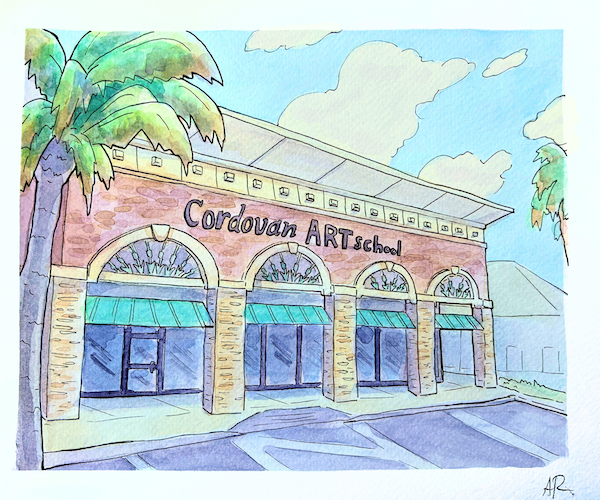
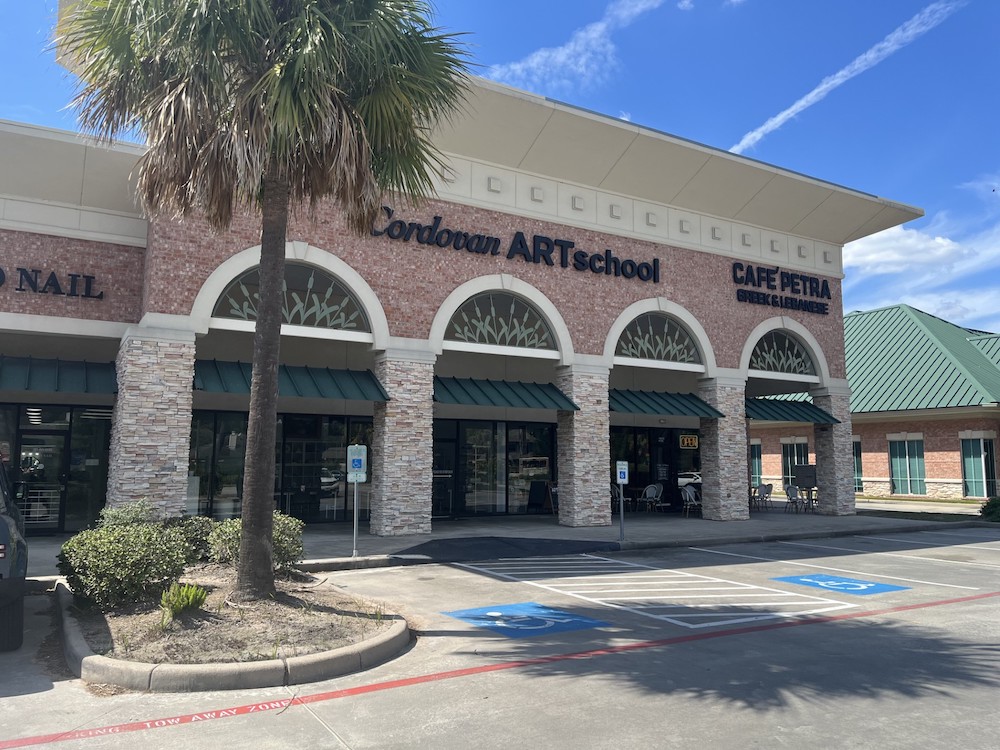
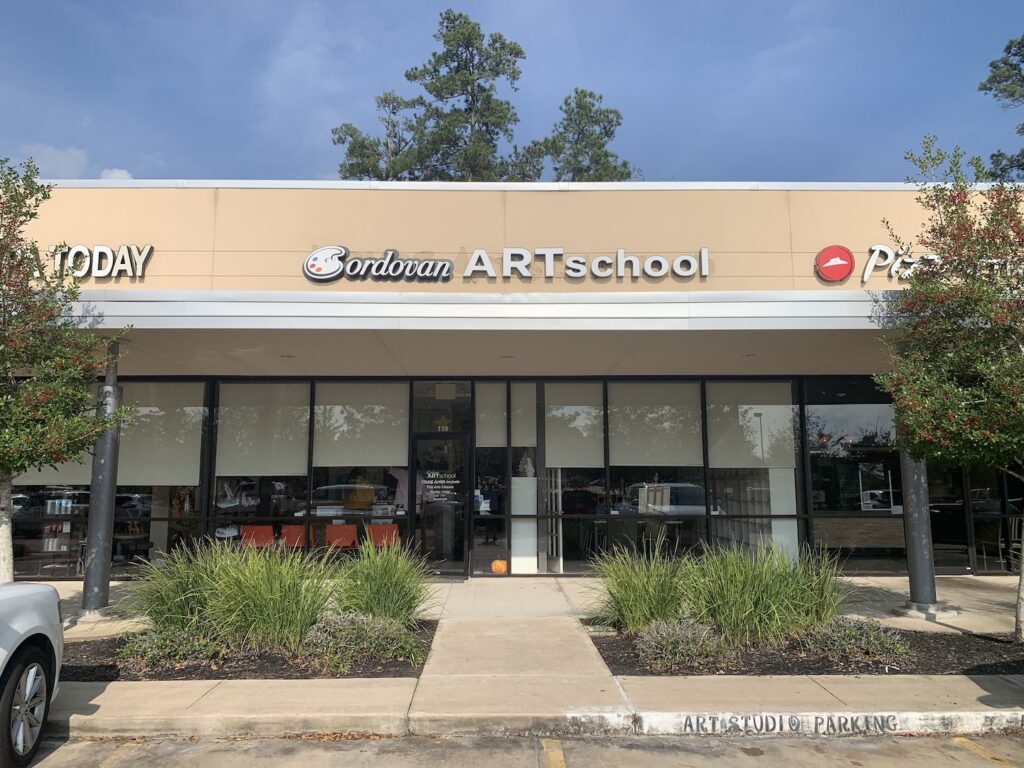
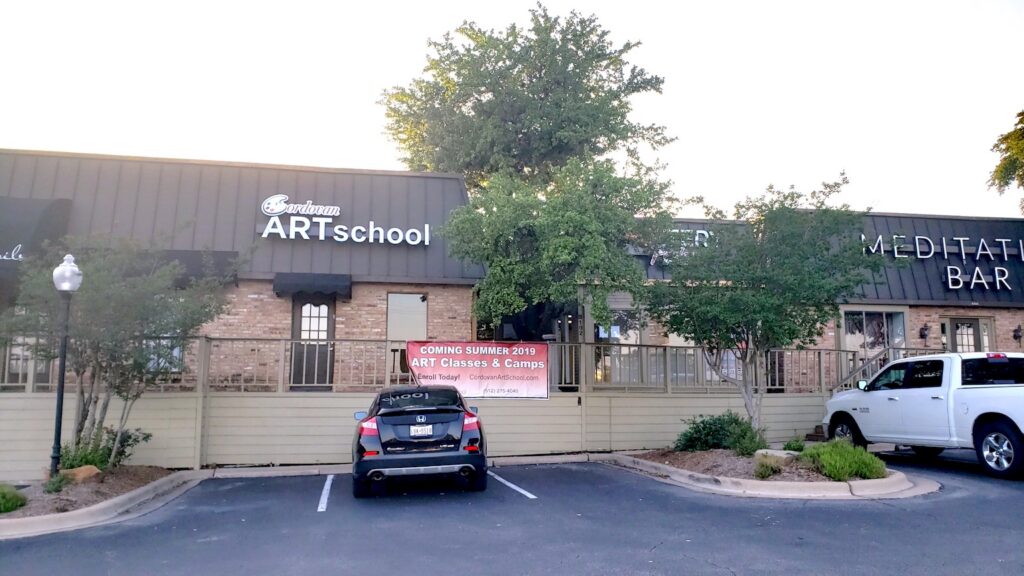
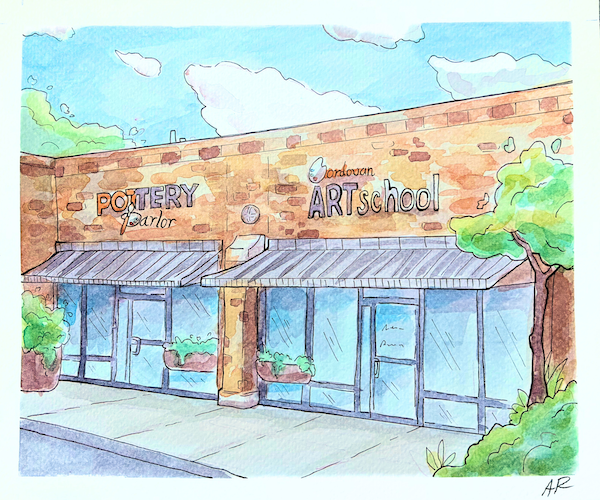
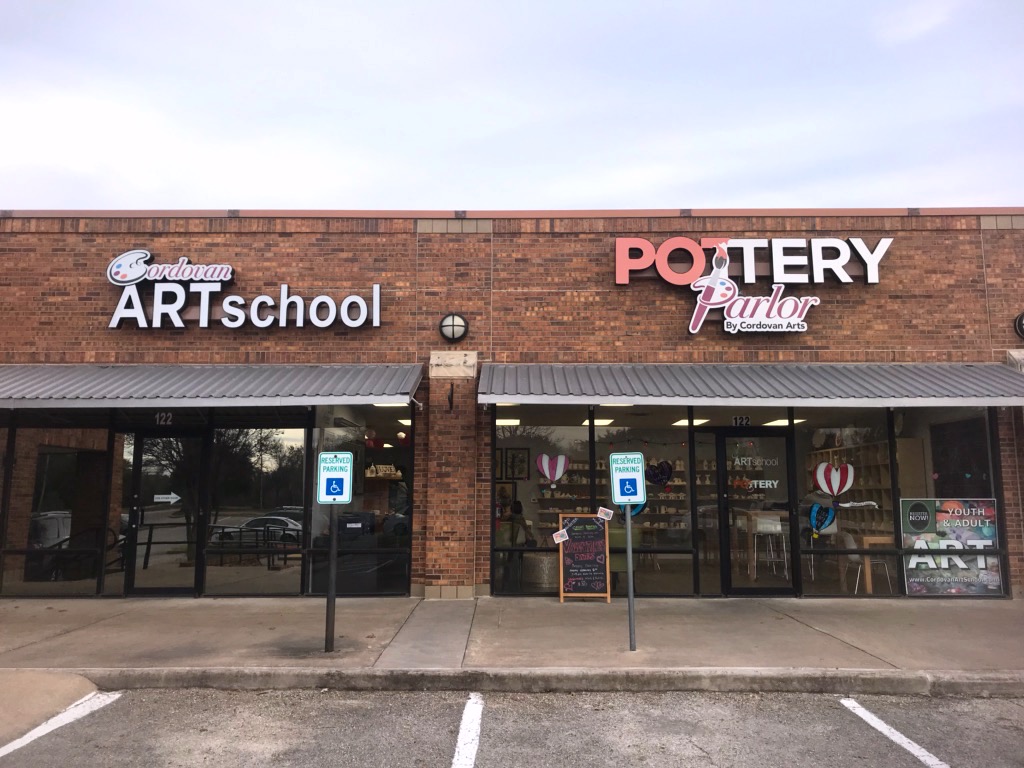
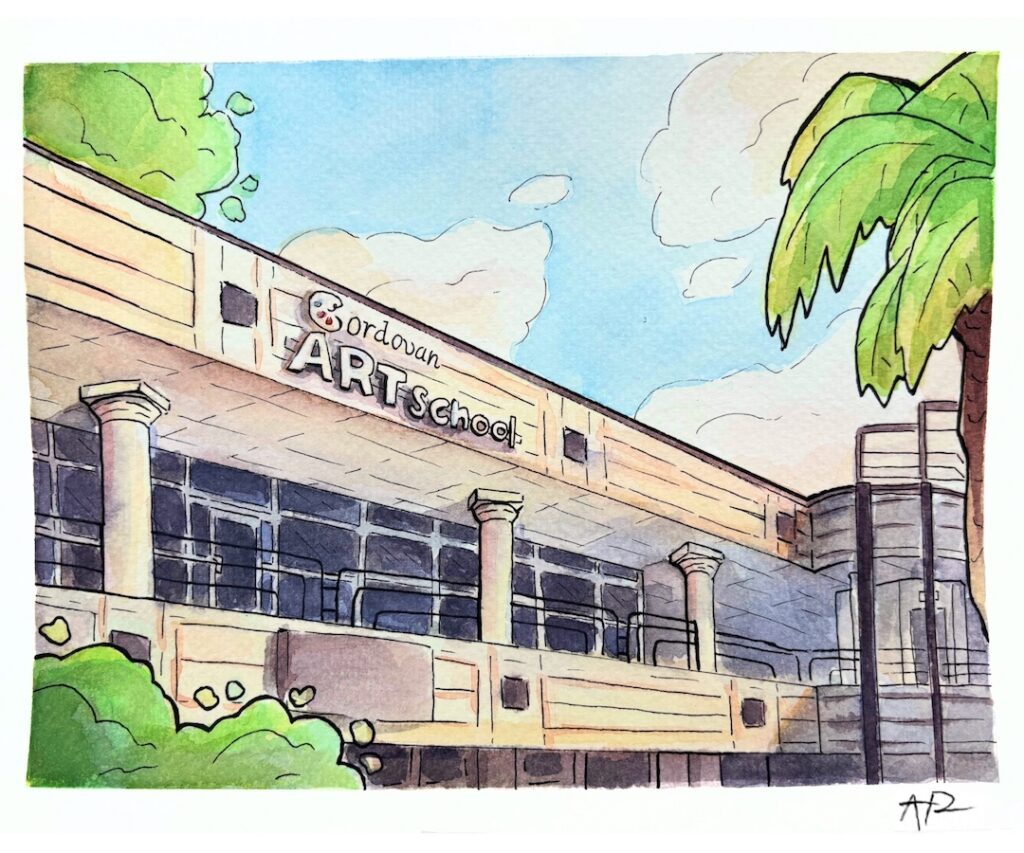
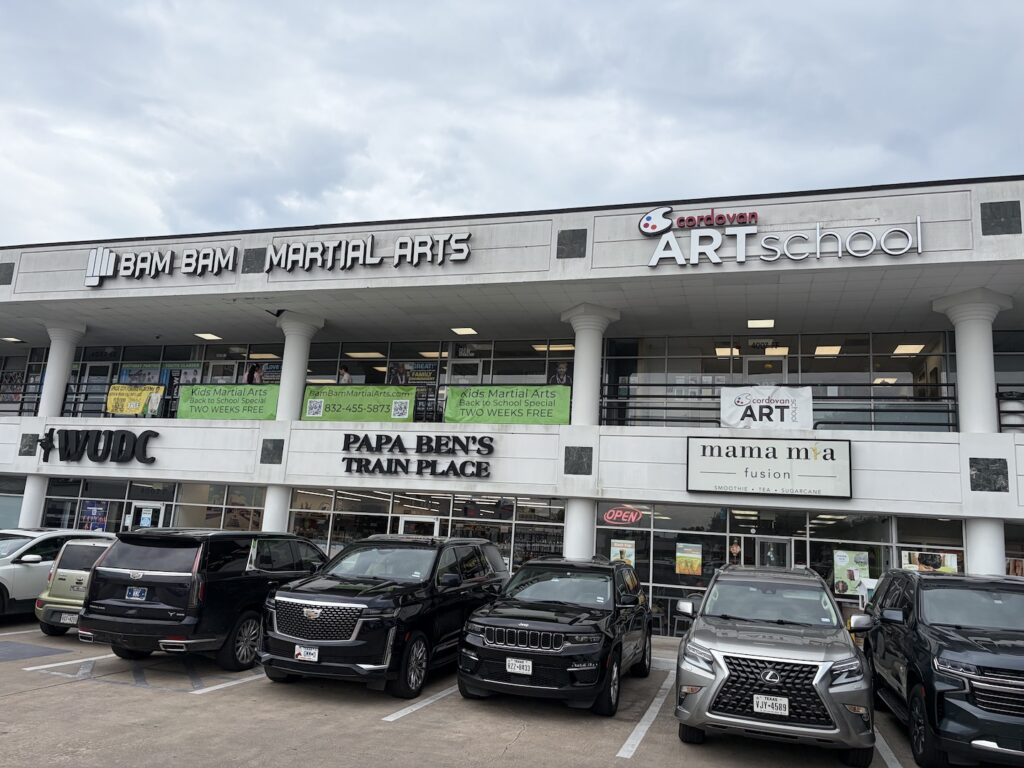
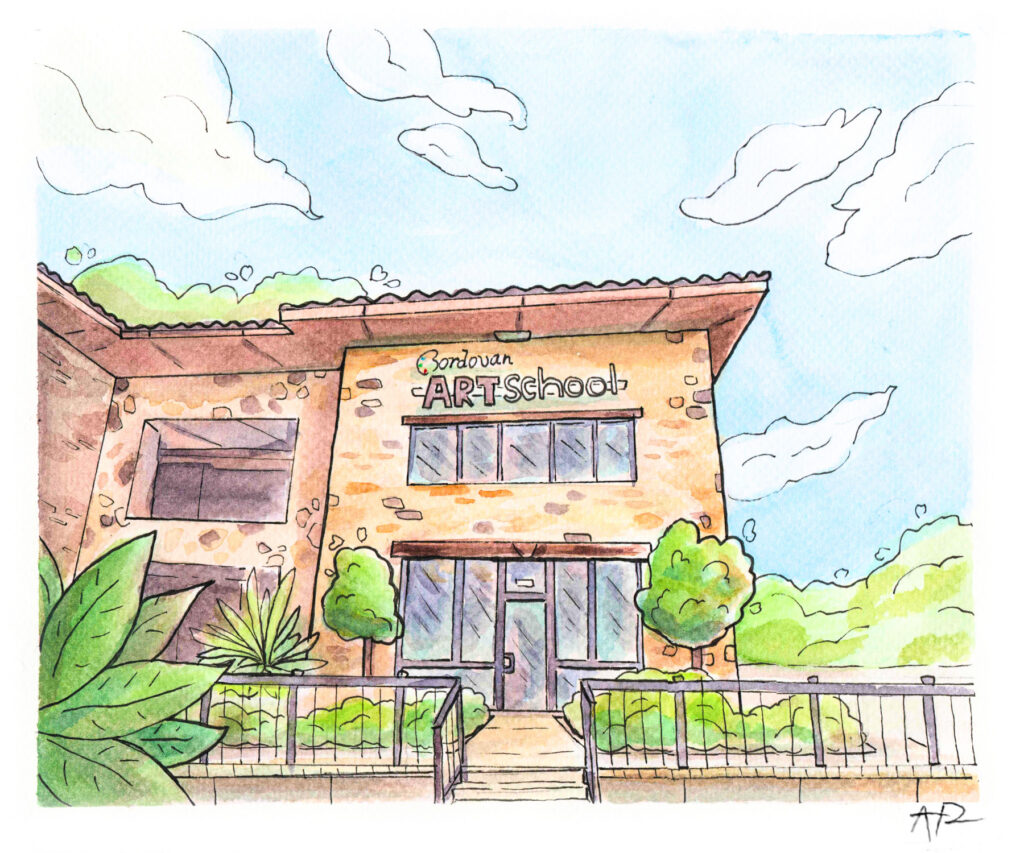
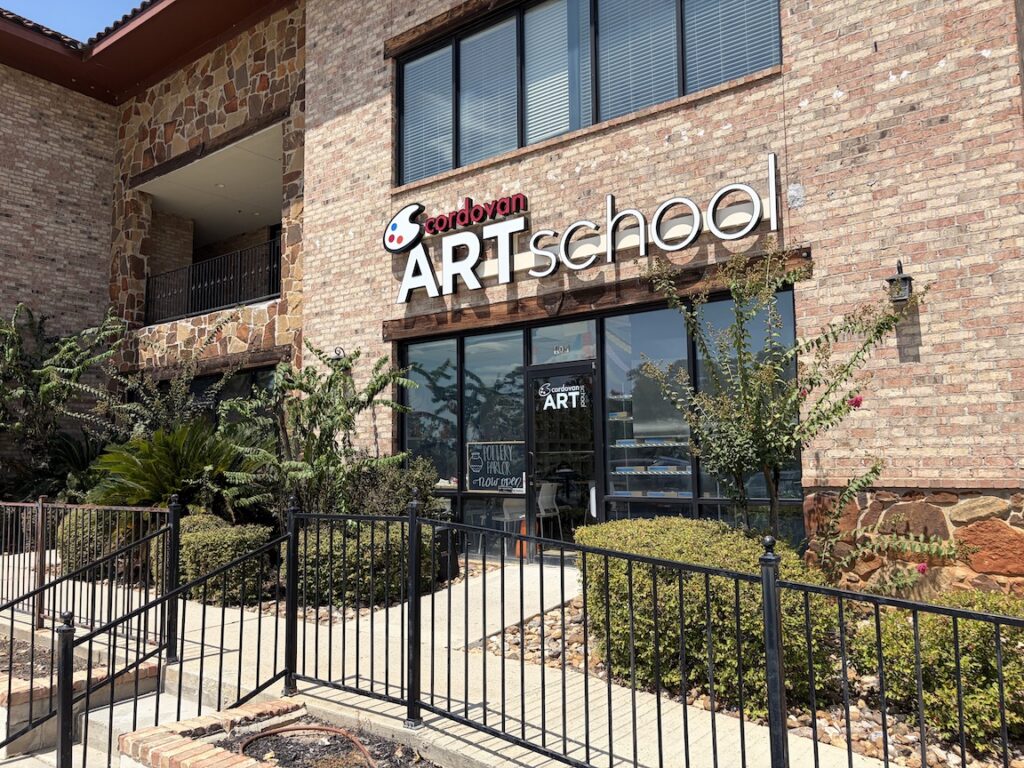
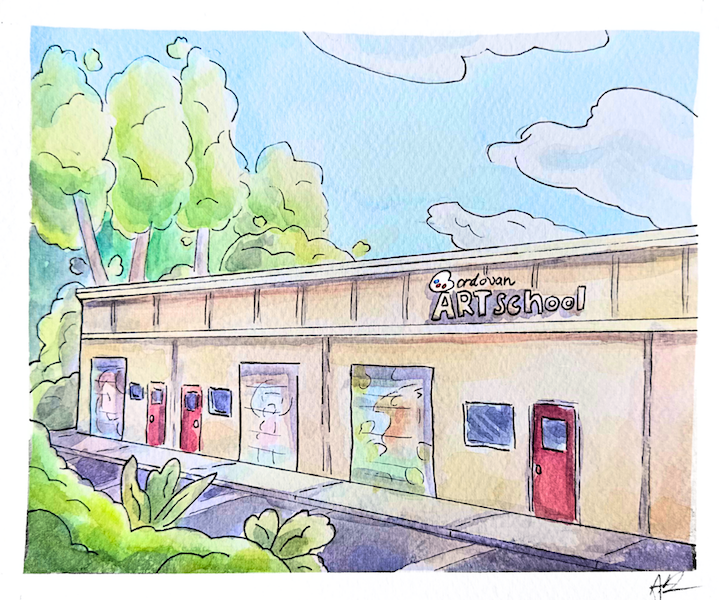
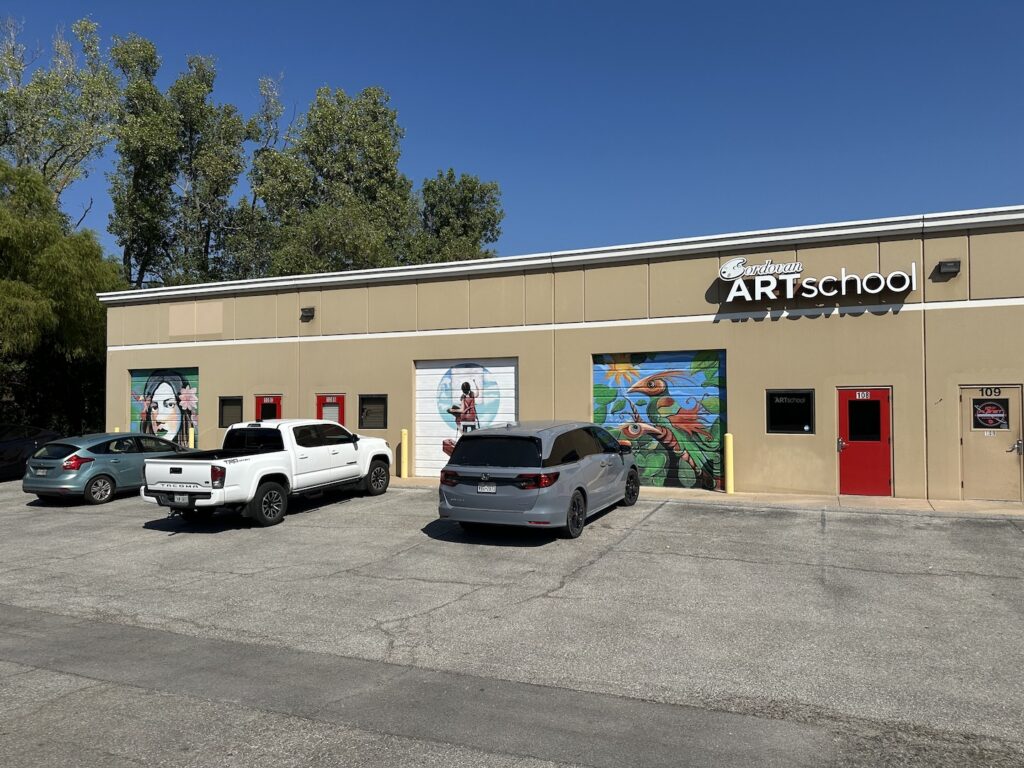
PRO TIP: One of the best ways to reduce start-up costs is to find a second-generation space in a desirable location that already includes existing improvements such as walls, restrooms, HVAC, and electrical infrastructure.
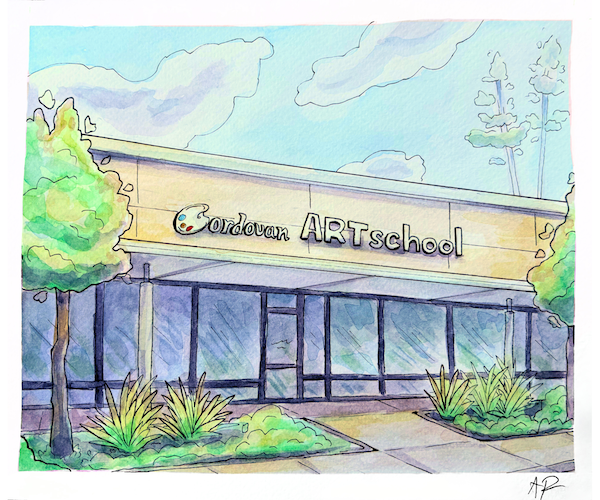
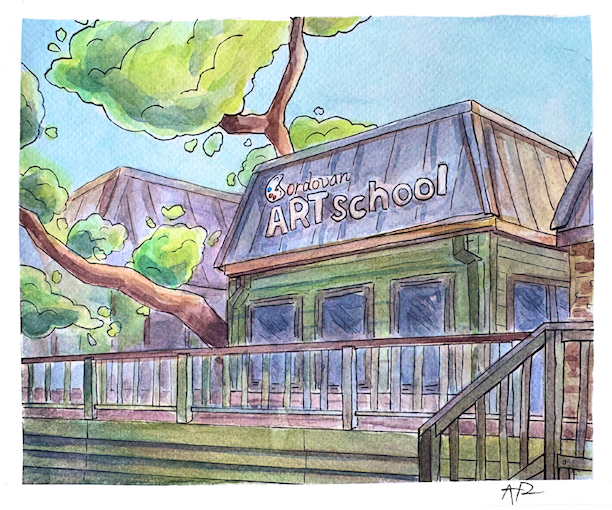
Here are some examples of 2nd Generation spaces that were converted into a Cordovan Art School location.
Size and Layout
- Approximately 1,600-3,000 square feet
Sample Floor Plans
A typical Cordovan Art School studio includes:
- 3–4 flexible-use classrooms
- Lobby or reception area
- Storage room for art supplies
- Kiln room
- Restroom facilities (ADA-compliant where required)
Studios should be designed to maximize instructional classroom space while maintaining an efficient flow for students, parents, staff, and guests.
To help franchisees understand space requirements and layout flexibility, Cordovan Art School has developed sample floor plans based on different square footage ranges. These examples illustrate how classrooms, lobby space, storage, restrooms, and support areas can be arranged to create a functional, efficient, and welcoming studio environment.
While every location is unique, the sample layouts demonstrate the key operational components required for a successful studio and provide guidance for space planning and design.
1.600 square feet
This sample layout illustrates a 1,600 square-foot studio featuring a small lobby area and three (3) mid-sized classrooms. This layout prioritizes efficiency of classroom space over lobby space to maximize revenue opportunities from camps, classes, parties, and events. This design provides an efficient use of space while supporting the core instructional and event-based activities of the studio.
2,500 square feet
This sample layout illustrates a 2,500-square-foot studio featuring a medium-sized lobby area and three (3) mid-sized classrooms. The layout provides a balanced mix of classroom space and lobby seating for Paint Your Own Pottery (PYOP) customers. The classrooms are designed to accommodate camps, classes, parties, and special events while maximizing revenue opportunities and operational efficiency.
3,100 Square feet
This sample layout illustrates a 3,100-square-foot studio featuring a large lobby area designed for Paint Your Own Pottery (PYOP) painting and three (3) large classrooms. The layout provides ample space for PYOP customers, retail displays, and walk-in traffic while maintaining generous classroom areas for camps, classes, parties, and special events. This design is intended to maximize revenue opportunities while creating an inviting and efficient studio environment.
Location Type & Visibility
Preference is given to retail shopping centers and strip malls that are:
- In centralized areas of commerce
- Near residential neighborhoods, schools, and community centers
- Surrounded by complementary businesses (e.g., child enrichment businesses such as math and reading tutoring centers, dance/music studios, gymnastic studios, cafés, family services)
- Locations should provide strong street visibility and foot traffic, as well as opportunities for exterior signage.
Demographics
Ideal markets are those with a strong population of:
- Families with children
- Young professionals
- Active older adults
- Target areas with middle to upper-middle income households with disposable income, who are likely to enroll in weekly enrichment programs and summer camps.
- In high density population areas, within a few miles of multiple elementary schools.
Accessibility & Parking
- Must be easily accessible from major roads or residential areas.
- Locations should offer ample free parking for students, parents, and event attendees.
- Must meet ADA accessibility requirements, including restrooms and entryways.
Zoning & Permits
- Site must be properly zoned for educational, recreational, or arts-related use.
- Capable of securing any required local permits for group classes, day camps, and private events.
- Site must meet fire, health, and safety codes applicable to instructional and event-based businesses.
Lease Requirements
- Franchisees are encouraged to pursue multi-year leases (5 years preferred, with two (2) 5-year options to renew the lease at that same location).
- Tenant improvement allowances or flexibility in space customization is a plus.
- Prior written approval from the Corporate Office is required before signing any lease agreement to ensure the space meets all operational and branding standards.
Additional Considerations
- Quiet, safe, and family-friendly surroundings are essential.
- Avoid co-tenants that may produce excessive noise, odors, or congestion (e.g., nightclubs, vape shops, industrial tenants, and any type of co-tenants that are not kid-friendly).
- For locations offering wheel throwing or pottery, additional considerations such as proper ventilation, water access, and flooring durability must be evaluated.
Finding the Perfect Location
Choosing the right location is one of the most important decisions you will make as a franchise owner. Upon request, your Cordovan Art School Field Consultant can introduce you to real estate professionals who can assist you in identifying and evaluating potential locations.
Additional ways to search for available properties include:
- Working with a commercial real estate broker
- Looking for “For Lease” or “For Rent” signs in target areas
- Reviewing local business and real estate listings
- Searching commercial real estate websites
Helpful online resources include:
- LoopNet
- CityFeet
- Showcase
- Crexi
All proposed locations must be reviewed and approved by Cordovan Arts Franchising before a lease or purchase agreement is finalized.
5. Signing a Lease
Lease Negotiation Tips
A commercial lease is one of the most important agreements you will sign as a business owner. Before signing any lease, franchisees should consult with a qualified real estate attorney and obtain approval from the Franchisor.
When reviewing a lease, pay close attention to the following:
- Rent – Establish a budget and negotiate for rental rates that support your business plan.
- Total Rent for commercial space includes Base Rent, Common Area Maintenance, and Triple Net.
- Common Area Maintenance (CAM) Charges – Understand all CAM fees and seek caps on annual increases.
- Common Area Maintenance- Common area maintenance (CAM) is a catchall for the expenses of operating the facility. It is also a tempting place for landlords to “bury” every imaginable cost and seek huge increases in the gross check you submit each month. Make sure CAM specifically excludes any capital improvements. Seek an annual increase cap on CAM charges (do not allow yourself to be surprised by a 25% increase in CAM charges from year one to year two – this is common). Demand an annual accounting of CAM charges levied by the landlord and reserve the right to view paid invoices.
- Triple Net (NNN) Charges – Review how taxes, insurance, and maintenance costs are calculated and allocated.
- Triple Net Charges- Calculation of triple net charges must be based on the total leasable portion of the facility, not just the leased portion. Your fraction of the charges should be based on the square footage divided by the total leasable square footage of the center. It is encouraged that you obtain these numbers in writing. Avoid a situation where a 20,000 square foot tenant leaves the center and everyone who remains then divides the triple net charges.
- Rent Increases – Seek reasonable limits on annual rent increases whenever possible.
- Rent Escalation Clause– Fixed rent over long-term leases is relatively rare. Landlords may insist on annual increases based upon the percentage increases in the Consumer Price Index (CPI).If you are confronted with such a request, try to arrange that the CPI does not kick in for at least 2 years and cap the amount of each year’s increase (for example, no more than a 3 percent increase in any year). A sample clause for doing this would read as follows: “Any rent increases under this Lease shall commence no earlier than two (2) years after the date of the commencement of this Lease. The maximum amount that the rent may be increased in any one year (starting in the third year of this Lease) shall be three 3% over the beginning base rent under this Lease.”(Note: Make sure that your business plan projections adequately reflect such increases.)
- Square Footage – Verify the exact square footage of the space and ensure rent is based on that amount.
- Tenant Improvement Allowance – Always negotiate landlord contributions toward build-out and finish-out costs.
- Tenant finish-out- Most leases these days provide some if not all allowance for tenant finish-out, also called tenant improvements or build-out. There is a direct relationship between rental price and finish-out allowance. The higher your rent, the more you should expect for finish-out. The lower your rent, the lower your finish-out tends to be. During the lease investigation process, it is important to compare an estimated total finish-out expense from several reputable licensed contractors.
- Repairs and Maintenance – Clearly define landlord and tenant responsibilities for repairs.
- Exclusive Use Protection – Request restrictions that prevent direct competitors from leasing space in the same center.
- You do not want to spend a year or two building a successful business and have a competitor open in the same shopping center. It is wise to demand a restriction in the lease that prohibits another tenant from offering the same or similar services as yours.
- Assignment and Subleasing – Maintain the ability to transfer or assign the lease if the business is sold.
- Someday, you may wish to assign your lease or sublet your premises. You may choose to sell your franchise at some point. Be sure you have the right to reasonably assign your lease. Make sure the landlord does not have the right to cancel your lease if you wish to assign it to another party.
- Personal Guarantee – Limit personal liability whenever possible.
- Many landlords will require a personal guaranty of the lease amount. This means that even though you signed your lease as an officer of your corporation, you are personally responsible for the lease amount. In effect, you are putting all your savings and most of your personal assets on the line. Try not to guaranty the lease if possible. Some landlords will negotiate with you. For example, they may be willing to remove the personal guarantee if you pay them a higher security deposit.
- Relocation Rights – Avoid lease provisions that allow the landlord to relocate your business without your approval.
- Many leases contain a provision whereby the landlord can relocate the tenant within the center if the landlord needs your space for another tenant. This must be by mutual consent. The landlord must also agree to pay for all costs associated with the relocation (redecorating or building modifications; new stationery and business cards; utility and phone relocation costs; new brochures and marketing materials, etc.) prior to granting of consent by the tenant. If this is a term in the lease, ask for a substantial amount of notice (at least 120 days) and contiguous space; or financial compensation.
- Termination Rights – Seek protections if major changes occur that negatively impact the shopping center or your business operations.
- Entry by Landlord – The landlord has the right to enter your business during normal business hours. Negotiate that there can be no disruption to your business at such time.
- Caps – Commercial leases have a myriad of charges that may potentially be assessed to the tenant. It is possible to have these charges removed entirely, and that should be your goal. In the absence of having a specific charge removed, you should at least seek a reasonable cap, so you can define your maximum exposure. For instance, it is common for the landlord to demand that the tenant pay a share of the landlord’s deductible in the event of a casualty loss. If you cannot have this provision removed from the lease, language such as “not to exceed $250 annually” limits your financial exposure and would be sufficient.
- Common areas – Most leases contain a provision that states the landlord may do anything it wishes with the common areas. The common areas are essentially any portion of the building not leased to a tenant (sidewalks, parking lots, flower beds, etc.). Seek protection in the event the landlord makes a material change to the operation of your business because of a change in the common areas.
- Repairs – As a tenant, the landlord will expect you to not only maintain your premises but will also likely expect you to make certain repairs. The landlord should be expected to keep the foundation, exterior walls and roof in good condition and agree to repair them when needed. Get this in writing, along with a limited period in which the landlord agrees to conduct all repairs.
- Bail-out – Sometimes a thriving center takes a downhill turn throughout the term of the lease. This can happen when an anchor tenant vacates the center causing traffic to drop, or because of local factors such as a road is re-routed. You do not want to be stuck as the last tenant in a dead center. Firmly seek a provision which allows you to terminate your lease if total occupancy in the center drops below a certain threshold (perhaps 50%).
- Eminent Domain – Eminent Domain is a concept whereby the government claims all or part of a property for the public good. Some leases may limit your rights under eminent domain. Seek protection so that if any portion of your premises is taken, you may terminate the lease.
- Late charges – Late charges often run approximately 5-10% of the monthly rent. Seek a reasonable limit to late charges and negotiate a waiver of late fees to occur not more than once per year during the lease.
- Radius restriction – Sometimes, landlords restrict your ability to open another business/franchise within X miles radius of the leased premises.
- Holding over – Every lease contains a provision dealing with a situation of the tenant “holding over” in the leased premises beyond the end of the lease. Many leases state that they will maintain a month-to-month basis, although some may treat your hold-over as a renewal for a new term. Some will also say the rent shall increase by the same percentage as in the prior term. Avoid any fixed or liquidated damages provisions in such a case.
Remember that many lease terms are negotiable. Taking the time to negotiate favorable terms at the beginning of the lease can significantly reduce costs and risk throughout the life of your business.
Lease Submission and Approval
The Corporate Office will need to review and approve a space that is leased or purchased with the intent of operating a Cordovan Art School franchise business. Approval of a lease shall be conditioned upon acceptable inclusion of terms in the lease and reasonably required provisions including:
- A provision reserving Cordovan Arts Franchising, LLC the right, but not the obligation, at their election, to receive an assignment of the leasehold interest without payment of any assignment fee or similar charge and without any increase in rent or other fees upon termination or expiration of the franchise grant. The lessor agrees, before the effective date of any assignment of the lease to Cordovan Arts Franchising, LLC (or its designee), the franchisee shall be solely responsible for all obligations, debts, and payments under the lease.
- A provision requiring the lessor to provide Cordovan Arts Franchising, LLC with a copy of any written notice of deficiency sent by the lessor to franchisee, and granting the right (but not the obligation) to cure any deficiency under the lease should franchisee fail to do so within fifteen (15) days after the expiration of the period in which franchisee may cure the default.
- A provision requiring the lessor to provide Cordovan Arts Franchising, LLC (at the same time lessor provides to franchisee) a copy of all lease amendments and assignments, and a copy of all letters and notices lessor sends to franchisee relating to the lease or the leased premises.
- A provision permitting Cordovan Arts Franchising, LLC to enter the leased premises to make any modifications or alterations necessary in order to protect the brand system and trademarks without being guilty of trespass or any other crime.
- A provision allowing franchisee to display the trademark in accordance with the specifications required by the Brand Standards Manual, subject only to the provisions of applicable law.
- A provision prohibiting the premises from being used for any purpose other than the operating of a Cordovan Art School franchise.
6. Pre-Construction
Architect/ Designer
Once your lease has been signed, begin planning your studio layout and build-out. Depending on the scope of your project, you may need to hire an architect or designer. The Cordovan Design Team can provide recommendations to help maximize classroom space and optimize studio flow.
General Contractor
This is also the ideal time to obtain contractor bids and select a General Contractor for your project. It is recommended that you obtain at least three bids to compare pricing, timelines, and experience before making a final selection.
7. Kiln
Kiln Installation Requirements
Provided by: The Pottery Consultant©
American Ceramic Supply Company, Inc.
What your contractors and electricians need to know©
Kilns and Wiring:
The only National Uniform Code requirements are that the kilns sit 18″ from the walls for all brands (except Paragon which can sit 12” from walls) and sit on their stands on concrete – if the walls are non-combustible; and if you are taking that into consideration, there should be no problems. If combustible walls, all brands must sit 36” away from wall. All brands must sit within 25 feet of the electric panel (except Skutt which can sit within 40 feet.) This is not as the crow flies, but taking into consideration up a wall, across a ceiling, down a wall, etc. If you deviate from this, copper wire sizes will have to be adjusted and this can be expensive.
Kilns are safer than ovens in restaurants. Kilns are not going to catch on fire or catch anything around them on fire. The ONLY way there might be a problem is if the electrician does the wiring wrong. But if we have in writing that the wiring will be 240V or 208V, (In the kiln world, 220 is actually for Europe) and single phase or three-phase and have ordered kilns that are according to that fax, there should be no problems.
Once lease is signed, have electrician (that you are SURE you will use for job) email me or fax (817-536-7120) the following information:
How many amps are coming into the building? ___________ (I recommend minimum 200 amps for commercial spaces)
Volts – 240___________ or 208 ______________
Phase – Single____________ or Three____________
Where is the electric panel on the floor plan? _________________ (within 25 ft of kiln? Or how far will the kiln sit from the existing electric panel?)
Then once you have picked your brand of kiln and model, I can email back to him the exact and proper copper wire, breaker and if receptacle or hard wire. Each kiln is different. Some kilns can use receptacles if 240V, single-phase models, but in the long run, if they can be hard wired, even your electrician should agree, it is better. In a brand-new commercial space where you can dictate amps, volts and phase, again I would recommend 200 amps, 208V and three-phase. Most of the time, we will not have this luxury. Your kiln may use up to 60-80 amps per kiln.
Venting:
As far as the venting goes, kilns will be ordered pre-drilled and the downdraft vent sits under the kiln and goes to the motor/blower and the ducting attaches to it and goes outside – either out the back wall just like a dryer duct – and that is what the contractors will buy – 4″ wide, flexible aluminum ducting to attach to the vent and the wall mount to go outside.(they also get the wall mount for you and install it)….OR….the ducting can go up through the ceiling and up through the roof. Most code says that if it does go up through the roof…. the part that extends from the ceiling to the roof must be rigid…. again….4″ wide, and the contractor can get that from Home Depot or Lowes, as well. And if up through the roof, your lease may dictate you must use the landlord’s roofer.
You can forward this to ALL concerned parties – contractor and electrician and if they need to me to talk to them, we can make arrangements for me to do so. I have copy of the National Mechanical Uniform Code requirements for kilns for your contractors (for the sake of permits) when the time comes. I will visit Vent website with you and/or your contractor so everyone fully understands the technology, if necessary.
Electrician Name___________________________ Phone_______________________
Company_____________________________Email____________________________
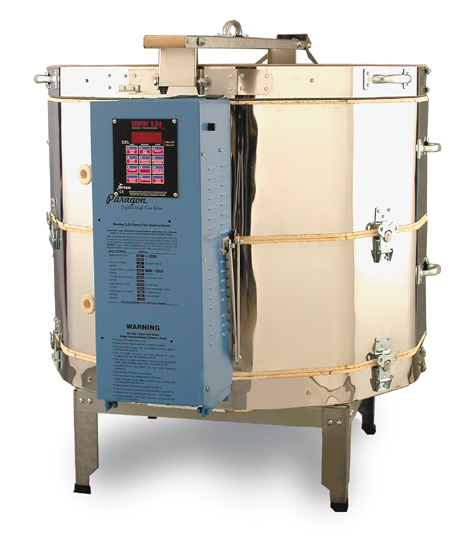
The make and model of a kiln can vary from studio to studio. Some things to consider are the size of the kiln, the brand, etc. An example of one of the kilns used at some of the Cordovan Art School studios is shown below:
Paragon TnF-27-3
- 28″ x 22 1/4″ deep, Cone 10, 8.11 Cu. Ft.
- 3-phase
- 208 volts
- 33 Amps
8. Insurance
Insurance “types” and policies must adhere to the terms stated in the Franchise Agreement.
The Franchise Agreement indicates the franchisee must protect both the business and the Franchisor (Cordovan Arts Franchising, LLC) from liability and losses and requires the franchisee purchase the essential coverage listed below from an insurance company licensed in the franchisee’s state of operation and having at least an “A” rating classification, as indicated in A.M. Best’s Key Rating Guide. Required insurance coverages may be obtained by separate primary policies or in combination with umbrella or excess liability policies.
The franchisee must list the Franchisor, Cordovan Arts Franchising, LLC as an ‘Additional Named Insured’.
The franchisee must forward a copy of the certificate of insurance to the Corporate Office within 30 days of signing the Franchise Agreement. The certificate must state the franchisee’s policies may not be canceled or altered without at least 15 days prior written notice.
- “Special” causes of loss coverage forms, including fire and extended coverage, crime, vandalism, and malicious mischief, on all property of the Business, for full repair and replacement value (subject to a reasonable deductible)
- Business interruption insurance covering at least 12 months of income
- Commercial General Liability insurance, including products liability coverage, and broad form commercial liability coverage, written on an “occurrence” policy form in an amount of not less than $1,000,000 single limit per occurrence and $2,000,000 aggregate limit
- Workers Compensation coverage is required by state law. Your policies (other than Workers Compensation) must list us and our affiliates as an additional insured, must include a waiver of subrogation in favor of us and our affiliates, must be primary and non-contributing with any insurance carried by us or our affiliates, and must stipulate that we receive 30 days’ prior written notice of cancellation.
- EPLI (Employment Practices Liability Insurance)
- E & O (Errors & Omissions)
Franchisees must maintain all required insurance coverage at all times. A current certificate of insurance must be provided to the Corporate Office annually upon renewal.
9. Software and Technologies
To ensure consistent operations, reporting, customer management, and communication across the franchise system, franchisees are required to utilize certain software and technology platforms. These tools support accounting, class management, marketing, communication, and daily business operations. The required technology stack is subject to change as business needs evolve.
A Cordovan Art School Field Consultant will assist you with the setup and implementation of these systems.
| SOFTWARE/ TECHNOLOGY | PURPOSE |
| Computer | Business operations, communication, and software access |
| Cordovan Email | |
| Jackrabbit Class Software | Class management software: student registration, scheduling, and credit card processing |
| Clover Software (PYOP locations only) | Point-of-sale system and credit card processing for PYOP |
| Go High Level | CRM, sales, marketing and communications |
| Quickbooks (Via Xceleran) | Bookkeeping and financial reporting |
| Facebook, Instagram, and TikTok | Social media management and marketing |
| Google Drive/ Google Workspace | Shared files, documents, collaboration |
| Custom Channels | Music Playlists |
10. Website
The Cordovan Design Team will create and maintain all webpages on the Cordovan Art School website, including individual studio location pages. Franchisees are responsible for providing accurate location information, including business hours, phone number, address, email, manager contact information, and any updates needed to keep the page current.
Class, camp, workshop, and event registrations are integrated through Jackrabbit Class software. Franchisees are responsible for maintaining accurate schedules, pricing, availability, and registration information within Jackrabbit, as this information feeds directly to the website.
11. Exterior Signage
The Cordovan Design Team will provide the approved logo and artwork files needed to order exterior signage. Franchisees are responsible for complying with all lease requirements, obtaining landlord approvals, and following applicable city or community sign regulations.
Because facade signage can take up to three months to approve, produce, and install, franchisees should begin the process as early as possible.
All exterior signage designs must be reviewed and approved by the Franchisor prior to production or installation.
12. Construction/ Build-Out
The franchisee is responsible for all aspects of the studio build-out, including coordinating contractors, obtaining required permits, complying with local building codes, and completing the project in accordance with Cordovan Art School brand standards and approved specifications.
IMPORTANT: Carefully manage construction costs throughout the build-out process. Staying on budget can have a significant impact on the long-term success and profitability of your business.
Architect/ Designer
Work with an architect or designer to create plans that meet local requirements and comply with Cordovan Art School design standards.
Paint Colors
The walls should serve as a neutral canvas that showcases the artwork without distracting from it. The Color inside the studio should come from the artwork, not the walls. The following are the approved Cordovan paint colors:
Lobby: SW 7035 (Sherwin Williams Aesthetic White), Pro-Mar 200, interior, eggshell
Classrooms: SW 7035 (Sherwin Williams Aesthetic White), Pro-Mar 200, interior, eggshell
Storage Room/ Kiln Room: SW 7035 (Sherwin Williams Aesthetic White), Pro-Mar 200, interior, eggshell
Trim Paint Color: SW7005 Pure White
No other colors, including accent walls are permitted, in order to adhere to the Cordovan Brand Standards.
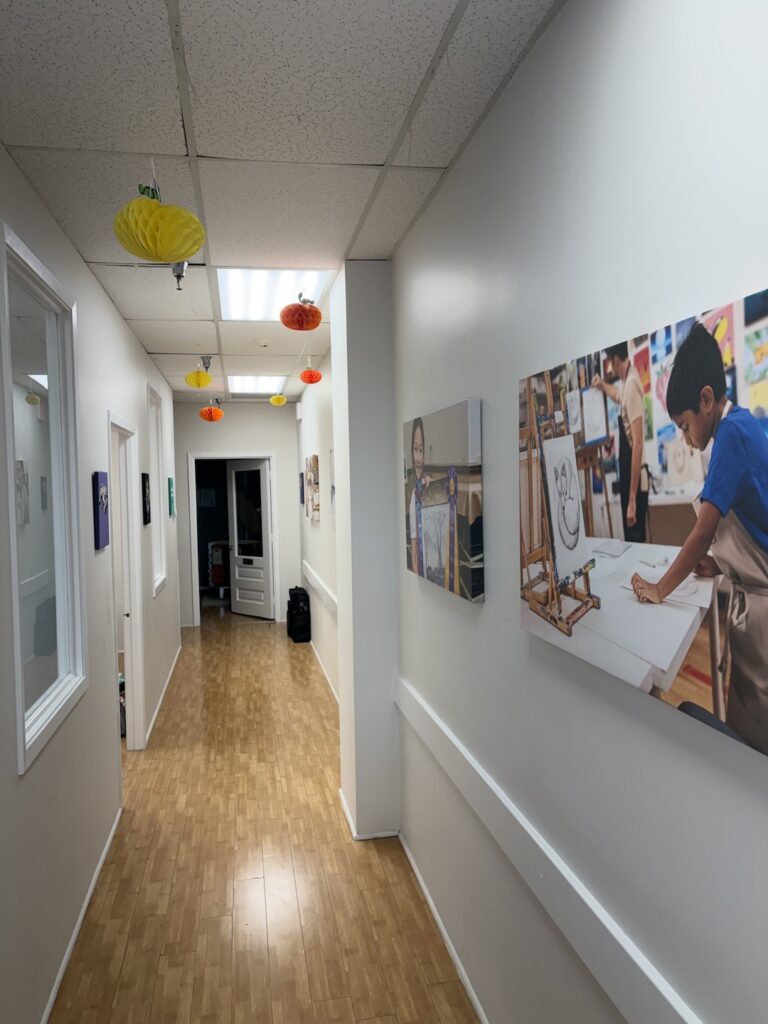
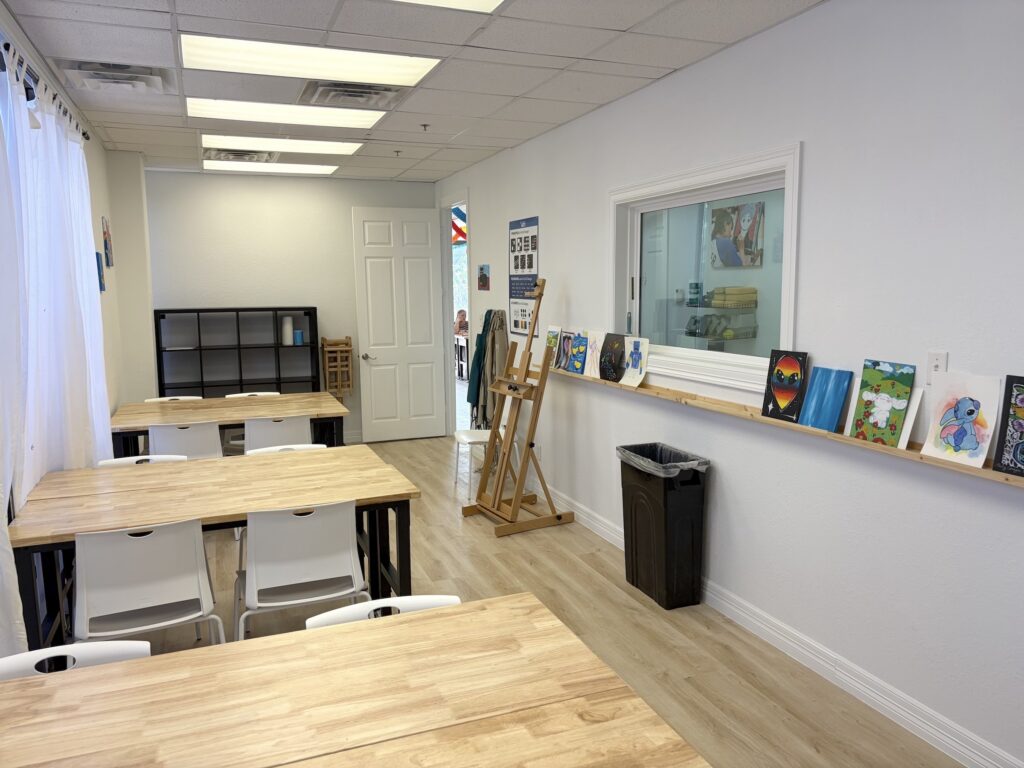

Flooring
Flooring should be a neutral color and style that doesn’t distract from the studio.
Electrical
Kiln
Franchisees should coordinate with their electrician to ensure the proper electrical service, outlet type, voltage, and placement are installed based on the specifications of the kiln being purchased. Proper planning will help avoid costly modifications and installation delays later in the build-out process.
Security Cameras
A security camera may be installed in the lobby area to help promote student safety, security, and general studio oversight. Plan ahead during your construction phase for camera placement, wiring, outlets.
When installed, the camera should be positioned to monitor:
- The main entry and exit door
- The lobby and reception area
- Customer check-in and check-out areas
Cameras should be placed in a manner that respects the privacy of students, parents, teachers, and staff while providing appropriate visibility of public areas within the studio.
Security camera use must complies with applicable laws, regulations, and company policies regarding privacy and video recording.
Door Chime
A door chime may be installed to notify staff whenever someone enters or exits the studio. This can be especially helpful when the manager or staff members are assisting customers in classrooms, storage areas, kiln rooms, or other areas away from the front desk. Often, a door chime runs on batteries, and does not need electricity to function.
Phone/ Internet
Plan ahead during your construction phase for phone and internet placement, wiring and outlets.
Plumbing & Sinks
When designing your studio, carefully plan sink locations to ensure convenient access to water throughout the space. Proper sink placement helps classes, camps, and Paint Your Own Pottery (PYOP) operations run efficiently.
A sink in each classroom is recommended whenever possible. However, if installing a sink in every classroom is cost-prohibitive, consider adding additional sink stations in the lobby or other common areas to provide adequate access to water for students, instructors, and staff.
Paint Your Own Pottery (PYOP)
Studios offering Paint Your Own Pottery (PYOP) should plan for a dedicated sink that is easily accessible in the lobby near the PYOP paint bar. Artists will regularly need access to water for washing hands, rinsing brushes, and cleaning supplies.
PYOP Paint Bar Shelving System
Studios that include the PYOP option should plan for a paint display as shown in the examples below. The sink and paint bar location should support efficient workflow and provide convenient access for guests using the PYOP area.
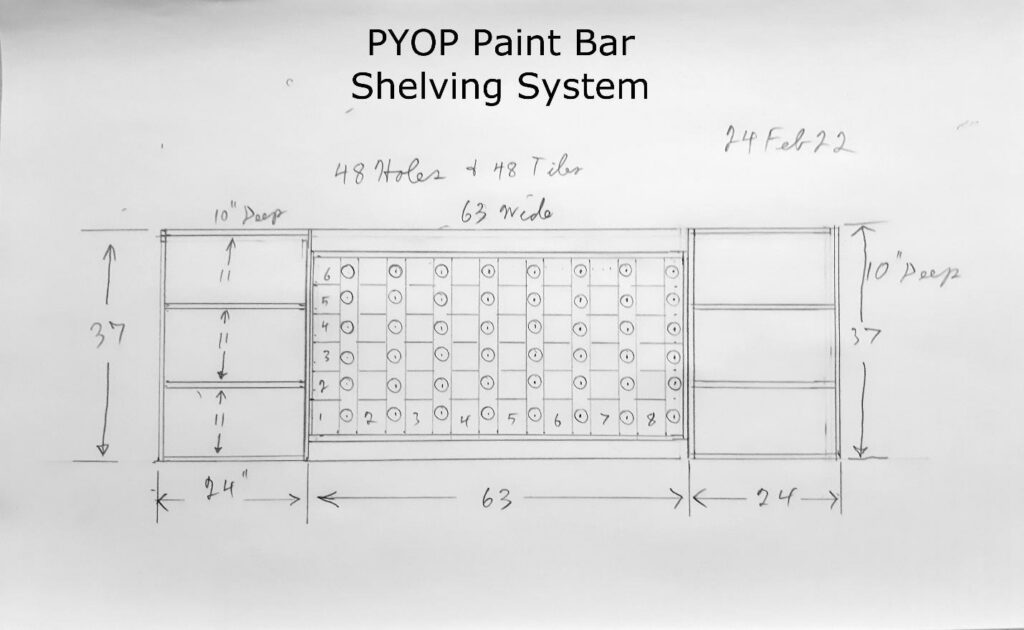
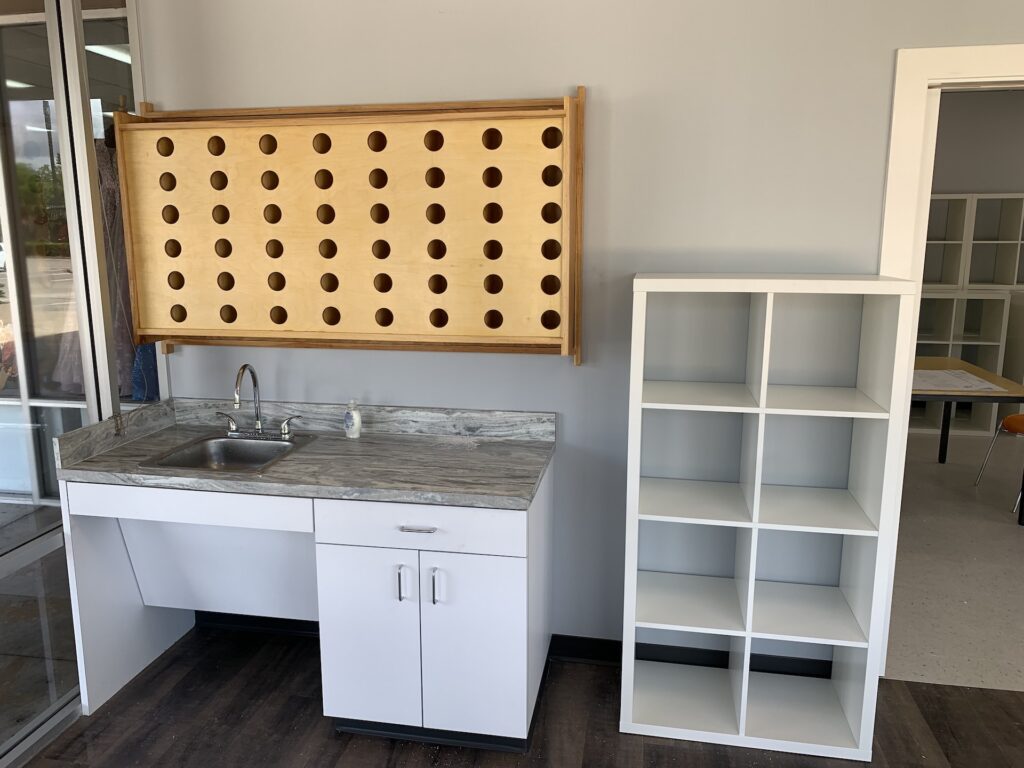



Art Classrooms
Whenever possible, install a sink in each classroom. Having a sink nearby allows students and teachers to easily wash hands, clean brushes and tools, and manage art supplies without leaving the classroom.
If plumbing is not available in each classroom, or if it is cost prohibitive, consider installing shared sinks in a convenient central location. Shared sinks may be strategically placed in a hallway, lobby, or other area that is easily accessible from all classrooms.
Pottery Wheel Classroom
If your studio has pottery wheels, a sink must be installed directly in the wheel classroom. Wheel throwing can create significant clay and water messes, and students need convenient access to water for cleaning their hands, tools, and work areas. Keeping the sink within the classroom also helps prevent students from carrying clay and wet tools throughout the studio.
Planning Tip: When determining sink locations, consider how students and teachers will move through the studio during classes, camps, and busy transition periods. Well-placed sinks reduce unnecessary traffic, simplify cleanup, and help keep the studio clean and organized.
Landlord Approval
Submit all required plans, signage, and build-out documents to the landlord for review and approval before construction begins.
Hiring a Contractor
Franchisees are responsible for selecting a qualified and licensed General Contractor to complete the studio build-out in accordance with approved plans, local building codes, and Cordovan Art School standards. It is recommended that franchisees obtain at least three bids to compare pricing, timelines, and experience before making a final selection.
Final Walk-Through
Before making final payment to your General Contractor, conduct a thorough walk-through of the studio to ensure all work has been completed according to the approved plans and specifications. Carefully inspect finishes, lighting, plumbing, electrical outlets, doors, paint, flooring, HVAC systems, and any installed fixtures or equipment. Create a punch list of any incomplete or unsatisfactory items and confirm that all corrections are completed before closing out the project. This final review helps ensure your studio is ready for setup, training, and opening to customers.
Lien Releases
Obtain lien releases from contractors and vendors to confirm all work has been paid for and to protect your business from future claims.
Tenant Improvement (TI) Reimbursement from Landlord
If your lease includes a Tenant Improvement (TI) allowance, submit all required documentation to receive reimbursement from the landlord.
Certificate of Occupancy
Obtain a Certificate of Occupancy (CO) from the appropriate local authority before opening for business. The Certificate of Occupancy confirms that the space meets applicable building, safety, and zoning requirements and is approved for occupancy. In many cases, your General Contractor can assist with coordinating the final inspections and obtaining the Certificate of Occupancy.
Site Inspections
Franchisees are responsible for complying with all applicable local, state, and federal laws and regulations. It is recommended that franchisees consult with an attorney or other qualified professional to understand the requirements in their market.
Franchisees are also responsible for coordinating and completing all required inspections throughout the construction process. Common inspections may include:
- Framing
- Electrical
- Plumbing
- Mechanical (HVAC)
- Fire Marshal / Sprinkler
Mail Key
Obtain a mailbox key in order to receive business mail at your studio. In many cases, you will need to visit your local post office with a copy of your lease and a valid form of identification in order to receive a mailbox key.
Keys to Building
Once construction is complete and possession of the space has been transferred, it is recommended that franchisees rekey or replace all exterior door locks. This helps ensure the security of the studio by limiting access to authorized team members only. Be sure to maintain a record of all keys issued and consider keeping a spare key in a secure lockbox for emergency access.
PRO TIP: Install a lockbox with a spare key outside the building (at the back of the building). This can be very helpful for emergency situations!
13. Licenses and Permits
It is the franchisee’s sole responsibility to acquire and verify all necessary licenses for operating the business. Franchisees are required to seek verification from their own attorney regarding compliance with all local and Federal licensing and permit requirements for their locale.
Franchisees may be required to seek a state, county, or city license on their location. Requirements may necessitate completion of an application, testing, bonding, establishing proof of insurance, and sharing proof of continuing education.
Current required licenses and permits are listed below and are subject to change based on location:
- Business Location Licenses & Permits
- General Local Business License
- Signage Permits
- Alarm System Permit (if applicable)
- Certificate of Occupancy (CO)
- Sales Tax License
The Small Business Administration features a thorough process that a franchisee may utilize for better understanding the requirements for launching a business:
Link: https://www.sba.gov/starting-business/business-licenses-permits
(This site is not affiliated with Cordovan Art School– franchisees are required to verify their local licensing requirements with an attorney.)
14. Utilities & Services
Inquiring about utilities and services well in advance of your proposed opening date will help to avoid complications during the grand opening. Identify how much advance notice is required for installation and connection of services and establish a routine maintenance schedule. Also, pay any starting deposit and set up automatic monthly payments when possible.
At a minimum, the following services will need to be arranged:
- Phone & Internet
- Electricity
- Gas
- Water and sewer
- Trash
- Custom Channels: Music
- Security camera covering lobby entrance
- Register business personal property with Appraisal Tax District (if needed)
The additional services are worth consideration (as needed):
- HVAC service contract
- Pest control contract
- Streaming service (Disney+, Netflix, etc)
- Window washing
- Snow removal (where applicable and if not handled by landlord)
Dedicated Business Phone Line
When operating a franchise, it is essential to have a dedicated business phone number. A separate business phone number reinforces a professional image for your franchise. By having a dedicated line for your Cordovan Art School franchise, you streamline communications. This ensures that calls related to franchise operations—such as customer inquiries, service requests, and vendor interactions—are handled separately from personal or other business calls, leading to more organized and effective communication management. This clarity can be crucial for maintaining accurate records and tracking business performance, making it easier to address any issues or assess the effectiveness of your communications.
Adhering to these guidelines is important for compliance with the franchisor’s standards and operational procedures. A dedicated business phone number is a fundamental tool for managing your franchise effectively. It supports professional communication, enhances customer service, ensures operational clarity, and helps maintain compliance with franchise standards.
15. Furniture, Fixtures, Equipment & Supplies
To ensure a consistent customer experience across all Cordovan Art School locations, franchisees must maintain the minimum standards established by the Franchisor.
Placing Your First Order
The furniture, fixtures, equipment, and supplies required to operate a Cordovan Art School franchise may vary based on the size of the facility, local market conditions, and applicable regulations. All major equipment and fixture purchases or leases must be approved by the Corporate Office.
The list of required Furniture, Fixtures, Equipment (FF&E), and supplies is subject to change. Franchisees should work closely with their Field Consultant to coordinate purchasing, setup, and installation.
To simplify the ordering process, Cordovan Art School provides FF&E order forms, approved vendor recommendations, and pre-authorized Amazon shopping lists containing many of the items needed to open and operate your studio. Click on the following link:
Furniture, Fixtures, & Equipment (FFE)
Required Vendors
The Corporate Office has a working relationship with the following vendors to assure product quality and consistency. You will be required to purchase your materials from this approved list of vendors unless prior approval from the Corporate Office is obtained. This list is subject to change.
VENDOR | PRODUCTS/ SERVICES | CONTACT INFO | ORDERING INSTRUCTIONS |
| Cordovan Art School | “Level Up” Pins, Magnetic Palettes | Nancy@CordovanArtSchool.com | Order from Cordovan Corporate Office. Send order requests to: Nancy@CordovanArtSchool.com |
Jerry’s Artarama | Art Supplies | Fill out Jerry’s Artarama Supply Form. Instructions provided by Field Consultant | |
ETundra | Aprons | https://www.tundrafmp.com/ (see ordering instructions under “Aprons” section) | See ordering Instructions under “Aprons” section below. |
American Business Solutions | Marketing Materials/ Swag | Elite Stores | Login/PW provided by Cordovan |
Amazon Prime | Art Supplies | Franchisee set up their own account. Cordovan Corporate will provide an approved order list. | |
Chesapeake Ceramics | PYOP supplies | ||
Gare | PYOP supplies |
Aprons

How to order aprons:
Step 1: Send an email with apron request to the persons listed below. Your email must include your SX studio # (this can be found in your OFFICAL Studio Google Folder >Official Studio Worksheet >Password Tab
| To: Lael Woosley | lwoosley@tundrafmp.cpm |
| CC: Kim Trotter | ktrotter@dfsupply.com |
Step 2: In your email, indicate how many aprons you want to order of each type below.
| Approximate Age (choose the size that fits best) | Apron # | Color | |
| Ages 4-8 | 1941KLG: KNG 24 in Bib Apron with logo | Green | |
| Ages 9-16 | 1040RBL: KNG 27 in Bib Apron with logo | Blue | |
| Teens/ Adults | 1033LTP: KNG 32 in Bib Apron with logo | Taupe | |
| Teachers Only | 1557BLK: KNG 32 in Bib Apron with logo | Black |
16. Lobby Décor & Interior Signage
The lobby and classroom environment play an important role in creating a welcoming, professional, and inspiring experience for students and customers. Work with your Field Consultant to select and install the required décor, displays, signage, and artwork that reflect the Cordovan Art School brand.
Lobby Décor
When setting up your studio, follow the list of approved studio décor and displays as shown below.
| TYPE | ROOM | PURPOSE |
| T-Shirt Display | Lobby | Cordovan Art School T-shirts add personality to the studio and showcase the creativity of our programs. |
| Seasonal Decorations | Lobby | Seasonal decorations to keep the studio fresh, inviting, and visually appealing throughout the year. |
| Ceramics Class Clay Projects | Lobby | Showcase ceramics hand-built clay projects to inspire customers and prospective students. |
| Inspirational PYOP Samples | Lobby (PYOP Only) | Display painted pottery samples to inspire customers and showcase project ideas. |
| Before & After PYOP Plate | Lobby (PYOP Only) | Display a sample plate showing pottery before and after firing to help customers understand the glazing process. |
| Paint Bar Tiles | Lobby | Display glaze sample tiles to help customers select colors and finishes for their pottery projects. |
| High-Res. Canvas Prints Package | Lobby | Install the approved canvas artwork and photography package in the lobby and common areas. |
| Book a Party with Us Display | Lobby | Display the sign “book a party with us” alongside a party plate or party decorations. |
| Original Artwork from Teachers | Lobby/ Classrooms | Display high-quality teacher and student artwork throughout the studio to inspire creativity and create an engaging learning environment. Lobby artwork should be framed or displayed on stretched canvas to maintain a polished, professional appearance. |
| Original Artwork for Classroom (Hand-crafted, unframed) | Classrooms | Display high-quality original hand-crafted artwork to inspire students and create a creative, engaging learning environment. Classroom artwork may be displayed without frames to provide flexibility and showcase a variety of artistic styles and mediums. |
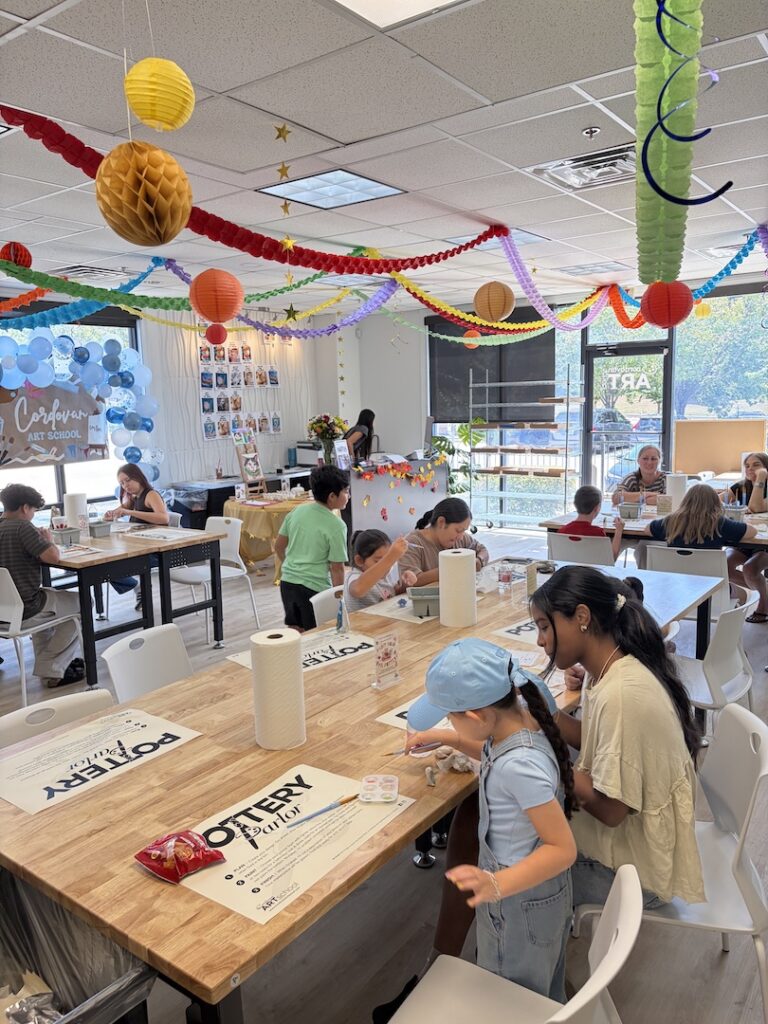
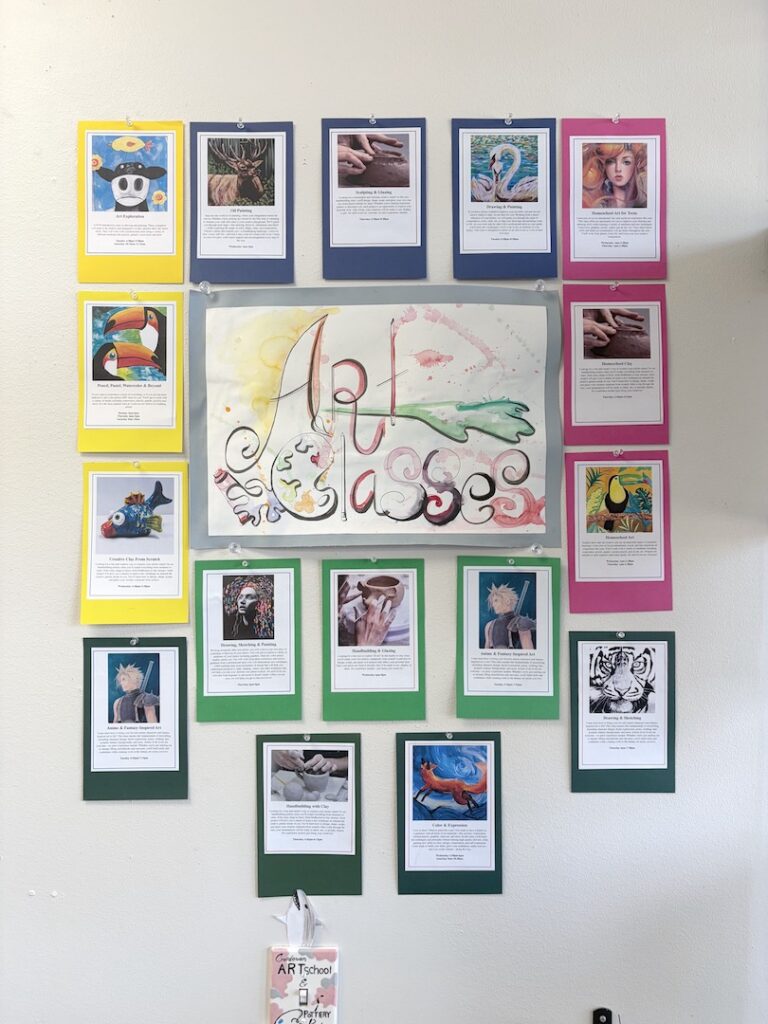

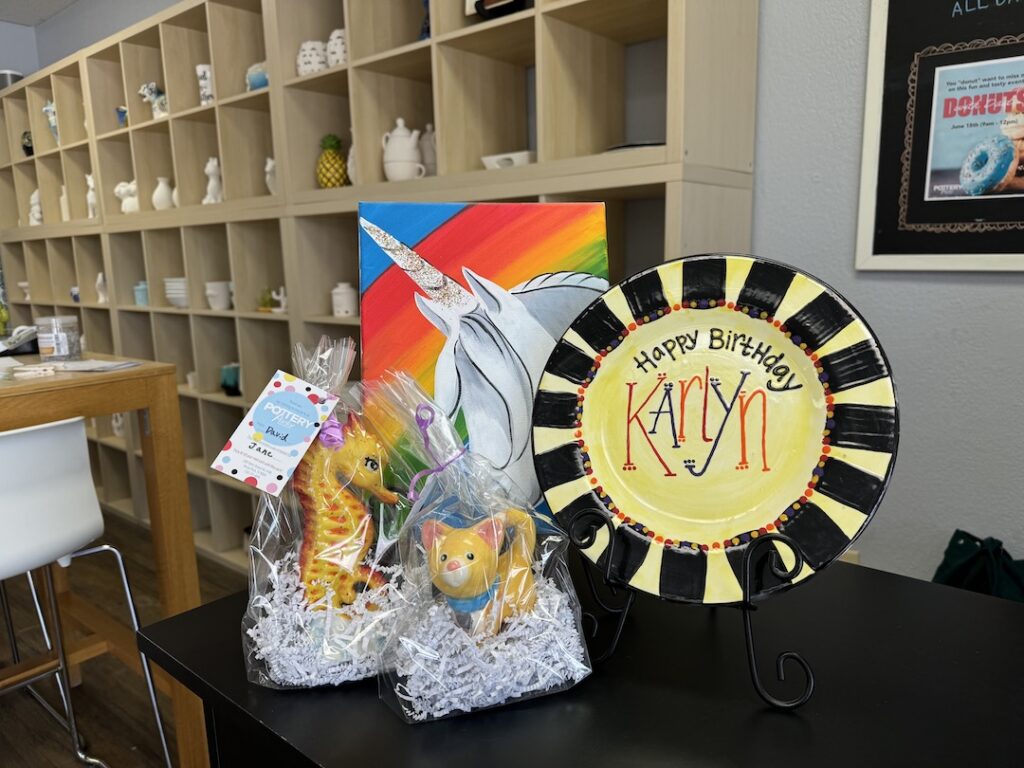



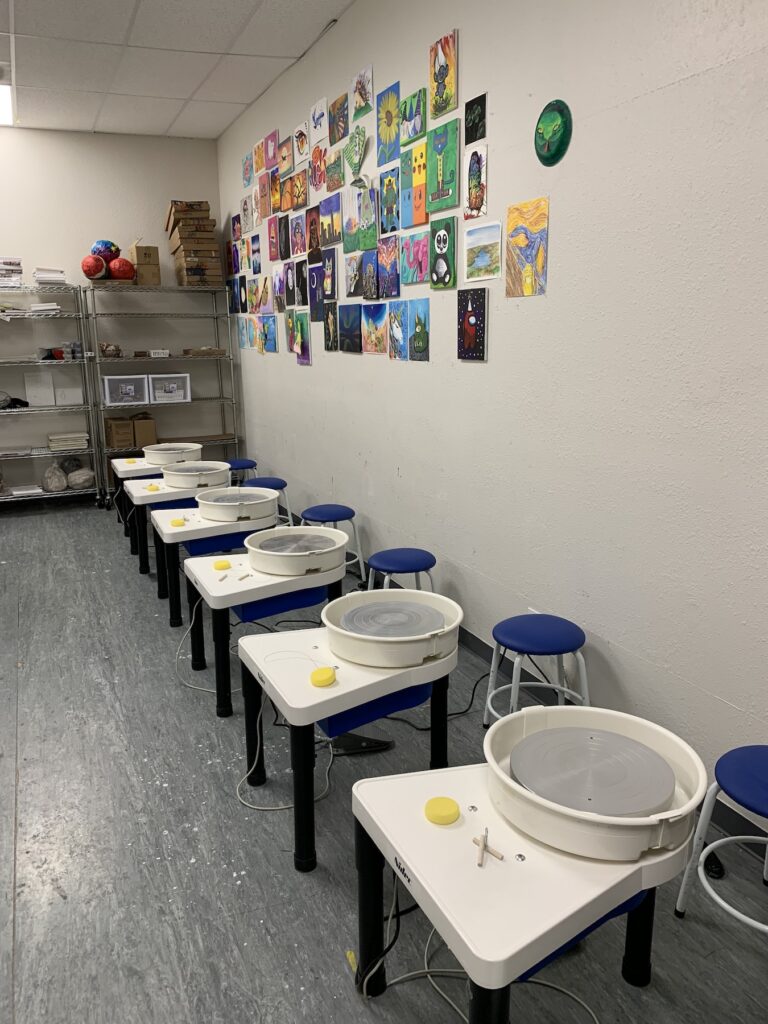



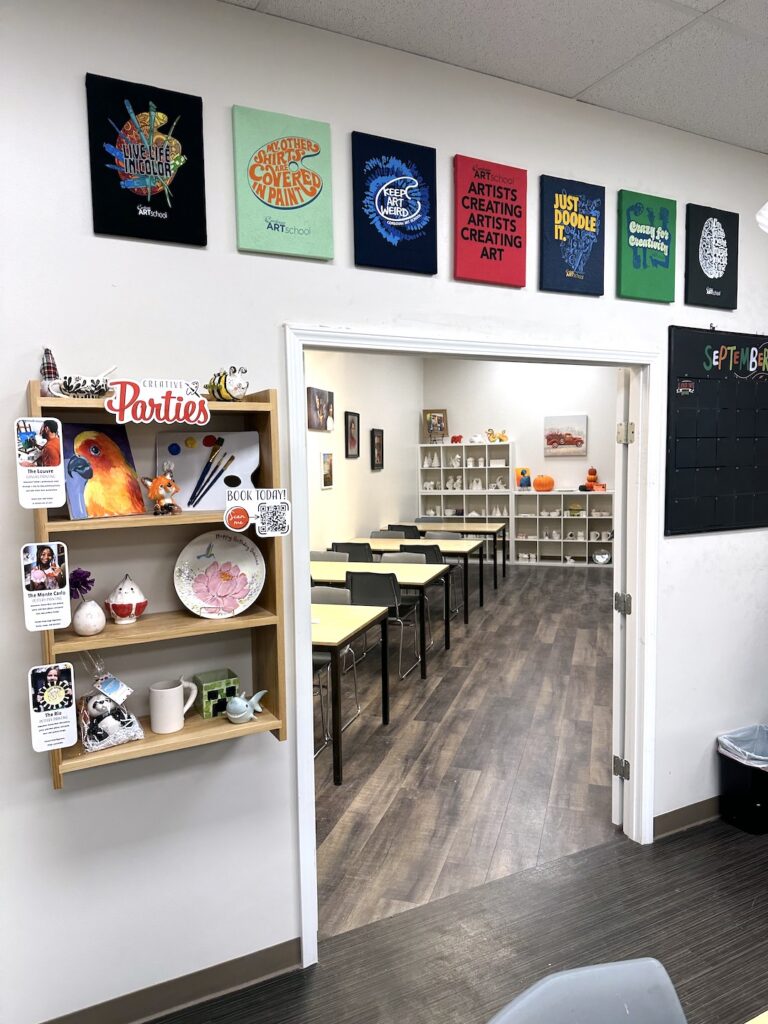

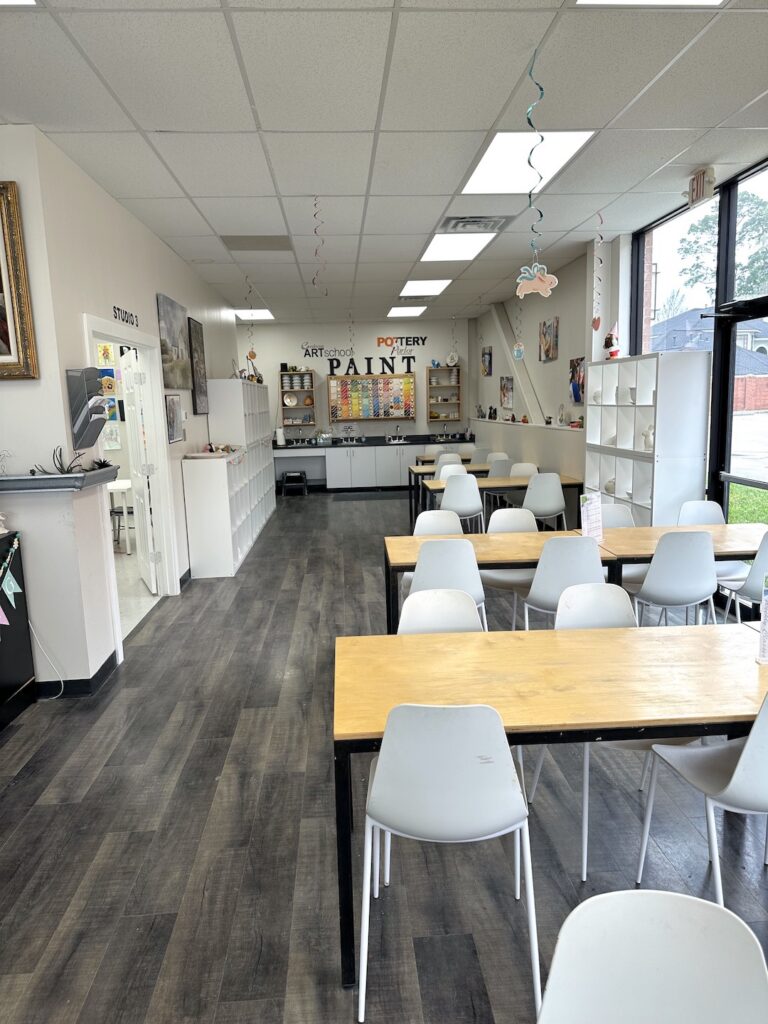

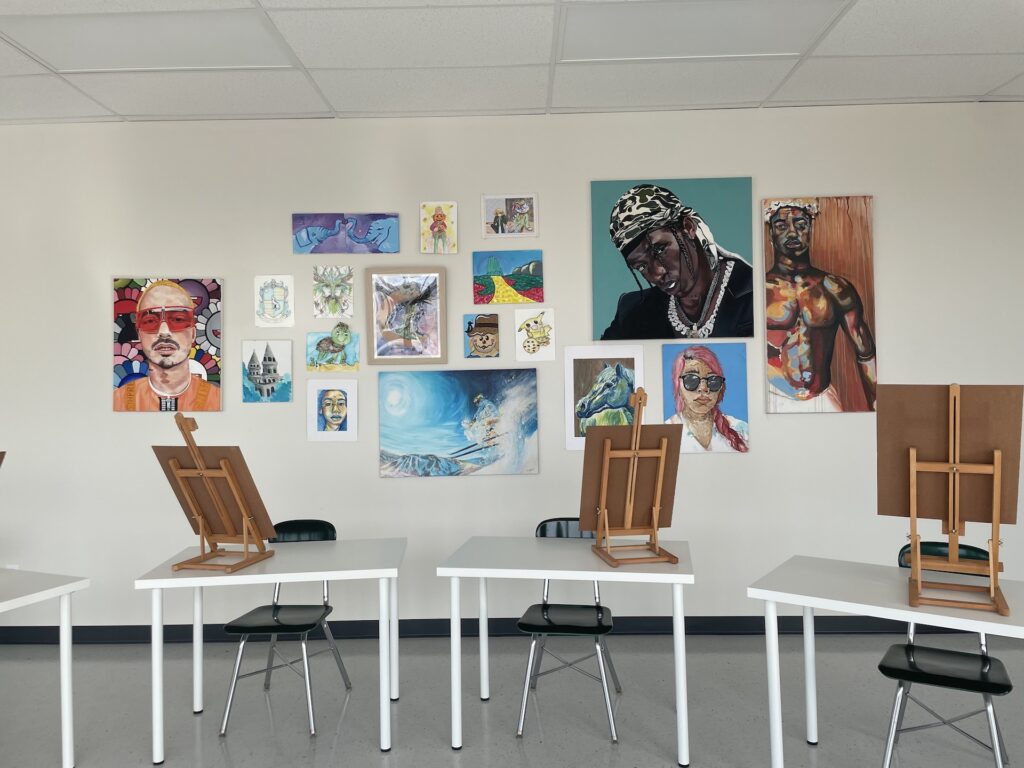
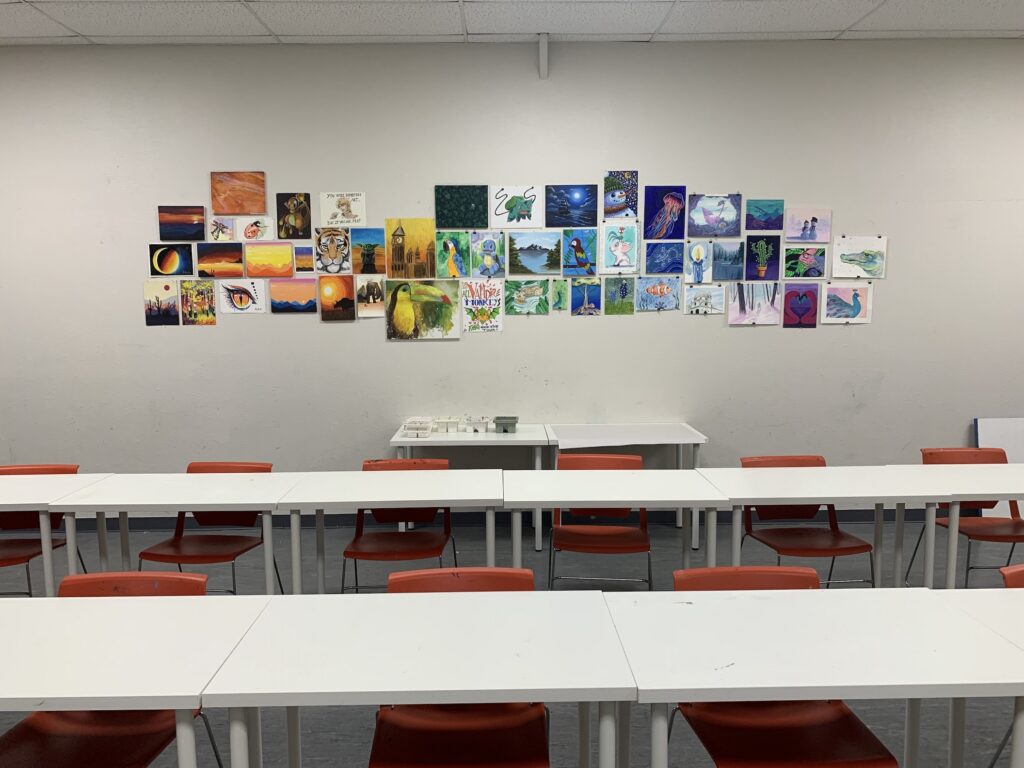

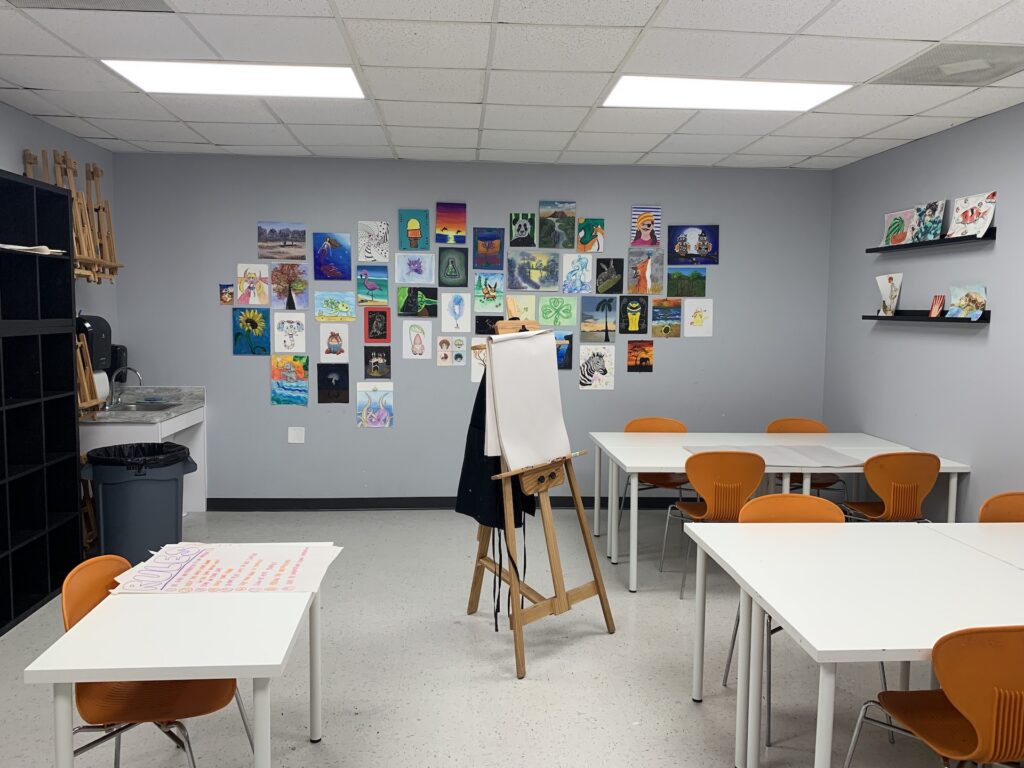
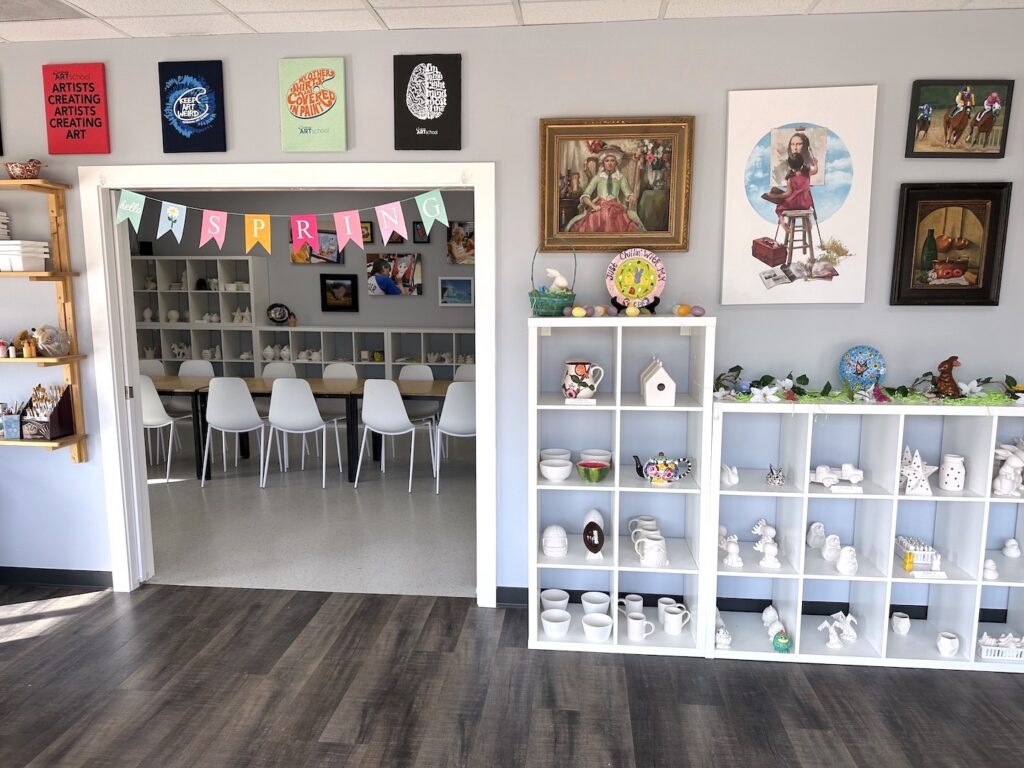
Interior Signage
| SIGNAGE TYPE | ROOM | PURPOSE |
| Front Door Vinyl Signage | Front Door | Install approved vinyl graphics including the Cordovan Art School logo, business hours, and required door signage. |
| “LEVEL UP” Magnetic Board | Lobby | The Level Up Board recognizes student achievement and promotes participation in the Achievement Program. It should be displayed in a prominent location within the lobby where students and parents can easily view it. |
| Chalk Board | Lobby | Promotes current classes, camps, workshops, special events, and seasonal promotions. It should be displayed in a prominent location within the lobby and updated regularly to keep customers informed about upcoming opportunities. |
| Digital Display Board | Lobby | Promotes upcoming classes, camps, workshops, and special events. |
| Book a Party with Us | Lobby | Promotes parties |
| A-Frame Sidewalk Easel | Lobby | Place an A-frame easel outside the studio to promote classes, camps, events, and special offers. |
| Classroom Vinyl Signage | Lobby/ Entrance to Classrooms | Label the door of each classrooms with vinyl signs: Studio 1, Studio 2, Studio 3, etc. |
| Pottery Parlor Logo | Lobby (PYOP Only) | Install the approved Pottery Parlor logo signage in the lobby area. |
| Paint Bar Sign | Lobby (PYOP Only) | Install approved signage identifying the Paint Bar area. |
| Studio Fee Signage | Lobby (PYOP Only) | Display current studio fee signage near pottery displays and customer workstations. |
| Pottery Pickup Labels A-Z | Storage Room/ Lobby | Install A–Z labels to organize finished pottery by customer last name for easy pickup. |
| Pottery Organization Labels | Kiln Room | Install labels for organizing pottery before and after firing. |
Staging
The lobby is often a customer’s first impression of your studio. A well-staged lobby should feel warm, creative, organized, and inviting. Thoughtful placement of artwork, displays, signage, pottery samples, and seasonal décor helps showcase the quality of the Cordovan Art School programs and encourages customers to explore the studio. An attractive lobby not only enhances the customer experience but can also increase student registrations for classes, camps, workshops, and parties, and PYOP participation.
16.1 Music
Music is an important part of creating a fun, welcoming atmosphere at Cordovan Art School. All music must be played through Custom Channels to ensure appropriate, family-friendly content. Be thoughtful about volume levels. Music should add energy and atmosphere to the studio without making it difficult for customers, teachers, or front-desk staff to have conversations.
Preferred Pricing
Cordovan Art School has negotiated a preferred pricing package, so make sure to set up under the Cordovan Custom Channels program rather than creating a separate account. The package includes:
- Sonos One Speakers
- Custom Channels Service: The monthly subscription allows studios to play music in up to four (4) separate zones at the same time.
Music by Zone
Each zone may play a different Custom Channels station, or multiple zones may play the same station simultaneously. For example, a studio may play different music in the lobby, classrooms, and other areas—all under the same monthly Custom Channels subscription.
Approved Playlists
Music is selected from pre-approved playlists. The lobby required that music be played in the lobby at all times. Teachers may turn on music from pre-approved playlists during the classroom as well. Teachers should keep in mind the age-appropriateness of the music and fit the music style to the class they are teaching.
Setting Up Your Custom Channels Account
To open a Custom Channels account, purchase speakers, or receive assistance with setup, contact Tiara at tiara@customchannels.net.
Once your studio has been set up with Custom Channels, you will receive a login to access your account.
Setting Up the Sonos One Speakers
Before connecting Custom Channels, each Sonos speaker needs to be connected to the studio’s Sonos system.
- Place the Sonos One on a shelf, and plug it in.
- Download/open the Sonos app onto the Manager’s computer. You will also need to download the app on your phone to use as a connector piece between your Sono’s speaker and computer if you have an apple computer.
- Connect devices to the studio’s Wi-Fi network.
- Follow the Sonos prompts to add a new speaker/product.
- Allow Sonos to locate and connect to the speaker.
- Assign a name to each Sonos One speaker that corresponds with the appropriate room or zone.
- Recommended Zone Names: Lobby, Classroom 1, Classroom 2, Classroom 3, etc.
Syncing Custom Channels to Sonos
Once your Sonos speakers are connected and working:
- Open the Sonos app.
- Go to the area for adding or managing music/content services.
- Search for Custom Channels.
- Select Custom Channels and choose the option to add/connect the service.
- Sign in or authorize the service using the Custom Channels account information provided for the studio.
- Once connected, Custom Channels should appear as an available music source within Sonos.
Selecting a Different Music Playlist for Each Zone
With Cordovan’s Custom Channels plan, you can have up to four (4) zones playing simultaneously. Just select a speaker/zone and then choose the Custom Channels station you want playing in that area. For example, you could make the following music assignments:
Lobby → Play Cordovan Remix Channel (always)
Pottery Parlor → Play Fun, energetic music
Classroom 1 → Play Relaxed background music
Classroom 2 → Play Relaxed background music
Selecting the Same Music Playlist for Multiple Zones
If you want several areas of the studio playing the same music, Sonos allows you to group speakers together.
- Open the Sonos app.
- Select the zone that is currently playing the desired Custom Channels station.
- Choose the option to group rooms/speakers.
- Select the additional speakers you want included.
- The grouped speakers will now play the same music together.
When you want the areas to operate independently again, simply ungroup the speakers in Sonos.
17. Initial Marketing Set-Up
Marketing plays a critical role in building awareness of your new studio and generating enrollments before and after opening. The Cordovan Marketing Team will provide training, resources, templates, and support to help you establish your local marketing presence. Franchisees should work closely with the Marketing Team to implement both digital and traditional marketing efforts in their community. The purpose of this section is to guide you in initial set-up.
Marketing & Graphics Training Call
Work with your Field Consultant to schedule an Initial Marketing Training Call with the Cordovan Art School Marketing Team. During this call, you will review available marketing resources, branding standards, approved marketing materials, and pre-opening marketing strategies.
Setting up Marketing Platforms
| Marketing Platform | Setup & Requirements | Initial Setup By | Managed By |
| Google Business Profile | Create and verify your Google Business Profile to improve local search visibility and help customers find your studio. | Cordovan Creative Marketing Manager | Franchisee |
| Google Ads | Set up and optimize Google Ads campaigns to increase local awareness and drive registrations. | Franchisee | Franchisee |
| Yelp Business Account | Create and verify your Yelp Business Account to improve local visibility and provide accurate studio information. | Cordovan Creative Marketing Manager | Franchisee |
| Apple Maps Business Listing | Create and verify your Apple Maps business listing so customers can easily find your studio and access accurate location information. | Cordovan Creative Marketing Manager | Franchisee |
| Facebook and Instagram Pages | Create your studio’s Facebook and Instagram pages and connect them to the corporate accounts for content sharing and brand consistency. | Cordovan Creative Marketing Manager | Franchisee |
| Facebook and Instagram Ads | Set up targeted Facebook and Instagram advertising campaigns to build local awareness and generate registrations. | Franchisee | Franchisee |
| American Business Solutions | Print Marketing Materials (Business Cards, Flyers, Banners, etc) https://www.gotaces.com/66f9e103-9785-4c98-9c54-e9105ca9402d/login?returnUrl=%2FMallfront%2FIndex | Cordovan Creative Marketing Manager | Franchisee |
| Cordovan’s Google File Folder | Download a variety of creative assets for all of your marketing needs (logos, photos, videos, flyers, etc) | Cordovan Creative Marketing Manager | Franchisee |
Placing Your First Orders for Marketing Materials
Review recommended quantities with your Field Consultant and place initial orders for marketing materials, including business cards, flyers, schedules, coupons, promotional items, Grand Opening materials, etc.
Level Up Program Materials
Order Level Up classroom posters, flyers, achievement pins, and magnetic palettes for use in the Achievement Program.
Custom Graphic Requests
Submit requests to the Cordovan Art School Design Team for any customized marketing pieces not available through approved templates or ASB.
Find Local Marketing Partners
Local Influencers and Mom Blogs
Build relationships with local influencers, parenting groups, and mom blogs to help generate awareness and referrals.
Local Camp Guides
Submit camp listings to local camp directories and community guides.
Local Media Announcements
Notify local newspapers, magazines, and media outlets of your opening and seek inclusion in “new business” announcements.
Newspaper and Magazine Advertising
Evaluate opportunities for print and digital advertising through local publications.
Promotions During Launch
| Type of Promo | Marketing Platform | Responsible Party |
| 3:1 coupon | Franchisee | |
| Free PYOP | ASB: Business Card | Franchisee |
| Grand Opening Flyer | Franchisee | |
| Google Ads | Franchisee | |
| Facebook Ads | Franchisee |
Grand Opening Promotional Materials
Order banners, flyers, signage, giveaways, and other materials needed to support your Grand Opening event.
18. Hiring
Initially, it is highly recommended that you, as the franchisee, operate your Cordovan Art School yourself. Taking on this role allows you to gain firsthand experience with daily operations, student and parent interactions, and overall program delivery. This direct involvement is invaluable for building a strong understanding of the business and ensuring that it runs smoothly in accordance with brand standards.
Operating the school on your own at first also helps minimize overhead costs—an important consideration during the startup phase when establishing a stable financial foundation is key. You’ll be in full control of maintaining instructional quality and creating a welcoming, creative environment that reflects the mission of the brand.
Franchisees are not required to hire staff immediately, but they may choose to do so based on their individual needs and capacity. Optional roles include a studio manager, an assistant manager, art teachers, and a general manager (a general manager would only be necessary for a franchisee that opens several locations). These positions can help support programming, scheduling, and administrative tasks as enrollment grows.
As your school develops and the demand for classes increases, it may become appropriate to expand your team. The following sections will provide guidance on hiring and onboarding staff to support your continued growth and success.
Manager
See “Managers, Teachers, and Staff” Section of Brand Standards Manual
Assistant Manager
See “Managers, Teachers, and Staff” Section of Brand Standards Manual
Managers should conduct an in-person interview before hiring an Assistant Manager. During the early stages of a studio’s growth, to help keep labor expenses low, an Assistant Manager may only be needed during camps, special events, or other busy periods. The Assistant Manager should be a dependable individual who can be trusted to operate the studio and perform many of the manager’s responsibilities when the Manager is unavailable.
Art Teachers
See “Managers, Teachers, and Staff” Section of Brand Standards Manual
Teachers are compensated only for the classes, camps, workshops, and events they are scheduled to teach. Teaching positions are part-time and are scheduled based on studio needs and instructor availability.
Finding New Teachers
Franchisees should always be networking to find good-quality art teachers. Establishing relationships with colleges and local community schools (elementary, middle school and high schools) is a great place to find art teachers, especially for summer camps.
Franchisees should only use paid job advertisements when necessary, such as Indeed or Craig’s List. Whenever possible, utilize free posting options to reduce recruiting costs.
When creating job postings, be sure to target the local market by setting appropriate location filters. Limiting advertisements to applicants within a reasonable commuting distance can help attract qualified candidates and reduce applications from candidates who live too far away to realistically work at the studio.
Evaluating Skill Level
Franchisees or assigned manager should review all resumes and portfolios before inviting an applicant to an in-person interview. The online portfolio submission review is designed to determine whether the applicant possesses the traditional drawing, painting, and design skills necessary to teach at Cordovan Art School. Applicants who do not demonstrate sufficient artistic skill should not be invited to interview.
Cordovan Art School is not an “arts & crafts” studio. Our curriculum focuses on traditional drawing, painting, sculpture, and the principles of art and design. For this reason, it is important that teachers possess the artistic skills and technical knowledge necessary to teach these subjects effectively.
If a manager is unsure how to evaluate a portfolio, they should consult their Field Consultant. Whenever possible, it is recommended that portfolios be reviewed by two qualified individuals to help ensure consistent hiring standards.
Art teacher applicants must submit at least five (5) examples of their personal artwork. Student artwork, classroom projects, or artwork created by students they have taught should not be included in the evaluation process.
If the portfolio demonstrates the necessary skill level, the applicant may be invited to participate in an in-person interview. During the in-person interview, the manager should ask questions to evaluate the candidate’s personality, friendliness, dependability, professionalism, communication skills, and ability to work with students.
Teacher Application Process
Prospective art teachers may apply for employment through the Cordovan Art School website. Once an application is submitted, an automated email notification is sent to the franchisee. The franchisee should respond to all new teacher applications within 24 hours.
After reviewing the applicant’s resume and art portfolio, the franchisee should determine whether the candidate is a potential fit for Cordovan Art School and respond accordingly.
Candidate Has Potential, but No Current Opening: If the candidate appears to be a strong fit but there are no teaching positions currently available, send the following response:
Thank you for your interest in joining Cordovan Art School. Our current classes are fully staffed for this semester. However, we were impressed with your qualifications and will keep your resume on file. We will contact you if a teaching opportunity becomes available.
Best Practice: Even if there is no immediate opening, the franchisee should schedule an interview with promising candidates. This provides an opportunity to evaluate the applicant’s teaching ability, communication skills, personality, and artistic experience so qualified instructors are ready when future teaching opportunities become available.
Candidate Is Not a Fit: If the franchisee determines that the applicant is not a good fit for Cordovan Art School, send the following response:
Thank you for your interest in working with Cordovan Art School. We appreciate the time you took to apply and wish you the best in your future endeavors.
Applicant Tracking: The franchisee should maintain a detailed database of all teacher applicants, including resumes, portfolios, interview notes, and hiring status. Maintaining accurate and organized records of qualified candidates is an important part of operating a successful school and allows the franchisee to quickly identify and contact potential instructors as teaching positions become available.
Assigning Teachers to Classes
Teachers should be assigned to classes based on both their artistic ability and personality. Every teacher, regardless of the age group they teach, must be friendly, positive, dependable, professional, and able to represent the values and teaching philosophy of Cordovan Art School.
- Do Not Hire: The applicant does not possess the artistic ability or qualifications necessary to teach at Cordovan Art School.
- Assistant Teacher: The applicant demonstrates developing artistic skills and has the potential to become an excellent instructor. This role is ideal for individuals who are building their teaching experience or refining their artistic abilities. Many high school and college students begin as Assistant Teachers and may be promoted to Art Teacher as their skills and experience develop.
- Ages 5–7: Teachers assigned to this age group should have a basic understanding of traditional art principles and be able to demonstrate foundational drawing and painting techniques. More importantly, they should be patient, energetic, encouraging, and skilled at classroom management. Although artistic expectations are introductory, arts and crafts projects are not part of the Cordovan curriculum. Teachers must have sufficient traditional art skills to effectively teach drawing, painting, and other fine art concepts appropriate for young students.
- Ages 8–12: Teachers should demonstrate strong competency in drawing, painting, and traditional art and design principles. They must be confident in demonstrating each technique they teach and capable of answering students’ questions while providing meaningful artistic instruction. Remember: You cannot effectively teach skills you have not mastered. (you can’t teach what you don’t know).
- Teens & Adults: Teachers assigned to teen and adult classes should be highly skilled artists with advanced knowledge of the principles of art and design. Their technical ability must exceed the skill level of the students they are teaching, allowing them to confidently demonstrate advanced techniques, provide constructive feedback, and mentor students as they develop their artistic abilities.
Teacher Onboarding Checklist
- Signed Employment Agreement and completed all new hire paperwork
- Studio tour and art supply orientation completed
- Teacher contact information entered into Jackrabbit
- Teacher assigned to classes in Jackrabbit
- Login credentials provided for online lesson plans (online.cordovanartschool.com)
- Completion of two teacher shadowing sessions
- Teacher biography and art portfolio uploaded to the website
Assistant Teacher/ Staff
See “Managers, Teachers, and Staff” Section of Brand Standards Manual
Managers should conduct an in-person interview before hiring Assistant Teachers or other studio staff. These positions are often ideal for high school and college students seeking part-time or seasonal employment. Many successful Assistant Teachers are current or former Cordovan Art School students who are already familiar with the studio environment, teaching style, and culture. Recruiting from within the Cordovan community can be an excellent way to find enthusiastic, reliable team members.
Employee Handbook
It is required that you have an employee handbook for outlining the policies and procedures for your employees. This will include employment policies, standards of conduct, drug and alcohol policy, harassment policy, absences, payroll procedures, benefits, and social media policies.
A sample Employee Handbook can be provided to you upon request, but must be approved by your local attorney. If a Franchisee enlists a payroll company, such as Paychex, ADP or Gusto, these companies can provide you with an employee handbook template, which you can fill out on your own.
Job Postings
Hiring a new team member begins with creating a clear and accurate job posting. Keep job descriptions concise while providing enough information for applicants to understand the position and its requirements. Clearly distinguish between required qualifications and preferred qualifications so applicants can easily determine whether they are a good fit for the role.
A job posting should include:
- A brief overview of Cordovan Art School
- A brief description of the position
- Key job duties and responsibilities
- Minimum required qualifications and skills
- Preferred qualifications and skills
- Application requirements and instructions
- Application deadline (if applicable)
Well-written job postings help attract qualified candidates and reduce time spent reviewing unqualified applications.
Manager
Position: Studio Manager
Employment Type: Full-Time (32–40 hours per week)
Compensation: Starting at $xyz/hour
Location: [Studio Address]
Start Date: [Start Date]
About Cordovan Art School:
Cordovan Art School is one of the nation’s leading providers of fine art education for children, teens, and adults. Our mission is to inspire creativity through traditional drawing, painting, sculpture, and design instruction in a welcoming and professional studio environment.
Position Overview:
Cordovan Art School is seeking a friendly, organized, and motivated Studio Manager to oversee daily operations, customer service, student enrollment, team management, and local marketing efforts. The ideal candidate enjoys working with people, building community relationships, and creating an exceptional experience for students and families.
Responsibilities:
- Manage the scheduling of classes, camps, workshops, and instructors
- Create a welcoming and positive studio environment
- Greet students and parents and provide exceptional customer service
- Learn and utilize studio management software systems
- Process customer registrations and billing
- Answer phone calls, emails, and customer inquiries
- Maintain accurate class information on the website and registration systems
- Oversee local marketing and promotional efforts
- Develop partnerships with local businesses, schools, influencers, and community organizations
- Increase student enrollments and generate new business opportunities
- Create newsletters and manage local social media accounts
- Participate in community arts and outreach activities
- Ensure the studio remains clean, organized, and professional
- Recruit, interview, hire, train, and supervise staff as needed
Required Qualifications:
- Friendly, confident, and outgoing personality
- Excellent customer service and communication skills
- Strong organizational and time-management skills
- Comfortable working with children, teens, and adults
- Sales and relationship-building abilities
- Basic proficiency with Microsoft Word, Excel, and email systems
Preferred Qualifications:
- Experience with marketing, social media, or graphic design
- Interest in art, creativity, or arts education
- Previous management, retail, education, or customer service experience
How to Apply:
To learn more about Cordovan Art School, visit www.cordovanartschool.com.
To apply, please submit your resume to [YourEmail@cordovanartschool.com].
Art Teacher
Position: Art Teacher
Employment Type: Full-Time
Compensation: Starting at $xyz/hour (based on experience and skill level)
Location: [Studio Address]
Start Date: [Start Date]
About Cordovan Art School:
Cordovan Art School is one of the nation’s leading providers of fine art education for children, teens, and adults. We specialize in traditional drawing, painting, sculpture, and design instruction in a fun, positive, and professional studio environment.
Position Overview:
Cordovan Art School is seeking a part-time Art Teacher to teach drawing, acrylic painting, watercolor, and other traditional art mediums. We are looking for a traditionally trained artist who enjoys working with students and inspiring creativity through high-quality art instruction.
Required Qualifications:
- Cheerful, positive, and enthusiastic personality
- Strong traditional drawing and painting skills
- Working knowledge of multiple art mediums
- Excellent communication and interpersonal skills
- Ability to work well with children, teens, and adults
- Portfolio demonstrating artistic skill and technical competency
Preferred Qualifications:
- Previous teaching experience
- Formal art training or education
- Experience working with children
Availability:
Applicants should be available to teach classes between [Insert Hours].
Application Requirements:
Applicants must submit:
- Resume
- Portfolio of personal artwork
How to Apply:
Apply online at:
www.cordovanartschool.com/work-with-us
Interviewing
After the job posting is public, you should wait until the application deadline to review applicants or adjust the posting. Adjusting the posting or reviewing the applicants before the deadline may unintentionally exclude an exceptional candidate.
When reviewing the applicants, start by excluding any applicant that does not meet the minimum required qualifications/skills. Then, prioritize your top candidates to perform a phone pre-screening. Pre-screening allows you to weed out those who embellish on their applications and get a better sense of specific skill sets, character, attitude, and personality. It also allows the applicant an opportunity to ask questions and see if they want to pursue the position.
Suggested topics include:
- Employment history
- Related work experience
- Ability/willingness to meet the needs of the team (schedule, job roles, etc.)
- Any other specialized skills not listed on application
If all the applicant’s information is verified and you are satisfied with the results of the phone screening, schedule a face-to-face interview with the candidate. Although interviewing takes time, you should conduct personal interviews with everyone you hire. This personal contact gives you another opportunity to evaluate the suitability of an applicant and may protect you from losing time and money by hiring the wrong person.
Consider these guidelines when completing a face-to-face interview.
- Most candidates are nervous during interviews! Try to make the applicant feel comfortable.
- Start the interview by providing information about yourself and the company.
- When you ask a question, wait for the applicant to respond; resist the temptation to converse. Silence can be a powerful tool for eliciting additional information.
- Strive to ask open-ended questions so you can engage the applicant and see how comfortable they are at making conversation.
- Ask some role-playing questions that relate to the position to give you some insight as to how the person would handle different situations while speaking with a customer.
- Encourage the applicant to ask you questions to help determine if they are a good fit for the company.
- End the interview on a positive note. Let applicants know what the next step in the process will be and when to expect notification of your decision.
The manager should interview only qualified candidates, and they should not extend a job offer during the 1st interview. They should wait at least 1-2 days between the interview and the time that they formally extend the job offer. This time allows the manager to reflect and not feel rushed or pressured. It also sends a message to the candidate that the manager was thoughtful about hiring them.
After the interview, perform a reference check. Be sure the applicant knows you will be contacting their references and they give you permission to contact the references listed on the application.
Making the final hiring decision is the last step in the recruitment process. The candidate must meet the minimum required qualifications/skills, should demonstrate some of the recommended qualifications/skills, and should have left a positive impression during the face-to-face interview. Once you have made your decision, contact the candidate you plan to hire via phone call, deliver a copy of the job offer, and begin the onboarding process (background check, drug testing, onboarding paperwork). After the process has been initiated with the top candidate, contact the remaining candidates via phone or email to deliver the decision and gather consent to keep their information on file for future job openings.
Personnel File
Once an applicant is hired, you should immediately establish a personnel file for that employee or contractor, including the following:
- Completed Employee Application.
- Completed Personal Information & Emergency Contact Form
- Completed Direct Deposit Authorization
- Copies of applicable License, Permit or Certification
- Reference letter(s), if provided.
- Resume, if applicable and provided.
- Completed W-4, W-5, I-9 Forms, or any other required tax documents.
- Signed and Reviewed Employee Non-Disclosure and Non-Competition Agreement (when applicable)
- Employee Background Check
- Any other applicable paperwork related to their employment
Later additions to the file may include notations of periodic evaluations, salary history, and records of disciplinary actions when applicable. The following sample forms are below:
- Employment Application
- Employee Contact Information Form
- Candidate Evaluation Form
- Team Member Availability Form
- Non-Disclosure Agreement
Personal Information & Emergency Contact Form
Candidate Evaluation Form
Sample Job Offer Letter
Sample Team Member Availability Chart
Employment Agreement
For new hire paperwork, franchisees should consult a company such as:
ADP, QuickBooks payroll, Auris, Volpe Consulting, etc.
Background Check
Due to the nature of the work and services provided by Cordovan Art School, Franchisees must conduct a background check on all new team members. Franchisees must abide by all laws and regulations as they pertain to proper background checking procedures.
Due to the nature of the work and services provided by Cordovan Art School, franchisees may also require any new team member to complete a drug test prior to starting their employment or contractual commitment.
Drug Testing
Franchisees are free to utilize the following link to help locate an accredited drug testing facility: https://www.accrediteddrugtesting.com/drug-testing-locations/
Orientation and Training
After completing all onboarding paperwork, the new hire will begin the orientation and training process.
Staff members: Assistant managers, staff, and other non-teaching employees will participate in on-the-job training conducted at the franchise location. Training typically lasts 1–3 days, depending on the position and the employee’s prior experience.
Training should provide employees with the knowledge and skills needed to perform their responsibilities confidently and consistently. Topics may include customer service, sales, studio operations, software systems, safety procedures, and daily responsibilities.
Art Teachers: After hiring a new Art Teacher, the franchisee should schedule an orientation at the studio. During this visit, the franchisee should:
- Give the teacher a tour of the studio.
- Introduce the teacher to other staff members.
- Review the location of classroom supplies, equipment, and teaching materials.
- Explain studio procedures and expectations.
- Answer any questions the teacher may have.
Teacher Shadowing: Before teaching independently, every new Art Teacher should shadow experienced instructors. The franchisee is responsible for scheduling all teacher mentoring and shadowing sessions. Whenever possible, the new teacher should shadow two (2) different instructors to observe a variety of teaching styles and classroom management techniques. Teachers should be compensated for all required shadowing sessions.
Shadowing allows new teachers to:
- Experience the flow of a Cordovan Art School class.
- Observe effective classroom management techniques.
- Learn how lessons are introduced and demonstrated.
- Watch experienced teachers interact with students and parents.
- Become familiar with Cordovan’s teaching philosophy and classroom expectations.
Hands-On Training: Training should take place in the actual studio environment whenever possible. This hands-on approach helps new team members become comfortable with daily operations while learning the standards and expectations of Cordovan Art School.
Training should cover topics such as:
- Classroom management
- Customer service
- Lesson preparation and delivery
- Student engagement
- Studio operations
- Safety procedures
- Opening and closing responsibilities
- Cordovan policies and procedures
By the end of the training period, each employee should feel confident in their role and be prepared to deliver the consistent, high-quality experience that families expect from Cordovan Art School.
The franchisor will provide training resources, operational guidelines, and curriculum materials to help every franchise location maintain a professional, creative, and consistent learning environment.
19. Dress and Appearance
The Appearance and Uniform Standards are mandatory as follows:
Managers, Assistant Managers, Teachers and staff must always wear a BLACK Cordovan Art School apron (their uniform) while teaching or while working in the lobby. The BLACK aprons should always display all the Level Up pins to encourage student participation in the Level-Up program. Teachers must purchase their aprons, or it can be withheld from their first paycheck. If a teacher loses their apron, then must purchase another one. If a teacher shows up to work without their apron, they can borrow an apron from the studio when they show up to work, and leave the apron at the studio when they leave. After the 3rd offense of forgetting their apron, the teacher must purchase a new apron.
Cordovan Art School strives to maintain a professional and functional environment. Self-expression is part of being an artist. However, all managers, teachers, and staff must not wear anything that others might find offensive or that might make coworkers, students, or parents uncomfortable. This includes clothing with profane language or clothing that includes any reference to politics, religion, sexuality, race, age, gender, and ethnicity. Please use tasteful attire while at work. No cleavage or short- shorts. Our goal is to provide a workplace environment that is comfortable and inclusive for everyone. Teachers should be well groomed, maintain a neat and clean appearance, and wear clothes that are comfortable.
Smoking or vaping is not allowed inside the studio or outside the studio while on the physical property. Teachers must not smell like smoke when they arrive to teach. We expect anyone who works at Cordovan to demonstrate common sense and professionalism. Remember that Cordovan Art School is a child-enrichment business, and it serves families and children in the community.
20. Payroll
Franchisees will utilize a payroll system that fits their needs and provides quick and efficient distribution of applicable wages at the end of an agreed ‘Payment Cycle’ or ‘Payment Period’. Franchisees are permitted to elect a service or software of their choosing and may seek counsel from their Field Consultant regarding payroll options.
Managers are responsible for submitting payroll every 2 weeks for ALL employees and contractors that work at their studio (assistant managers, teachers, assistant teachers, staff, etc.). Before submitting the payroll worksheet, managers must double-check for accuracy.
Recommended Software:
Gusto: https://gusto.com/
These sample payroll forms are on the following pages:
- Payroll Employer Information Sheet
- Employee Information Sheet
- Contractor Information Sheet
- Authorization for Direct Deposit
Employer Information Sheet
Employee Information Sheet
Complete this form for each employee
Authorization for Direct Deposit
21. Leadership
If you want your business to run smoothly, it is important to maintain quality communication with your employees. Good quality communication will not only ensure your franchise operates in a fine-tuned manner; it will ensure employee satisfaction as well.
Provide frequent and positive feedback throughout the day while working. Praise team members in public and when speaking with a customer and recognize all their achievements. If you must correct errant behavior, do so in private – never reprimand a team member in front of others.
Your email may be the ‘easiest’ method for communicating with crewmembers, however, face-to-face communication will be the most personal, as this will help employees and crewmembers achieve the ‘feeling’ they are part of a large and sophisticated organization. For this reason, the Cordovan Art School suggests you conduct regular meetings to discuss all issues at hand.
Meetings
Staff Meetings
A crucial part of keeping employees engaged, enthusiastic, and motivated to do the best job possible is to communicate with them on a regular basis and rally everyone together. Establishing open lines of communication with employees will go a long way towards getting the most out of their performance and appreciation.
Your staff meetings may have a formal agenda or may be an open forum for discussion on the issues impacting our customers and the business at large. At the very minimum, you should conduct staff meetings six (6) times per year. Use the staff meetings to create a back-and-forth dialogue for ideas to provide your staff. Team members will quickly feel they are a truly valued part of the business.
Teacher/ Manager Chats
Managers should sit and chat with teachers at least once per semester. Managers can set up the time to chat before or after class, or whenever it is most convenient for the teacher. The purpose of this chat is for the manager to show appreciation to the teacher, listen to any needs of the teacher, offer support, encouragement, and correction (if necessary) The chats can be informal–they don’t need to be a formal sit-down. The manager sets the tone, and should always be positive and show encouraging leadership so that the teacher and the manager feel that they are working together to make the studio the best it can be. Managers can give the teacher a small gift at the meeting to help teachers feel valued (i.e. Starbucks gift card, a treat, or something that is meaningful to the teacher)
Teacher Group Meeting
Type: Formal
Frequency: 1-2 times per year (more often if needed)
Who organizes this meeting: Manager
Purpose: To promote unity between teachers, to introduce the teachers to each other, to provide teacher training.
Typically, the Teacher Meeting is held 1-2 months prior to summer camps once all summer camp teachers have been hired, and their summer camp schedules have been sent out and accepted by the teachers. The other optimal time is 1 month prior to the Fall semester.
One of the benefits to holding the teacher training meeting a few months before summer camps is to help the teachers meet one another. A contact list of all the teachers can be distributed, so that teachers can reach out to each other for help, when needed. There are times when a teachers will need to find a sub to teach their class, so it is helpful for the teachers to get to know each other and gain trust with one another.
You can have food at the Group Teacher’s training meeting to encourage managers to mingle and interact together (i.e. pizza, sandwiches, cookies, drinks, etc.) Let teachers know ahead of time if food will be provided.
The manager sets up the Teacher Meeting and prepares the agenda. If the manager wants to invite other team members to help with any portion of the training, they should make sure to ask those people ahead of time so they can be prepared. The meeting should last no longer than 1.5 hours, including any hands-on art-project training (optional).
The following is an example of a Teacher Meeting agenda
Example of a TEACHER MEETING agenda |
Prior to meeting
Sample Agenda
|
Scheduling Team Members
A consistent schedule provides structure for the business. A work schedule in this business may vary based on factors specific to a certain market.
The manager creates the studio work schedule for all employees and art teachers The manager makes sure that all shifts are covered and that all classes have a teacher assigned.
When a teacher is not able to teach their class or camp, it is the teacher’s responsibility to find a substitute teacher from the approved teachers list (provided by the manager), and to notify the manager. Managers should help teachers make connections with each other so that teachers can call upon each other when they need to find a substitute teacher.
Managers should remind teachers that it is their responsibility to find a substitute. If a teacher does not show up to teach a class, the responsibility falls to the manager to figure out a solution.
An essential part of managing your team is having an accurate record of the hours worked by all team members to ensure adherence to all government and local wage regulations. If your team members work varying schedules from week to week, are paid on an hourly basis, and/or are eligible for overtime pay, it is imperative they track their time each day. The Manager will typically manage the task of verifying team member’s hours worked utilizing the Jackrabbit Class Software.
Teacher Evaluations
Managers should give parents & students the opportunity to evaluate their Teacher at the end of each semester. The teacher evaluations should be given to the parents and students by the manager, not the teacher. When appropriate, the manager can share the positive feedback with the teacher as well as things that the teacher can work on doing better.
Sample Performance Review Form
Steps to Progressive Discipline
Despite careful selection, thorough training, and practicing good employee relations, you may eventually have a team member who does not ‘work out’. Before dismissing a team member, you should ask yourself these questions:
- Has the person been properly motivated?
- Has the person been properly trained?
- Has a proper and adequate explanation of the job been provided?
- Has the team member been allowed to ask questions?
Often, when an individual is not doing the job well, the honest answer to one or more of these questions is “no.” Before taking irreversible action, you should look at what you can do to correct these deficiencies. As with most problems, the sooner they are recognized and attended to, the better. This is your opportunity to create an ally and establish a better working relationship.
If the situation escalates and a formal meeting is required, start with preparing a written statement of warning (a sample Statement of Warning follows). Meet with the individual to discuss your concerns and create a Team Member Development Plan (sample follows). End the meeting by signing the plan and establishing a time frame to reassess. If the employee refuses to sign the statement, you must have a witness sign it as proof you communicated this information to the individual.
Sample Employee Statement of Warning
Sample Team Member Development Plan
Employee Termination
If there has been no progress within the agreed upon time frame and development plan, termination may be the only solution. In this case you would need to complete a Termination Form for your records (sample follows). It is to your distinct advantage to recognize problems and try to resolve them before resorting to termination.
The following actions should be considered grounds for immediate termination.
- Possessing, being under the influence of, or using alcoholic beverages or drugs while on a jobsite or in the store.
- Brandishing dangerous weapons while on company or customer property.
- Immoral or indecent conduct, soliciting persons for immoral purposes, or the aiding or abetting of the previously mentioned to a customer.
- Theft or misappropriation of customers, employees, or company property.
- Sexual harassment of any kind.
- Fighting or provoking a fight with a customer or any team member
- Falsifying information on an Employee-related document.
Sample Termination Form
22. Financial Operations
This section outlines the various administrative responsibilities a franchisee must manage, including financial reporting, royalty payment, and taxes. As a franchisee, it is imperative these reporting practices become an integral part of your routine when managing the business. Franchisees are also required to work with an Accountant (CPA).
Understanding Business Administration
High quality record keeping is responsible business management. We implore you to maintain quality records regarding the operation of your franchise. Utilizing QuickBooks, franchisees will have the ability to monitor and instrumentalize all financial data related to the business.
The following information is general in nature and is intended to assist you in understanding the process of good record keeping:
The Importance of Quality Record Keeping: An appropriate record-keeping system can determine the survival or failure of your franchise. Complete records will keep you in touch with your business’s operations and obligations and help you see problems before they occur.
The Need for Good Records: Accounting records furnish substantial information about your volume of business and funds that have been successfully collected as well as current indicators and trends.
Fulfill Payroll Requirements: Payroll will be a large expense when managing your business. Adequate payroll records should meet the requirements of the:
- Internal Revenue Service.
- State Department of Revenue.
- Local Department of Revenue.
- Workers’ compensation laws.
- Wage and labor laws.
- Social Security requirements.
- Unemployment insurance requirements.
Control Expenses: Accounting records detail the amounts owed to suppliers and other creditors for you to plan availability of cash to meet all obligations. Such records also provide information regarding expenditures and allow you to establish controls over them. At all times, you must be aware of your individual expense requirements and how they relate to the overall picture.
Determine Profit Margin: Good accounting records will indicate the franchisee’s level of profit and provide specific information on the factors influencing profitability. In most cases, you can avoid losses if you maintain current records and analyze the information from your records on an ongoing basis.
Improve Cash Flow: Good accounting records provide detailed reports of cash availability, both on hand and in the bank. Since cash is your most liquid asset, you must carefully account for it.
Measure Performance: Finally, good business records help you measure your business’s performance by comparing your actual results with the figures in your budget and those of other similar businesses.
Accounting
When operating the business, you will establish a “hybrid” management system in which franchisees monitor the day-to-day revenue reports via usage of the required accounting software while an accountant (CPA) manages the year-end record preparation, summaries and reconciliations for all tax-related obligations. Franchisees are expected to use an accounting service within a reasonable distance of their office.
Franchisees should locate an accounting firm willing to work closely to help provide information necessary for development of a successful operation. There are many types of accounting professionals you may consider:
- Certified Public Accountant (CPA) — A person who has passed the American Institute of CPA’s national examination, which tests an individual’s ability in accounting, auditing, law, and related areas.
- Enrolled Agent (EA) — An individual who has passed a two-day exam prepared by the IRS, covering many areas of federal taxation. This person is generally considered a tax specialist.
- Accredited Accountant — An individual who has passed a rigorous examination prepared by the Accreditation Council of Accountancy and Taxation, a national accounting accreditation board affiliated with the National Society of Public Accountants and the College for Financial Planning. Accredited accountants specialize in small business accounting.
Monthly services provided by an accounting firm will provide you with complete and timely information and will also allow the accountant to develop knowledge of your business and be in a more comfortable position to render professional advice as the business grows.
In addition to bookkeeping, utilizing an accounting service can advise you on financial management for expenditures. They may assist with better understanding your cash flow requirements and budget forecasts, business borrowing opportunities and verifying the legal structure and entity for your business.
Accounting Procedures
DAILY
- Monitor all current bank balances using online banking software.
- Close out all sales reports and upload to QuickBooks.
- Review QuickBooks reports for data sharing with the Corporate Office.
- Identify all processing errors or problems that have occurred.
- Verify all records of monies paid in or out.
WEEKLY
- Evaluate all Accounts Payable to vendors and/or the Franchisor.
- Evaluate all Accounts Receivables from customers.
MONTHLY
- Verify all sales reports and income statements utilizing the bookkeeping features on QuickBooks.
- Review a balance sheet that indicates the balance of business assets and the total current liability of the business.
- Reconcile your bank account each month so that any variations are recognized, and necessary adjustments made.
- Review federal and local tax requirements and make bank deposits.
SUMMARIZING ALL FINANCIAL RESPONSIBILITIES
- Payroll.
- Equipment and Materials.
- Administrative Expenses (attorney fees, CPA fees, etc.).
- Transportation costs.
- Lease-related payments.
- Taxes.
Banking Procedures
Cordovan Arts Franchising, LLC requires all amounts to be paid via an Electronic Funds Transfer (EFT) or Automatic Clearing House (ACH) transfer from a bank account.
Cordovan Arts Franchising, LLC will train and educate franchisees on the payment system utilized to properly satisfy payment obligations. This arrangement will allow a seamless, simplified, and manageable accounting process to be established – both Cordovan Arts Franchising, LLC and the franchisee should ultimately feel comfortable on how payments are processed.
Most transactions within the franchise relationship will take place electronically. However, there may be occasional situations where a transaction at your banking institution will need to take place. In this event, when you fill out and complete a deposit slip upon initiating a banking transaction, indicate the date, time and location the deposit is made, and make a copy of the slip, or a copy of the receipt provided after the transaction.
Cordovan Art School would like detailed and organized methods of delineating each deposit for proper bookkeeping. This will provide a good system of checks and balances. Cordovan Arts Franchising, LLC recommends having access to carbon copies of all checks for record keeping.
Cordovan Art School does not require a specific financial institution for you to do business with, but as a source of information, Wells Fargo features information on their business checking services that you can reference to better understand the typical requirements: www.wellsfargo.com/biz/checking/
Franchise Reporting
Franchisees will be tracking all daily, weekly, monthly, and yearly sales and reports via QuickBooks and Jackrabbit Class – all reports will be evaluated by the Corporate Office to ensure optimum franchise performance. Such financial statements shall be provided according to general accounting principles. Franchisees will be required to work with a CPA to verify compliance with all tax needs and auditing requirements. Should the franchisee have any questions or problems with any franchise reporting responsibilities, the Corporate Office will be happy to assist.
Royalty
After evaluating the potential Return on Investment (ROI), franchisee support costs, and typical royalties of the industry, it has been decided franchisees will pay a royalty of 8% of the prior month’s gross sales. This fee will be due on the date as stated and agreed upon in the Franchise Agreement. Royalty fees will be paid via electronic funds transfer no later than the 5th of the month.
Administrative Checklist
Franchisees may reference this list for ‘action-items’ to complete related to the administrative aspects of the business and franchise.
- Conduct annual strategic and budgeting plan regarding revenue and expenditures
- Review business performance year-over-year
- Compare franchisee performance
- Conduct yearly business review
- Review current expenses
- Review inventory
- Review sales reports provided to the Corporate Office
- Meet with your Field Consultant
- Review licensing and certification needs
- Verify ‘EIN’ number is in good standing
- Verify ordinances with the city and/or state
- File Taxes
- Complete Federal and State Tax returns Annually and/or When Legally Obligated using a CPA
- Verify financial records and bank account balances with QuickBooks figures/reports
- Review and renew all insurance policies
- Analyze all marketing efforts and results
- Update all software
- Submit payroll
- Pay all invoices when they are due
- Calculate royalty payments
- Calculate Marketing Fund Contributions
- Backup all contents and files using Cloud services (Google Drive, Dropbox, etc.)
- Submit all requests for assistance to the Corporate Office
- Communicate with your Field Consultant regularly
- Manage all equipment
- Replace equipment that is damaged or has become unusable
- Maintain regular communication with vendors and the Corporate Office regarding equipment and supply replenishment
Employer Identification Number (EIN)
You must have a federal taxpayer identification number for the Internal Revenue Service (IRS) to process your tax return. There are two types of taxpayer identification numbers: a social security number and an employer identification number.
If you are a sole proprietor, you need an employer identification number (EIN) only if you are required to file an excise or employment tax return. Otherwise, use your social security number. You are a sole proprietor if you are self-employed (work for yourself) and are the only owner of your unincorporated business.
To apply for an EIN, visit the Internal Revenue Service website at www.irs.gov. Numbers are issued immediately. However, it will take approximately two weeks to receive verification in the mail.
How to Get an EIN
You can also retrieve an EIN via www.irs.gov directly from the website at: https://www.irs.gov/businesses/small-businesses-self-employed/how-to-apply-for-an-ein
When to Apply
You should file Form SS-4 early enough so you will have a number by the time you need to file a return or statement or to make a tax deposit. It takes about four weeks for Form SS-4 to be processed.
An EIN is also known as a federal tax identification number and is used to identify a business entity. Employers with employees, business partnerships, and corporations and other types of organizations, must obtain an EIN from the U.S. Internal Revenue Service. The EIN is also known as an Employer Tax ID and Form SS-4:
IRS Required Reports
The three reports required by the IRS concerning payroll taxes are:
- A Quarterly Federal Tax Return (Form 941), due April 30, July 31, October 31, and January 31
- An annual withholding statement for individual employees (W-2 form), due to the employee by January 31 and to the Social Security Administration by the last day of February
- An annual withholding tax summary (W-3 form), due to the Social Security Administration by the last day of February, which reconciles individual employee withholding taxes (W-2 form) with the quarterly returns (Form 941)
Because tax deposit and reporting requirements can be complex, you may find you must devote a lot of time to record keeping and tax reporting. Yet, because you are subject to penalties incurred for late payments of taxes, it is essential that your tax collecting methods are established correctly and that appropriate taxes are submitted accurately and on time. Therefore, Cordovan Arts Franchising, LLC recommends that you call your state department of revenue, the IRS, or the local chamber of commerce or small business association in your state when you have questions.
The Federal Tax Filing Checklist at the end of this section can be used as a reference. It charts the federal requirements for taxes, forms, and due dates that apply to all types of businesses. (Source: IRS Publication 334, Tax Guide for Small Businesses) We strongly recommend that you use the services of an experienced accountant and/or tax professional.
The balance of this discussion presents a general overview of the various tax requirements that apply to small businesses. Be aware that other local, state, or federal taxes that are not mentioned here may apply to your operations.
Taxes
The type of business you operate determines which federal taxes you must pay and how you pay them. There are five general kinds of federal business taxes:
- Income taxes
- Self-employment taxes
- Social security and withheld income taxes for employees
- Unemployment taxes
- Excise taxes
Publication 509, a Tax Calendar, contains a general tax calendar, an employer’s tax calendar, and an excise tax calendar that explains when to file returns, make tax payments, and do other things required by the federal tax law. This publication is updated annually.
Income Taxes
Every business must file an annual income tax return. Which form you should use depends on how your business is organized. For more information on estimated tax, see IRS Publication 505, Tax Withholding and Estimated Tax.
If you are: | File: |
A sole proprietor | Schedule C (Form 1040) |
A partnership | Form 1065 |
A corporation | Form 1120 or 1120-A |
An “S” corporation | Form 1120S |
Self-Employment Tax
Self-employment tax is the social security tax for individuals who work for themselves, such as sole proprietors and members of a partnership. The tax is figured and reported on Schedule SE, which is attached to and filed with Form 1040. For more information, obtain Publication 533, Self-Employment Tax.
Social Security, Medicare, and Withheld Income Taxes
If you have employees, you are required to pay or withhold the following:
- Federal income taxes (withheld from employee pay)
- Social security taxes
- Medicare
The total amount of federal income tax must be withheld from your employees’ wages. For social security tax (the FICA, or Federal Insurance Contributions Act tax), you withhold part from your employees’ wages, and you pay a matching amount yourself. An additional amount must be withheld from employees’ wages for Medicare. Social security, Medicare, and withheld income taxes are reported and paid together.
Determine the amount of income tax to withhold from each employee’s paycheck from a tax table furnished by the Internal Revenue Service using the employee’s gross pay for that pay period and the number of exemptions claimed by the employee (from W-4 form). The tax tables to use may be found in Publication 15, Circular E, Employer’s Tax Guide. Your state’s department of revenue can provide you with similar information about state taxes. The amount to withhold for social security is based on a percentage of the gross pay.
Unemployment Taxes
The Federal Unemployment Tax system (FUTA) provides for unemployment compensation for laid-off workers. Federal unemployment tax is reported and paid separately from social security taxes and withheld income taxes. You pay the FUTA tax from your funds. Employees do not pay this tax or have it withheld from their pay.
State Income Taxes
If you are operating as a sole proprietor or as a partner, you will not receive a salary. There will be no income tax withheld from the money you take out of your business. To meet your tax obligations, you must estimate your tax liability and file your income taxes at year-end. Your state’s revenue department will supply you with a tax guide for small businesses and the applicable forms. Your tax return is filed at year-end as an individual return, and your liability is computed from profits earned by the business in that year.
State Unemployment Taxes
Many states require payment of an unemployment tax to be reported quarterly and paid separately from any other state taxes. This tax is paid as a percentage of gross wages, up to a maximum wage level that varies from state to state. The percentage, called an “experience rating,” is determined by the number of claims attributable to your business’ account. It is applied to your employees’ taxable gross wages. In general, the lower the number and amount of the claims, the lower the experience rating will be. This tax is not withheld from the employees’ pay – it is the sole responsibility of the business.
Retail Tax
Generally, a retail sale is the sale of tangible personal property. It is also the sale of services such as installation, repair, cleaning, altering, improving, construction, and decorating. Other services include improving real or personal property, amusement and recreational activities, lawn maintenance, and physical fitness activities.
Different states have different rules when it pertains to sales taxes on services. You should check with a CPA who is familiar with the local tax codes and rules. The sales tax rules will vary depending both on the state and on the county you are doing business in.
For example, South Carolina tax codes and overview is here for reference:
Federal Tax Filing Checklist
*Source: IRS Publication 334, Tax Guide for Small Businesses www.irs.gov/pub/irs-pdf/p334.pdf